B1

Avaliar uma exposição

Sobre esta lição

Avaliar uma exposição · B1. Relacione a pessoa, horário, lugar ou quantidade ao acontecimento correto. Observe avaliações e ressalvas; um fato positivo não significa aprovação irrestrita.

Leia o material original em inglês e responda com evidências. O nível é uma referência editorial, não um resultado certificado.

12 questões
Salve para encontrar em Minha coleção.
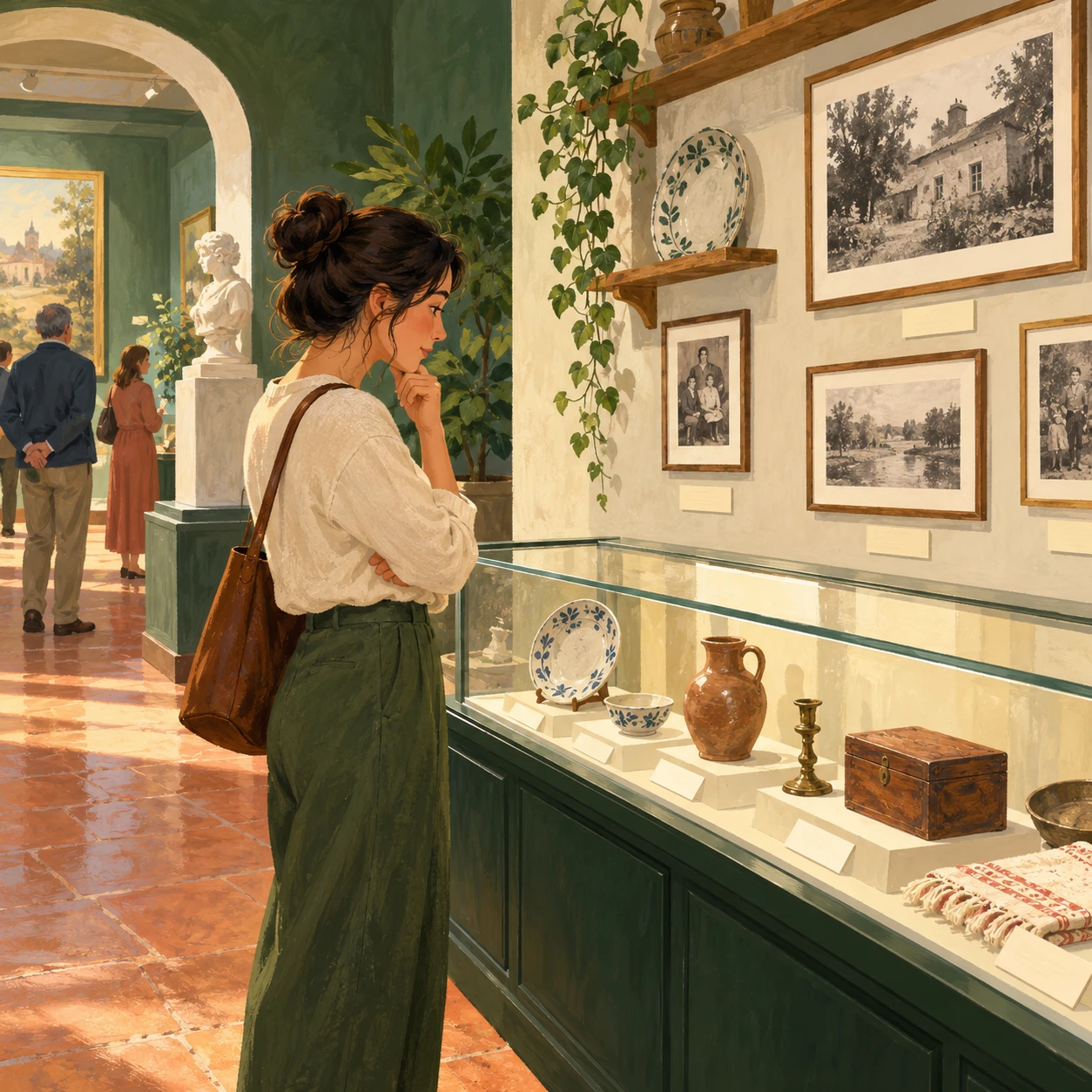
Reviewing an exhibition — context illustration
LeituraB1

Reviewing an exhibition

Leia o material original em inglês e responda com evidências. O nível é uma referência editorial, não um resultado certificado.

“Ordinary Things” is an exhibition about objects people once used every day. I expected rows of old tools with long explanations. Instead, the first room contains only twelve objects, each introduced through the story of a person who owned it. A repaired school bag, for example, appears beside a short account of the journey its owner made to school.

The small number of objects is a strength. Visitors have space to look carefully rather than hurry past a crowded display. The labels are short, and longer information is available in folders on a table. I found this arrangement useful because I could choose how much detail to read. However, the folders are heavy and difficult to hold while standing. A few seats near the table would make a practical difference.

The second room invites visitors to listen to recorded memories. Headphones allow several stories to play without filling the room with competing voices. One recording was unavailable during my visit, but a printed transcript was provided. I would have preferred to hear the speaker, yet I could still follow the account. The staff member explained that the missing recording was being checked, rather than pretending the equipment was working.

Not everything is equally successful. The final wall asks visitors to imagine which of today’s objects might become important in fifty years. This is an interesting question, but the suggested answers are all electronic devices. A wider choice, including ordinary clothing or handmade gifts, would connect better with the range shown earlier.

The exhibition is free, although booking is required at weekends because the rooms are small. Allow about an hour if you want to read the extra material. This is not a complete history of household life, and it does not claim to be one. Its success lies in showing how a few carefully chosen objects can open a door into other people’s experiences.

Um pouco de clareza

Detalhes explícitos · Posição e avaliação

Relacione a pessoa, horário, lugar ou quantidade ao acontecimento correto. Observe avaliações e ressalvas; um fato positivo não significa aprovação irrestrita.

The doors open at eight. The class starts at nine.

Detalhes explícitos · Razões

Relacione a pessoa, horário, lugar ou quantidade ao acontecimento correto. Use a razão apresentada; uma razão externa apenas plausível não basta.

The doors open at eight. The class starts at nine.

Inferências a partir de pistas · Ideia principal

Combine as pistas reais sem acrescentar fatos sem apoio. Considere o texto inteiro: um detalhe verdadeiro não é automaticamente a ideia principal.

The bag is wet and the umbrella is open: these are clues, not a complete history.

Material de estudo
Reviewing an exhibition — context illustration
LeituraB1

Reviewing an exhibition

Leia o material original em inglês e responda com evidências. O nível é uma referência editorial, não um resultado certificado.

“Ordinary Things” is an exhibition about objects people once used every day. I expected rows of old tools with long explanations. Instead, the first room contains only twelve objects, each introduced through the story of a person who owned it. A repaired school bag, for example, appears beside a short account of the journey its owner made to school.

The small number of objects is a strength. Visitors have space to look carefully rather than hurry past a crowded display. The labels are short, and longer information is available in folders on a table. I found this arrangement useful because I could choose how much detail to read. However, the folders are heavy and difficult to hold while standing. A few seats near the table would make a practical difference.

The second room invites visitors to listen to recorded memories. Headphones allow several stories to play without filling the room with competing voices. One recording was unavailable during my visit, but a printed transcript was provided. I would have preferred to hear the speaker, yet I could still follow the account. The staff member explained that the missing recording was being checked, rather than pretending the equipment was working.

Not everything is equally successful. The final wall asks visitors to imagine which of today’s objects might become important in fifty years. This is an interesting question, but the suggested answers are all electronic devices. A wider choice, including ordinary clothing or handmade gifts, would connect better with the range shown earlier.

The exhibition is free, although booking is required at weekends because the rooms are small. Allow about an hour if you want to read the extra material. This is not a complete history of household life, and it does not claim to be one. Its success lies in showing how a few carefully chosen objects can open a door into other people’s experiences.

0/12
Questões
01 / 12D01Salve para encontrar em Minha coleção.

Reviewing an exhibition

What surprised the reviewer in the first room?

Sua resposta
1 / 12

Seu caminho de aprendizagem

01
Etapa 1 · Aquecimento

Aquecimento

0/3
02
Etapa 2 · Praticar a habilidade

Detalhes explícitos · Posição e avaliação

0/2

Relacione a pessoa, horário, lugar ou quantidade ao acontecimento correto. Observe avaliações e ressalvas; um fato positivo não significa aprovação irrestrita.

The doors open at eight. The class starts at nine.
03
Etapa 3 · Praticar a habilidade

Inferências a partir de pistas · Ideia principal

0/1

Combine as pistas reais sem acrescentar fatos sem apoio. Considere o texto inteiro: um detalhe verdadeiro não é automaticamente a ideia principal.

The bag is wet and the umbrella is open: these are clues, not a complete history.
04
Etapa 4 · Praticar a habilidade

Detalhes explícitos · Razões

0/1

Relacione a pessoa, horário, lugar ou quantidade ao acontecimento correto. Use a razão apresentada; uma razão externa apenas plausível não basta.

The doors open at eight. The class starts at nine.
05
Etapa 5 · Prática relacionada

Prática relacionada

0/3
06
Etapa 6 · Desafio do texto

Desafio do texto

0/2
Revisões desta unidade

Transforme erros em aprendizado.

Mantenha a primeira resposta, confira a evidência e tente outra questão. Acertar no mesmo material não comprova transferência para outro texto.

0

Ainda não há revisões. Faça um aquecimento curto.

Mapa da aula

Avaliar uma exposição

B1
Reviewing an exhibition

Pontos da aula

01

Detalhes explícitos · Posição e avaliação

Relacione a pessoa, horário, lugar ou quantidade ao acontecimento correto. Observe avaliações e ressalvas; um fato positivo não significa aprovação irrestrita.

The doors open at eight. The class starts at nine.
02

Detalhes explícitos · Razões

Relacione a pessoa, horário, lugar ou quantidade ao acontecimento correto. Use a razão apresentada; uma razão externa apenas plausível não basta.

The doors open at eight. The class starts at nine.
03

Inferências a partir de pistas · Ideia principal

Combine as pistas reais sem acrescentar fatos sem apoio. Considere o texto inteiro: um detalhe verdadeiro não é automaticamente a ideia principal.

The bag is wet and the umbrella is open: these are clues, not a complete history.

Perguntas e respostas

Abrir uma resposta registra ajuda para essa questão.

D01 · Aquecimento

Reviewing an exhibition

What surprised the reviewer in the first room?

  1. A complete history of every household object.
  2. Only modern electronic devices.
  3. A few objects presented through their owners’ stories.
  4. Rows of tools with very long labels.
Resposta e explicação
A few objects presented through their owners’ stories.

Resposta: “A few objects presented through their owners’ stories.”. Evidência: “the first room contains only twelve objects, each introduced through the story of a person who owned it.”. Confira “Rows of tools with very long labels.”: Isso era esperado no início. Não é o resultado posterior inesperado que a pergunta pede. Evidência: “I expected rows of old tools with long explanations.”. Confira “Only modern electronic devices.”: O texto não identifica isso como a questão perguntada. Use a questão que ele nomeia explicitamente. Evidência: “the suggested answers are all electronic devices.”.

D02 · Aquecimento

Reviewing an exhibition

What information accompanies the school bag?

  1. Instructions explaining how its owner repaired it.
  2. A description of the owner’s school timetable.
  3. The cost of repairing it before the exhibition.
  4. Its owner’s journey to school.
Resposta e explicação
Its owner’s journey to school.

Resposta: “Its owner’s journey to school.”. Evidência: “a short account of the journey its owner made to school.”. Confira “The cost of repairing it before the exhibition.”: O texto não dá esse detalhe. Não o acrescente. Confira “Instructions explaining how its owner repaired it.”: O texto não dá esse detalhe. Não o acrescente.

D03 · Aquecimento

Reviewing an exhibition

Why does the reviewer like the limited number of objects?

  1. It guarantees visitors can avoid booking at weekends.
  2. It makes the owners’ stories unnecessary.
  3. It allows every label to be replaced by a long folder.
  4. It gives visitors room to look carefully.
Resposta e explicação
It gives visitors room to look carefully.

Resposta: “It gives visitors room to look carefully.”. Evidência: “Visitors have space to look carefully rather than hurry past a crowded display.”. Confira “It guarantees visitors can avoid booking at weekends.”: Isso diz o contrário do detalhe relevante. Evidência: “booking is required at weekends because the rooms are small.”. Confira “It allows every label to be replaced by a long folder.”: Isso torna a afirmação mais ampla ou mais forte do que o texto permite. Evidência: “The labels are short, and longer information is available in folders on a table.”.

P01 · Praticar a habilidade

Reviewing an exhibition

Where can visitors find longer explanations?

  1. On longer labels beside every object.
  2. Only through recordings in the second room.
  3. In folders attached to the twelve objects.
  4. In folders on a table.
Resposta e explicação
In folders on a table.

Resposta: “In folders on a table.”. Evidência: “longer information is available in folders on a table.”. Confira “On longer labels beside every object.”: Esse não é o item indicado para essa ação. Evidência: “The labels are short”. Confira “Only through recordings in the second room.”: Isso torna a afirmação mais ampla ou mais forte do que o texto permite. Evidência: “The second room invites visitors to listen to recorded memories.”.

P02 · Praticar a habilidade

Reviewing an exhibition

What practical improvement is suggested near the folders?

  1. Lighter folders that can only be read while standing.
  2. A guide who chooses how much information each visitor reads.
  3. Some seats.
  4. Longer labels instead of the choice of folders.
Resposta e explicação
Some seats.

Resposta: “Some seats.”. Evidência: “A few seats near the table would make a practical difference.”. Confira “Longer labels instead of the choice of folders.”: Esse não é o item indicado para essa ação. Evidência: “I could choose how much detail to read.”. Confira “Lighter folders that can only be read while standing.”: O texto não identifica isso como a questão perguntada. Use a questão que ele nomeia explicitamente.

P03 · Praticar a habilidade

Reviewing an exhibition

What does the staff member’s explanation show?

  1. An open acknowledgement of the equipment problem.
  2. A claim that the equipment was working normally.
  3. A guarantee that every recording would work on the next visit.
  4. An instruction to skip the account without a recording.
Resposta e explicação
An open acknowledgement of the equipment problem.

Resposta: “An open acknowledgement of the equipment problem.”. Evidência: “the missing recording was being checked, rather than pretending the equipment was working.”. Confira “A claim that the equipment was working normally.”: Isso diz o contrário do detalhe relevante. Confira “A guarantee that every recording would work on the next visit.”: Isso torna a afirmação mais ampla ou mais forte do que o texto permite.

P04 · Praticar a habilidade

Reviewing an exhibition

What replaced the unavailable recording during the visit?

  1. An extended label listing the recording equipment.
  2. A live explanation from the staff member instead of the whole account.
  3. A printed transcript.
  4. Headphones playing a different owner’s memory.
Resposta e explicação
A printed transcript.

Resposta: “A printed transcript.”. Evidência: “a printed transcript was provided.”. Confira “A live explanation from the staff member instead of the whole account.”: Esse não é o item indicado para essa ação. Confira “Headphones playing a different owner’s memory.”: Esse não é o item indicado para essa ação.

R01 · Prática relacionada

Reviewing an exhibition

Why are headphones used in the second room?

  1. To keep different recordings from competing across the room.
  2. To prevent visitors choosing between different accounts.
  3. To let each story be heard throughout both rooms.
  4. To make the printed transcripts unnecessary.
Resposta e explicação
To keep different recordings from competing across the room.

Resposta: “To keep different recordings from competing across the room.”. Evidência: “Headphones allow several stories to play without filling the room with competing voices.”. Confira “To make the printed transcripts unnecessary.”: Isso torna a afirmação mais ampla ou mais forte do que o texto permite. Evidência: “a printed transcript was provided.”. Confira “To let each story be heard throughout both rooms.”: Isso diz o contrário do detalhe relevante.

R02 · Prática relacionada

Reviewing an exhibition

What does the reviewer criticise about the final wall?

  1. Its suggested objects are too narrowly focused on electronics.
  2. Its examples include more clothing than electronic devices.
  3. Its question about future importance is not interesting.
  4. Its suggested answers cover ordinary and handmade objects equally.
Resposta e explicação
Its suggested objects are too narrowly focused on electronics.

Resposta: “Its suggested objects are too narrowly focused on electronics.”. Evidência: “the suggested answers are all electronic devices.”. Confira “Its question about future importance is not interesting.”: Isso diz o contrário do detalhe relevante. Evidência: “This is an interesting question”. Confira “Its examples include more clothing than electronic devices.”: Isso diz o contrário do detalhe relevante.

R03 · Prática relacionada

Reviewing an exhibition

When must visitors book?

  1. Only on weekday visits lasting an hour.
  2. At weekends.
  3. Only when visitors want the extra material.
  4. Whenever the exhibition is free.
Resposta e explicação
At weekends.

Resposta: “At weekends.”. Evidência: “booking is required at weekends because the rooms are small.”. Confira “Whenever the exhibition is free.”: Isso torna a afirmação mais ampla ou mais forte do que o texto permite. Evidência: “The exhibition is free, although booking is required at weekends”. Confira “Only on weekday visits lasting an hour.”: Isso muda ou omite uma condição do texto.

X01 · Desafio do texto

Reviewing an exhibition

Why might a visitor allow about an hour?

  1. To wait for the unavailable recording to be repaired.
  2. To complete a guided tour that every visitor must book.
  3. To read a full history of fifty years of household life.
  4. To have time for the extra reading material.
Resposta e explicação
To have time for the extra reading material.

Resposta: “To have time for the extra reading material.”. Evidência: “Allow about an hour if you want to read the extra material.”. Confira “To wait for the unavailable recording to be repaired.”: Não é o motivo dado para essa ação. Confira “To read a full history of fifty years of household life.”: Isso torna a afirmação mais ampla ou mais forte do que o texto permite. Evidência: “This is not a complete history of household life”.

X02 · Desafio do texto

Reviewing an exhibition

What does the reviewer see as the exhibition’s main achievement?

  1. Showing that an object’s importance depends mainly on its technical features.
  2. Offering enough electronic examples to represent all future objects.
  3. Using selected objects to reveal personal experiences.
  4. Providing a complete history of household life.
Resposta e explicação
Using selected objects to reveal personal experiences.

Resposta: “Using selected objects to reveal personal experiences.”. Evidência: “showing how a few carefully chosen objects can open a door into other people’s experiences.”. Confira “Offering enough electronic examples to represent all future objects.”: Isso torna a afirmação mais ampla ou mais forte do que o texto permite. Confira “Providing a complete history of household life.”: Isso torna a afirmação mais ampla ou mais forte do que o texto permite.