明示された詳細・立場と評価
問われた人・時刻・場所・量を正しい出来事に結び付けます。 評価と留保に注目します。よい事実があるだけで全面的な賛成とは言えません。
The doors open at eight. The class starts at nine.

展覧会のレビュー · B1. 問われた人・時刻・場所・量を正しい出来事に結び付けます。 評価と留保に注目します。よい事実があるだけで全面的な賛成とは言えません。
オリジナルの英文を読み、根拠を基に答えましょう。レベルは編集上の目安で、認定結果ではありません。
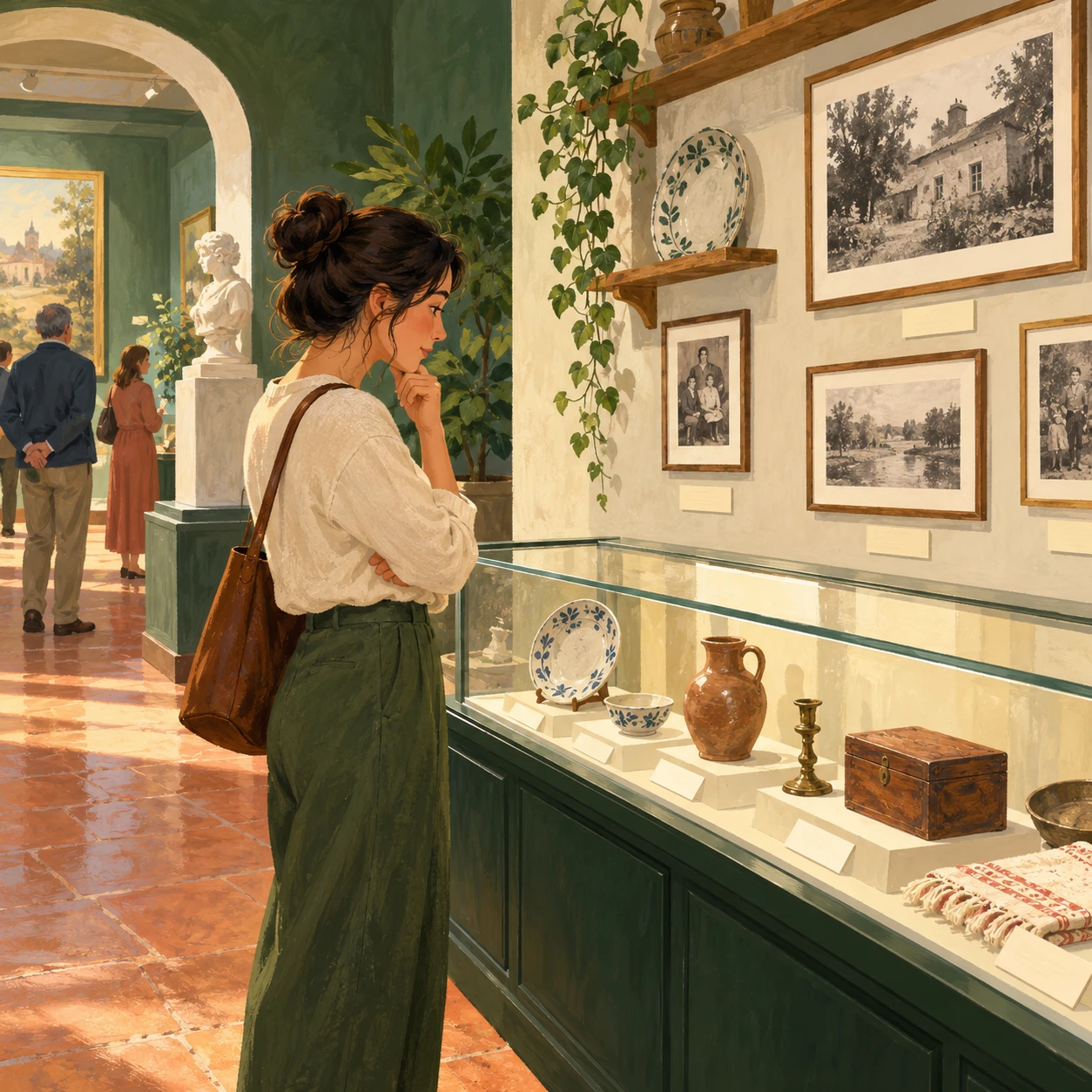
“Ordinary Things” is an exhibition about objects people once used every day. I expected rows of old tools with long explanations. Instead, the first room contains only twelve objects, each introduced through the story of a person who owned it. A repaired school bag, for example, appears beside a short account of the journey its owner made to school.
The small number of objects is a strength. Visitors have space to look carefully rather than hurry past a crowded display. The labels are short, and longer information is available in folders on a table. I found this arrangement useful because I could choose how much detail to read. However, the folders are heavy and difficult to hold while standing. A few seats near the table would make a practical difference.
The second room invites visitors to listen to recorded memories. Headphones allow several stories to play without filling the room with competing voices. One recording was unavailable during my visit, but a printed transcript was provided. I would have preferred to hear the speaker, yet I could still follow the account. The staff member explained that the missing recording was being checked, rather than pretending the equipment was working.
Not everything is equally successful. The final wall asks visitors to imagine which of today’s objects might become important in fifty years. This is an interesting question, but the suggested answers are all electronic devices. A wider choice, including ordinary clothing or handmade gifts, would connect better with the range shown earlier.
The exhibition is free, although booking is required at weekends because the rooms are small. Allow about an hour if you want to read the extra material. This is not a complete history of household life, and it does not claim to be one. Its success lies in showing how a few carefully chosen objects can open a door into other people’s experiences.
問われた人・時刻・場所・量を正しい出来事に結び付けます。 評価と留保に注目します。よい事実があるだけで全面的な賛成とは言えません。
The doors open at eight. The class starts at nine.
問われた人・時刻・場所・量を正しい出来事に結び付けます。 実際に示された理由を使います。文外のもっともらしい理由だけでは足りません。
The doors open at eight. The class starts at nine.
実際の手がかりを組み合わせ、裏付けのない事実を足しません。 文章全体で判断します。正しい細部がそのまま要点とは限りません。
The bag is wet and the umbrella is open: these are clues, not a complete history.
“Ordinary Things” is an exhibition about objects people once used every day. I expected rows of old tools with long explanations. Instead, the first room contains only twelve objects, each introduced through the story of a person who owned it. A repaired school bag, for example, appears beside a short account of the journey its owner made to school.
The small number of objects is a strength. Visitors have space to look carefully rather than hurry past a crowded display. The labels are short, and longer information is available in folders on a table. I found this arrangement useful because I could choose how much detail to read. However, the folders are heavy and difficult to hold while standing. A few seats near the table would make a practical difference.
The second room invites visitors to listen to recorded memories. Headphones allow several stories to play without filling the room with competing voices. One recording was unavailable during my visit, but a printed transcript was provided. I would have preferred to hear the speaker, yet I could still follow the account. The staff member explained that the missing recording was being checked, rather than pretending the equipment was working.
Not everything is equally successful. The final wall asks visitors to imagine which of today’s objects might become important in fifty years. This is an interesting question, but the suggested answers are all electronic devices. A wider choice, including ordinary clothing or handmade gifts, would connect better with the range shown earlier.
The exhibition is free, although booking is required at weekends because the rooms are small. Allow about an hour if you want to read the extra material. This is not a complete history of household life, and it does not claim to be one. Its success lies in showing how a few carefully chosen objects can open a door into other people’s experiences.
Reviewing an exhibition
問われた人・時刻・場所・量を正しい出来事に結び付けます。 評価と留保に注目します。よい事実があるだけで全面的な賛成とは言えません。
The doors open at eight. The class starts at nine.実際の手がかりを組み合わせ、裏付けのない事実を足しません。 文章全体で判断します。正しい細部がそのまま要点とは限りません。
The bag is wet and the umbrella is open: these are clues, not a complete history.問われた人・時刻・場所・量を正しい出来事に結び付けます。 実際に示された理由を使います。文外のもっともらしい理由だけでは足りません。
The doors open at eight. The class starts at nine.初回答を残し、根拠を確かめて別の問題に挑戦します。同じ教材での正解は、新しい文章への応用を証明するものではありません。
まだ復習ノートはありません。まずは短いウォームアップを。
問われた人・時刻・場所・量を正しい出来事に結び付けます。 評価と留保に注目します。よい事実があるだけで全面的な賛成とは言えません。
The doors open at eight. The class starts at nine.問われた人・時刻・場所・量を正しい出来事に結び付けます。 実際に示された理由を使います。文外のもっともらしい理由だけでは足りません。
The doors open at eight. The class starts at nine.実際の手がかりを組み合わせ、裏付けのない事実を足しません。 文章全体で判断します。正しい細部がそのまま要点とは限りません。
The bag is wet and the umbrella is open: these are clues, not a complete history.解答を開くと、その問題にヒント利用が記録されます。
Reviewing an exhibition
答え:「A few objects presented through their owners’ stories.」。 根拠:「the first room contains only twelve objects, each introduced through the story of a person who owned it.」。 「Rows of tools with very long labels.」を確認:これは最初の予想です。問われている、その後の予想外の結果ではありません。 根拠:「I expected rows of old tools with long explanations.」。 「Only modern electronic devices.」を確認:本文はこれを問われている問題として挙げていません。明示された問題を確認しましょう。 根拠:「the suggested answers are all electronic devices.」。
Reviewing an exhibition
答え:「Its owner’s journey to school.」。 根拠:「a short account of the journey its owner made to school.」。 「The cost of repairing it before the exhibition.」を確認:本文にはこの情報がありません。付け足さないようにしましょう。 「Instructions explaining how its owner repaired it.」を確認:本文にはこの情報がありません。付け足さないようにしましょう。
Reviewing an exhibition
答え:「It gives visitors room to look carefully.」。 根拠:「Visitors have space to look carefully rather than hurry past a crowded display.」。 「It guarantees visitors can avoid booking at weekends.」を確認:該当する情報と反対のことを述べています。 根拠:「booking is required at weekends because the rooms are small.」。 「It allows every label to be replaced by a long folder.」を確認:本文で言える範囲や強さを超えています。 根拠:「The labels are short, and longer information is available in folders on a table.」。
Reviewing an exhibition
答え:「In folders on a table.」。 根拠:「longer information is available in folders on a table.」。 「On longer labels beside every object.」を確認:この行動について挙げられた物ではありません。 根拠:「The labels are short」。 「Only through recordings in the second room.」を確認:本文で言える範囲や強さを超えています。 根拠:「The second room invites visitors to listen to recorded memories.」。
Reviewing an exhibition
答え:「Some seats.」。 根拠:「A few seats near the table would make a practical difference.」。 「Longer labels instead of the choice of folders.」を確認:この行動について挙げられた物ではありません。 根拠:「I could choose how much detail to read.」。 「Lighter folders that can only be read while standing.」を確認:本文はこれを問われている問題として挙げていません。明示された問題を確認しましょう。
Reviewing an exhibition
答え:「An open acknowledgement of the equipment problem.」。 根拠:「the missing recording was being checked, rather than pretending the equipment was working.」。 「A claim that the equipment was working normally.」を確認:該当する情報と反対のことを述べています。 「A guarantee that every recording would work on the next visit.」を確認:本文で言える範囲や強さを超えています。
Reviewing an exhibition
答え:「A printed transcript.」。 根拠:「a printed transcript was provided.」。 「A live explanation from the staff member instead of the whole account.」を確認:この行動について挙げられた物ではありません。 「Headphones playing a different owner’s memory.」を確認:この行動について挙げられた物ではありません。
Reviewing an exhibition
答え:「To keep different recordings from competing across the room.」。 根拠:「Headphones allow several stories to play without filling the room with competing voices.」。 「To make the printed transcripts unnecessary.」を確認:本文で言える範囲や強さを超えています。 根拠:「a printed transcript was provided.」。 「To let each story be heard throughout both rooms.」を確認:該当する情報と反対のことを述べています。
Reviewing an exhibition
答え:「Its suggested objects are too narrowly focused on electronics.」。 根拠:「the suggested answers are all electronic devices.」。 「Its question about future importance is not interesting.」を確認:該当する情報と反対のことを述べています。 根拠:「This is an interesting question」。 「Its examples include more clothing than electronic devices.」を確認:該当する情報と反対のことを述べています。
Reviewing an exhibition
答え:「At weekends.」。 根拠:「booking is required at weekends because the rooms are small.」。 「Whenever the exhibition is free.」を確認:本文で言える範囲や強さを超えています。 根拠:「The exhibition is free, although booking is required at weekends」。 「Only on weekday visits lasting an hour.」を確認:本文の条件を変えたり省いたりしています。
Reviewing an exhibition
答え:「To have time for the extra reading material.」。 根拠:「Allow about an hour if you want to read the extra material.」。 「To wait for the unavailable recording to be repaired.」を確認:この行動について示された理由ではありません。 「To read a full history of fifty years of household life.」を確認:本文で言える範囲や強さを超えています。 根拠:「This is not a complete history of household life」。
Reviewing an exhibition
答え:「Using selected objects to reveal personal experiences.」。 根拠:「showing how a few carefully chosen objects can open a door into other people’s experiences.」。 「Offering enough electronic examples to represent all future objects.」を確認:本文で言える範囲や強さを超えています。 「Providing a complete history of household life.」を確認:本文で言える範囲や強さを超えています。