명시된 세부 정보 · 관점과 평가
질문에 나온 사람·시간·장소·수량을 해당 사건과 연결하세요. 평가와 유보 표현을 보세요. 긍정적인 사실만으로 무조건 찬성한다고 볼 수 없습니다.
The doors open at eight. The class starts at nine.

전시회 리뷰 · B1. 질문에 나온 사람·시간·장소·수량을 해당 사건과 연결하세요. 평가와 유보 표현을 보세요. 긍정적인 사실만으로 무조건 찬성한다고 볼 수 없습니다.
직접 작성한 영어 자료를 읽고 근거를 찾아 답하세요. 수준 표기는 편집상의 안내이며 인증 결과가 아닙니다.
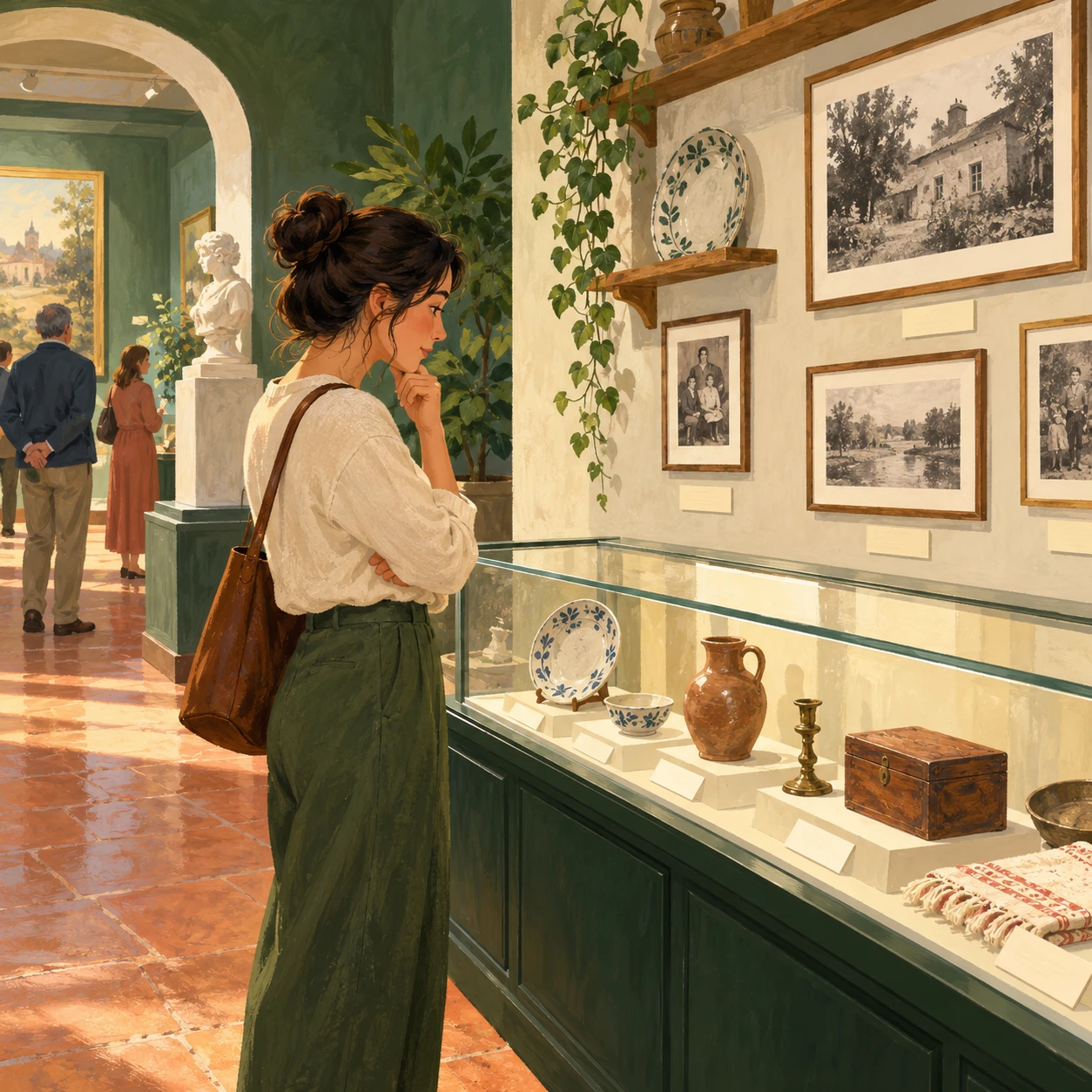
“Ordinary Things” is an exhibition about objects people once used every day. I expected rows of old tools with long explanations. Instead, the first room contains only twelve objects, each introduced through the story of a person who owned it. A repaired school bag, for example, appears beside a short account of the journey its owner made to school.
The small number of objects is a strength. Visitors have space to look carefully rather than hurry past a crowded display. The labels are short, and longer information is available in folders on a table. I found this arrangement useful because I could choose how much detail to read. However, the folders are heavy and difficult to hold while standing. A few seats near the table would make a practical difference.
The second room invites visitors to listen to recorded memories. Headphones allow several stories to play without filling the room with competing voices. One recording was unavailable during my visit, but a printed transcript was provided. I would have preferred to hear the speaker, yet I could still follow the account. The staff member explained that the missing recording was being checked, rather than pretending the equipment was working.
Not everything is equally successful. The final wall asks visitors to imagine which of today’s objects might become important in fifty years. This is an interesting question, but the suggested answers are all electronic devices. A wider choice, including ordinary clothing or handmade gifts, would connect better with the range shown earlier.
The exhibition is free, although booking is required at weekends because the rooms are small. Allow about an hour if you want to read the extra material. This is not a complete history of household life, and it does not claim to be one. Its success lies in showing how a few carefully chosen objects can open a door into other people’s experiences.
질문에 나온 사람·시간·장소·수량을 해당 사건과 연결하세요. 평가와 유보 표현을 보세요. 긍정적인 사실만으로 무조건 찬성한다고 볼 수 없습니다.
The doors open at eight. The class starts at nine.
질문에 나온 사람·시간·장소·수량을 해당 사건과 연결하세요. 실제로 제시된 이유를 찾으세요. 글 밖의 그럴듯한 이유만으로는 부족합니다.
The doors open at eight. The class starts at nine.
실제 단서를 연결하되 근거 없는 사실을 더하지 마세요. 전체 내용을 보세요. 맞는 세부 정보가 곧 중심 내용은 아닙니다.
The bag is wet and the umbrella is open: these are clues, not a complete history.
“Ordinary Things” is an exhibition about objects people once used every day. I expected rows of old tools with long explanations. Instead, the first room contains only twelve objects, each introduced through the story of a person who owned it. A repaired school bag, for example, appears beside a short account of the journey its owner made to school.
The small number of objects is a strength. Visitors have space to look carefully rather than hurry past a crowded display. The labels are short, and longer information is available in folders on a table. I found this arrangement useful because I could choose how much detail to read. However, the folders are heavy and difficult to hold while standing. A few seats near the table would make a practical difference.
The second room invites visitors to listen to recorded memories. Headphones allow several stories to play without filling the room with competing voices. One recording was unavailable during my visit, but a printed transcript was provided. I would have preferred to hear the speaker, yet I could still follow the account. The staff member explained that the missing recording was being checked, rather than pretending the equipment was working.
Not everything is equally successful. The final wall asks visitors to imagine which of today’s objects might become important in fifty years. This is an interesting question, but the suggested answers are all electronic devices. A wider choice, including ordinary clothing or handmade gifts, would connect better with the range shown earlier.
The exhibition is free, although booking is required at weekends because the rooms are small. Allow about an hour if you want to read the extra material. This is not a complete history of household life, and it does not claim to be one. Its success lies in showing how a few carefully chosen objects can open a door into other people’s experiences.
Reviewing an exhibition
질문에 나온 사람·시간·장소·수량을 해당 사건과 연결하세요. 평가와 유보 표현을 보세요. 긍정적인 사실만으로 무조건 찬성한다고 볼 수 없습니다.
The doors open at eight. The class starts at nine.실제 단서를 연결하되 근거 없는 사실을 더하지 마세요. 전체 내용을 보세요. 맞는 세부 정보가 곧 중심 내용은 아닙니다.
The bag is wet and the umbrella is open: these are clues, not a complete history.질문에 나온 사람·시간·장소·수량을 해당 사건과 연결하세요. 실제로 제시된 이유를 찾으세요. 글 밖의 그럴듯한 이유만으로는 부족합니다.
The doors open at eight. The class starts at nine.첫 답을 남기고 근거를 확인한 뒤 다른 문제를 풀어 보세요. 같은 자료에서 맞혔다고 새 지문에도 적용할 수 있다는 뜻은 아니에요.
아직 복습 노트가 없어요. 짧은 워밍업부터 해보세요.
질문에 나온 사람·시간·장소·수량을 해당 사건과 연결하세요. 평가와 유보 표현을 보세요. 긍정적인 사실만으로 무조건 찬성한다고 볼 수 없습니다.
The doors open at eight. The class starts at nine.질문에 나온 사람·시간·장소·수량을 해당 사건과 연결하세요. 실제로 제시된 이유를 찾으세요. 글 밖의 그럴듯한 이유만으로는 부족합니다.
The doors open at eight. The class starts at nine.실제 단서를 연결하되 근거 없는 사실을 더하지 마세요. 전체 내용을 보세요. 맞는 세부 정보가 곧 중심 내용은 아닙니다.
The bag is wet and the umbrella is open: these are clues, not a complete history.정답을 열면 해당 문제에 도움 사용이 기록돼요.
Reviewing an exhibition
정답: “A few objects presented through their owners’ stories.”. 근거: “the first room contains only twelve objects, each introduced through the story of a person who owned it.”. “Rows of tools with very long labels.” 확인: 이는 처음에 예상한 일입니다. 질문에서 묻는 이후의 예상 밖 결과가 아닙니다. 근거: “I expected rows of old tools with long explanations.”. “Only modern electronic devices.” 확인: 본문은 이를 질문에서 묻는 문제로 제시하지 않습니다. 명시된 문제를 확인하세요. 근거: “the suggested answers are all electronic devices.”.
Reviewing an exhibition
정답: “Its owner’s journey to school.”. 근거: “a short account of the journey its owner made to school.”. “The cost of repairing it before the exhibition.” 확인: 본문에 이 정보는 없습니다. 임의로 덧붙이지 마세요. “Instructions explaining how its owner repaired it.” 확인: 본문에 이 정보는 없습니다. 임의로 덧붙이지 마세요.
Reviewing an exhibition
정답: “It gives visitors room to look carefully.”. 근거: “Visitors have space to look carefully rather than hurry past a crowded display.”. “It guarantees visitors can avoid booking at weekends.” 확인: 해당 정보와 반대되는 내용입니다. 근거: “booking is required at weekends because the rooms are small.”. “It allows every label to be replaced by a long folder.” 확인: 본문이 허용하는 범위나 확실성보다 과장했습니다. 근거: “The labels are short, and longer information is available in folders on a table.”.
Reviewing an exhibition
정답: “In folders on a table.”. 근거: “longer information is available in folders on a table.”. “On longer labels beside every object.” 확인: 이 행동에 대해 언급된 물건이 아닙니다. 근거: “The labels are short”. “Only through recordings in the second room.” 확인: 본문이 허용하는 범위나 확실성보다 과장했습니다. 근거: “The second room invites visitors to listen to recorded memories.”.
Reviewing an exhibition
정답: “Some seats.”. 근거: “A few seats near the table would make a practical difference.”. “Longer labels instead of the choice of folders.” 확인: 이 행동에 대해 언급된 물건이 아닙니다. 근거: “I could choose how much detail to read.”. “Lighter folders that can only be read while standing.” 확인: 본문은 이를 질문에서 묻는 문제로 제시하지 않습니다. 명시된 문제를 확인하세요.
Reviewing an exhibition
정답: “An open acknowledgement of the equipment problem.”. 근거: “the missing recording was being checked, rather than pretending the equipment was working.”. “A claim that the equipment was working normally.” 확인: 해당 정보와 반대되는 내용입니다. “A guarantee that every recording would work on the next visit.” 확인: 본문이 허용하는 범위나 확실성보다 과장했습니다.
Reviewing an exhibition
정답: “A printed transcript.”. 근거: “a printed transcript was provided.”. “A live explanation from the staff member instead of the whole account.” 확인: 이 행동에 대해 언급된 물건이 아닙니다. “Headphones playing a different owner’s memory.” 확인: 이 행동에 대해 언급된 물건이 아닙니다.
Reviewing an exhibition
정답: “To keep different recordings from competing across the room.”. 근거: “Headphones allow several stories to play without filling the room with competing voices.”. “To make the printed transcripts unnecessary.” 확인: 본문이 허용하는 범위나 확실성보다 과장했습니다. 근거: “a printed transcript was provided.”. “To let each story be heard throughout both rooms.” 확인: 해당 정보와 반대되는 내용입니다.
Reviewing an exhibition
정답: “Its suggested objects are too narrowly focused on electronics.”. 근거: “the suggested answers are all electronic devices.”. “Its question about future importance is not interesting.” 확인: 해당 정보와 반대되는 내용입니다. 근거: “This is an interesting question”. “Its examples include more clothing than electronic devices.” 확인: 해당 정보와 반대되는 내용입니다.
Reviewing an exhibition
정답: “At weekends.”. 근거: “booking is required at weekends because the rooms are small.”. “Whenever the exhibition is free.” 확인: 본문이 허용하는 범위나 확실성보다 과장했습니다. 근거: “The exhibition is free, although booking is required at weekends”. “Only on weekday visits lasting an hour.” 확인: 본문의 조건을 바꾸거나 빠뜨렸습니다.
Reviewing an exhibition
정답: “To have time for the extra reading material.”. 근거: “Allow about an hour if you want to read the extra material.”. “To wait for the unavailable recording to be repaired.” 확인: 이 행동에 대해 제시된 이유가 아닙니다. “To read a full history of fifty years of household life.” 확인: 본문이 허용하는 범위나 확실성보다 과장했습니다. 근거: “This is not a complete history of household life”.
Reviewing an exhibition
정답: “Using selected objects to reveal personal experiences.”. 근거: “showing how a few carefully chosen objects can open a door into other people’s experiences.”. “Offering enough electronic examples to represent all future objects.” 확인: 본문이 허용하는 범위나 확실성보다 과장했습니다. “Providing a complete history of household life.” 확인: 본문이 허용하는 범위나 확실성보다 과장했습니다.