Detalles explícitos · Postura y valoración
Relaciona la persona, hora, lugar o cantidad con el hecho correcto. Busca valoraciones y reservas; un hecho positivo no implica aprobación absoluta.
The doors open at eight. The class starts at nine.

Reseñar una exposición · B1. Relaciona la persona, hora, lugar o cantidad con el hecho correcto. Busca valoraciones y reservas; un hecho positivo no implica aprobación absoluta.
Lee el material original en inglés y responde con pruebas. El nivel es una orientación editorial, no un resultado certificado.
Lee el material original en inglés y responde con pruebas. El nivel es una orientación editorial, no un resultado certificado.
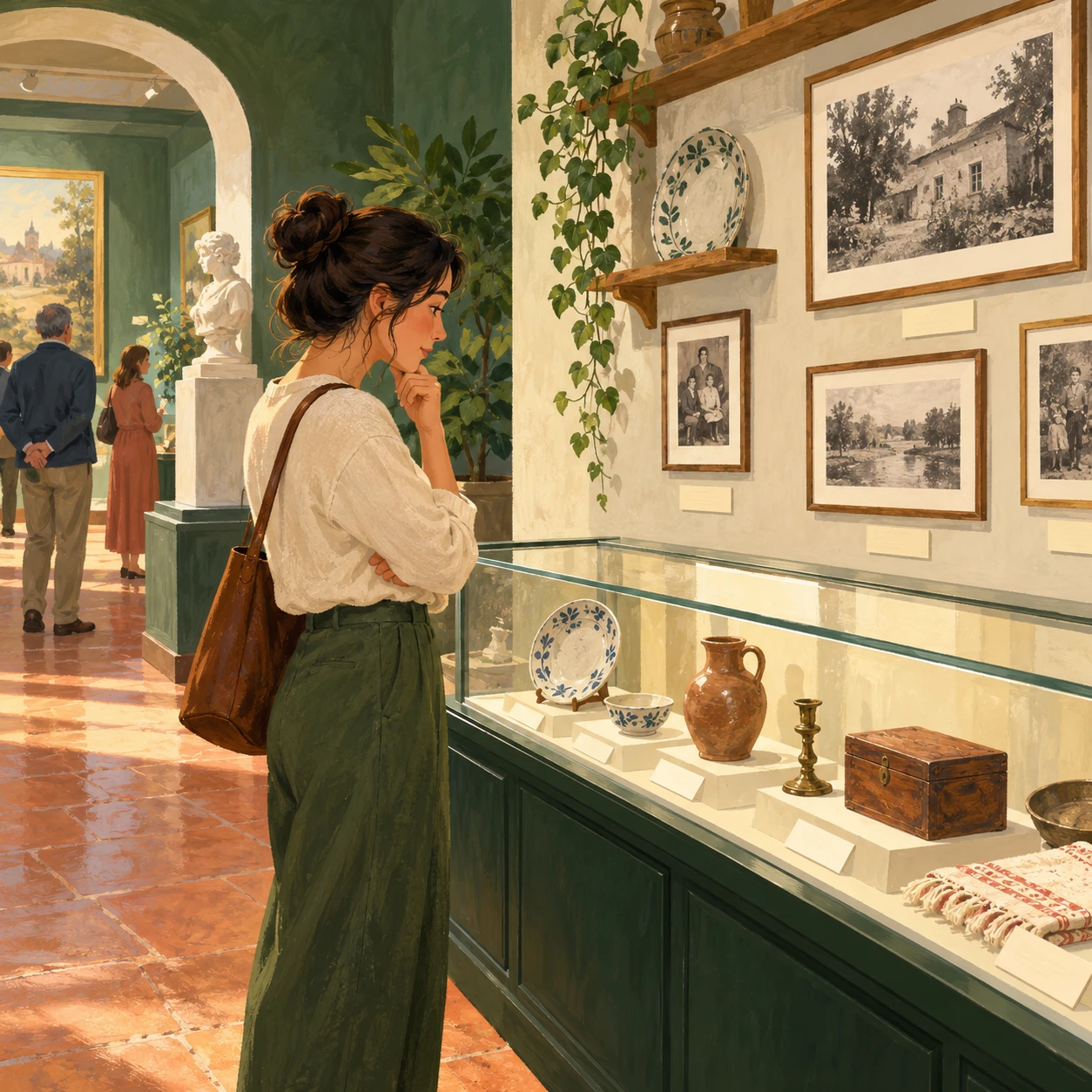
“Ordinary Things” is an exhibition about objects people once used every day. I expected rows of old tools with long explanations. Instead, the first room contains only twelve objects, each introduced through the story of a person who owned it. A repaired school bag, for example, appears beside a short account of the journey its owner made to school.
The small number of objects is a strength. Visitors have space to look carefully rather than hurry past a crowded display. The labels are short, and longer information is available in folders on a table. I found this arrangement useful because I could choose how much detail to read. However, the folders are heavy and difficult to hold while standing. A few seats near the table would make a practical difference.
The second room invites visitors to listen to recorded memories. Headphones allow several stories to play without filling the room with competing voices. One recording was unavailable during my visit, but a printed transcript was provided. I would have preferred to hear the speaker, yet I could still follow the account. The staff member explained that the missing recording was being checked, rather than pretending the equipment was working.
Not everything is equally successful. The final wall asks visitors to imagine which of today’s objects might become important in fifty years. This is an interesting question, but the suggested answers are all electronic devices. A wider choice, including ordinary clothing or handmade gifts, would connect better with the range shown earlier.
The exhibition is free, although booking is required at weekends because the rooms are small. Allow about an hour if you want to read the extra material. This is not a complete history of household life, and it does not claim to be one. Its success lies in showing how a few carefully chosen objects can open a door into other people’s experiences.
Relaciona la persona, hora, lugar o cantidad con el hecho correcto. Busca valoraciones y reservas; un hecho positivo no implica aprobación absoluta.
The doors open at eight. The class starts at nine.
Relaciona la persona, hora, lugar o cantidad con el hecho correcto. Usa la razón dada; una razón externa que parece posible no basta.
The doors open at eight. The class starts at nine.
Combina las pistas reales sin añadir hechos no respaldados. Considera todo el texto: un detalle verdadero no es necesariamente la idea principal.
The bag is wet and the umbrella is open: these are clues, not a complete history.
Lee el material original en inglés y responde con pruebas. El nivel es una orientación editorial, no un resultado certificado.
“Ordinary Things” is an exhibition about objects people once used every day. I expected rows of old tools with long explanations. Instead, the first room contains only twelve objects, each introduced through the story of a person who owned it. A repaired school bag, for example, appears beside a short account of the journey its owner made to school.
The small number of objects is a strength. Visitors have space to look carefully rather than hurry past a crowded display. The labels are short, and longer information is available in folders on a table. I found this arrangement useful because I could choose how much detail to read. However, the folders are heavy and difficult to hold while standing. A few seats near the table would make a practical difference.
The second room invites visitors to listen to recorded memories. Headphones allow several stories to play without filling the room with competing voices. One recording was unavailable during my visit, but a printed transcript was provided. I would have preferred to hear the speaker, yet I could still follow the account. The staff member explained that the missing recording was being checked, rather than pretending the equipment was working.
Not everything is equally successful. The final wall asks visitors to imagine which of today’s objects might become important in fifty years. This is an interesting question, but the suggested answers are all electronic devices. A wider choice, including ordinary clothing or handmade gifts, would connect better with the range shown earlier.
The exhibition is free, although booking is required at weekends because the rooms are small. Allow about an hour if you want to read the extra material. This is not a complete history of household life, and it does not claim to be one. Its success lies in showing how a few carefully chosen objects can open a door into other people’s experiences.
Reviewing an exhibition
Relaciona la persona, hora, lugar o cantidad con el hecho correcto. Busca valoraciones y reservas; un hecho positivo no implica aprobación absoluta.
The doors open at eight. The class starts at nine.Combina las pistas reales sin añadir hechos no respaldados. Considera todo el texto: un detalle verdadero no es necesariamente la idea principal.
The bag is wet and the umbrella is open: these are clues, not a complete history.Relaciona la persona, hora, lugar o cantidad con el hecho correcto. Usa la razón dada; una razón externa que parece posible no basta.
The doors open at eight. The class starts at nine.Conserva el primer intento, comprueba la evidencia y prueba otra pregunta. Responder sobre el mismo material no demuestra transferencia a otro texto.
Aún no hay repasos. Prueba un calentamiento corto.
Relaciona la persona, hora, lugar o cantidad con el hecho correcto. Busca valoraciones y reservas; un hecho positivo no implica aprobación absoluta.
The doors open at eight. The class starts at nine.Relaciona la persona, hora, lugar o cantidad con el hecho correcto. Usa la razón dada; una razón externa que parece posible no basta.
The doors open at eight. The class starts at nine.Combina las pistas reales sin añadir hechos no respaldados. Considera todo el texto: un detalle verdadero no es necesariamente la idea principal.
The bag is wet and the umbrella is open: these are clues, not a complete history.Abrir una respuesta registra ayuda para esa pregunta.
Reviewing an exhibition
Respuesta: «A few objects presented through their owners’ stories.». Prueba: «the first room contains only twelve objects, each introduced through the story of a person who owned it.». Revisa «Rows of tools with very long labels.»: Esto se esperaba al principio. No es el resultado posterior e inesperado que se pregunta. Prueba: «I expected rows of old tools with long explanations.». Revisa «Only modern electronic devices.»: El texto no identifica esto como el problema preguntado. Usa el que nombra expresamente. Prueba: «the suggested answers are all electronic devices.».
Reviewing an exhibition
Respuesta: «Its owner’s journey to school.». Prueba: «a short account of the journey its owner made to school.». Revisa «The cost of repairing it before the exhibition.»: El texto no da este dato. No lo añadas. Revisa «Instructions explaining how its owner repaired it.»: El texto no da este dato. No lo añadas.
Reviewing an exhibition
Respuesta: «It gives visitors room to look carefully.». Prueba: «Visitors have space to look carefully rather than hurry past a crowded display.». Revisa «It guarantees visitors can avoid booking at weekends.»: Dice lo contrario del dato pertinente. Prueba: «booking is required at weekends because the rooms are small.». Revisa «It allows every label to be replaced by a long folder.»: Amplía o refuerza la afirmación más de lo que permite el texto. Prueba: «The labels are short, and longer information is available in folders on a table.».
Reviewing an exhibition
Respuesta: «In folders on a table.». Prueba: «longer information is available in folders on a table.». Revisa «On longer labels beside every object.»: No es el objeto indicado para esta acción. Prueba: «The labels are short». Revisa «Only through recordings in the second room.»: Amplía o refuerza la afirmación más de lo que permite el texto. Prueba: «The second room invites visitors to listen to recorded memories.».
Reviewing an exhibition
Respuesta: «Some seats.». Prueba: «A few seats near the table would make a practical difference.». Revisa «Longer labels instead of the choice of folders.»: No es el objeto indicado para esta acción. Prueba: «I could choose how much detail to read.». Revisa «Lighter folders that can only be read while standing.»: El texto no identifica esto como el problema preguntado. Usa el que nombra expresamente.
Reviewing an exhibition
Respuesta: «An open acknowledgement of the equipment problem.». Prueba: «the missing recording was being checked, rather than pretending the equipment was working.». Revisa «A claim that the equipment was working normally.»: Dice lo contrario del dato pertinente. Revisa «A guarantee that every recording would work on the next visit.»: Amplía o refuerza la afirmación más de lo que permite el texto.
Reviewing an exhibition
Respuesta: «A printed transcript.». Prueba: «a printed transcript was provided.». Revisa «A live explanation from the staff member instead of the whole account.»: No es el objeto indicado para esta acción. Revisa «Headphones playing a different owner’s memory.»: No es el objeto indicado para esta acción.
Reviewing an exhibition
Respuesta: «To keep different recordings from competing across the room.». Prueba: «Headphones allow several stories to play without filling the room with competing voices.». Revisa «To make the printed transcripts unnecessary.»: Amplía o refuerza la afirmación más de lo que permite el texto. Prueba: «a printed transcript was provided.». Revisa «To let each story be heard throughout both rooms.»: Dice lo contrario del dato pertinente.
Reviewing an exhibition
Respuesta: «Its suggested objects are too narrowly focused on electronics.». Prueba: «the suggested answers are all electronic devices.». Revisa «Its question about future importance is not interesting.»: Dice lo contrario del dato pertinente. Prueba: «This is an interesting question». Revisa «Its examples include more clothing than electronic devices.»: Dice lo contrario del dato pertinente.
Reviewing an exhibition
Respuesta: «At weekends.». Prueba: «booking is required at weekends because the rooms are small.». Revisa «Whenever the exhibition is free.»: Amplía o refuerza la afirmación más de lo que permite el texto. Prueba: «The exhibition is free, although booking is required at weekends». Revisa «Only on weekday visits lasting an hour.»: Cambia u omite una condición del texto.
Reviewing an exhibition
Respuesta: «To have time for the extra reading material.». Prueba: «Allow about an hour if you want to read the extra material.». Revisa «To wait for the unavailable recording to be repaired.»: No es la razón indicada para esta acción. Revisa «To read a full history of fifty years of household life.»: Amplía o refuerza la afirmación más de lo que permite el texto. Prueba: «This is not a complete history of household life».
Reviewing an exhibition
Respuesta: «Using selected objects to reveal personal experiences.». Prueba: «showing how a few carefully chosen objects can open a door into other people’s experiences.». Revisa «Offering enough electronic examples to represent all future objects.»: Amplía o refuerza la afirmación más de lo que permite el texto. Revisa «Providing a complete history of household life.»: Amplía o refuerza la afirmación más de lo que permite el texto.