B1

Reviewing an exhibition

About this lesson

Reviewing an exhibition · B1. Keep the requested person, time, place or amount attached to the correct event. Look for evaluations and reservations; do not turn a positive fact into unconditional approval.

Read the original English material and answer with evidence. The level is an editorial guide, not a certified result.

12 items
Save it to find it in My collection.
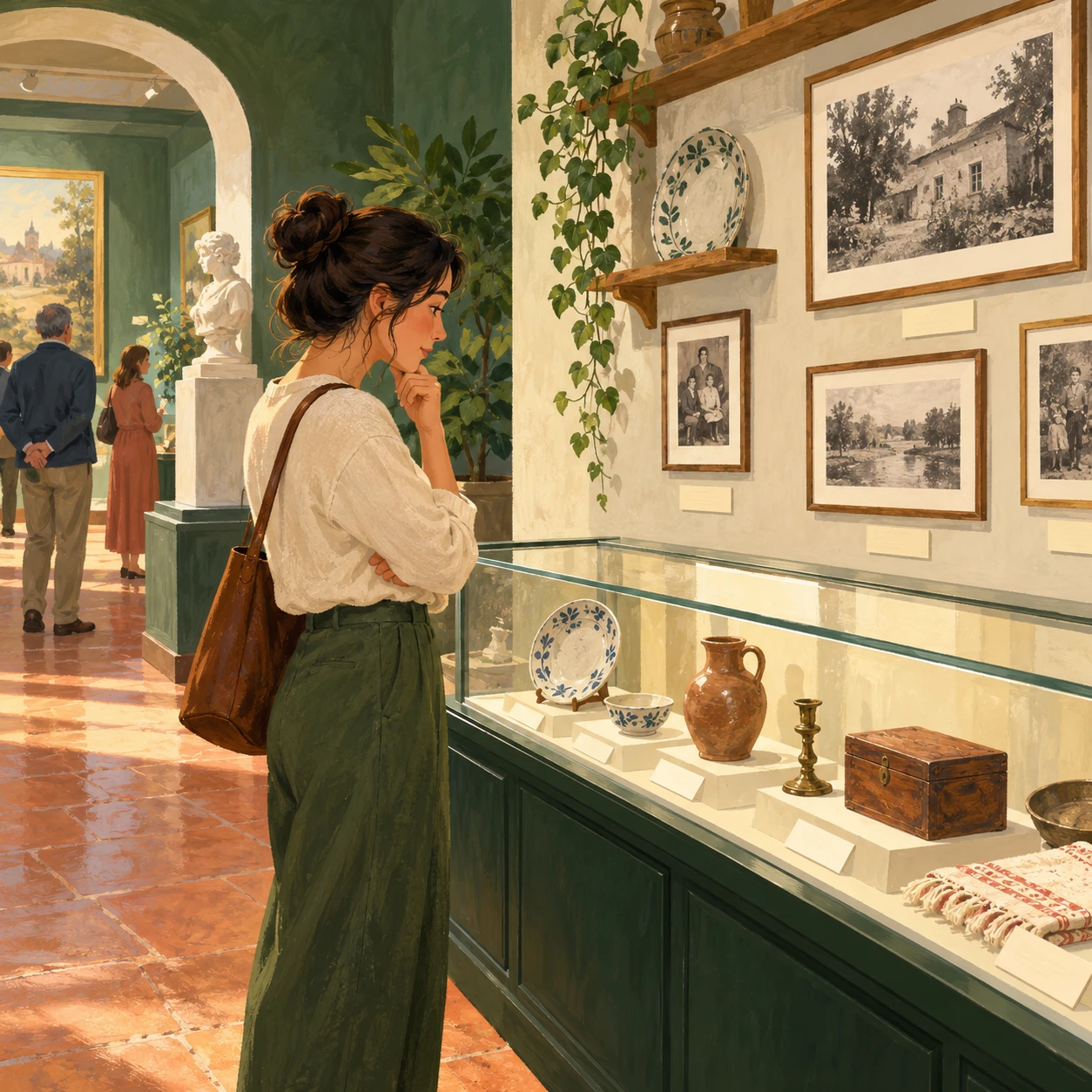
Reviewing an exhibition — context illustration
ReadingB1

Reviewing an exhibition

Read the original English material and answer with evidence. The level is an editorial guide, not a certified result.

“Ordinary Things” is an exhibition about objects people once used every day. I expected rows of old tools with long explanations. Instead, the first room contains only twelve objects, each introduced through the story of a person who owned it. A repaired school bag, for example, appears beside a short account of the journey its owner made to school.

The small number of objects is a strength. Visitors have space to look carefully rather than hurry past a crowded display. The labels are short, and longer information is available in folders on a table. I found this arrangement useful because I could choose how much detail to read. However, the folders are heavy and difficult to hold while standing. A few seats near the table would make a practical difference.

The second room invites visitors to listen to recorded memories. Headphones allow several stories to play without filling the room with competing voices. One recording was unavailable during my visit, but a printed transcript was provided. I would have preferred to hear the speaker, yet I could still follow the account. The staff member explained that the missing recording was being checked, rather than pretending the equipment was working.

Not everything is equally successful. The final wall asks visitors to imagine which of today’s objects might become important in fifty years. This is an interesting question, but the suggested answers are all electronic devices. A wider choice, including ordinary clothing or handmade gifts, would connect better with the range shown earlier.

The exhibition is free, although booking is required at weekends because the rooms are small. Allow about an hour if you want to read the extra material. This is not a complete history of household life, and it does not claim to be one. Its success lies in showing how a few carefully chosen objects can open a door into other people’s experiences.

A little clarity first

Stated details · Viewpoint and evaluation

Keep the requested person, time, place or amount attached to the correct event. Look for evaluations and reservations; do not turn a positive fact into unconditional approval.

The doors open at eight. The class starts at nine.

Stated details · Reasons

Keep the requested person, time, place or amount attached to the correct event. Use the reason actually given; a plausible reason from outside the text is not enough.

The doors open at eight. The class starts at nine.

Inference from clues · Main point

Combine the actual clues without adding an unsupported fact. Use the whole text: a true detail is not automatically the main point.

The bag is wet and the umbrella is open: these are clues, not a complete history.

Learning material
Reviewing an exhibition — context illustration
ReadingB1

Reviewing an exhibition

Read the original English material and answer with evidence. The level is an editorial guide, not a certified result.

“Ordinary Things” is an exhibition about objects people once used every day. I expected rows of old tools with long explanations. Instead, the first room contains only twelve objects, each introduced through the story of a person who owned it. A repaired school bag, for example, appears beside a short account of the journey its owner made to school.

The small number of objects is a strength. Visitors have space to look carefully rather than hurry past a crowded display. The labels are short, and longer information is available in folders on a table. I found this arrangement useful because I could choose how much detail to read. However, the folders are heavy and difficult to hold while standing. A few seats near the table would make a practical difference.

The second room invites visitors to listen to recorded memories. Headphones allow several stories to play without filling the room with competing voices. One recording was unavailable during my visit, but a printed transcript was provided. I would have preferred to hear the speaker, yet I could still follow the account. The staff member explained that the missing recording was being checked, rather than pretending the equipment was working.

Not everything is equally successful. The final wall asks visitors to imagine which of today’s objects might become important in fifty years. This is an interesting question, but the suggested answers are all electronic devices. A wider choice, including ordinary clothing or handmade gifts, would connect better with the range shown earlier.

The exhibition is free, although booking is required at weekends because the rooms are small. Allow about an hour if you want to read the extra material. This is not a complete history of household life, and it does not claim to be one. Its success lies in showing how a few carefully chosen objects can open a door into other people’s experiences.

0/12
Questions
01 / 12D01Save it to find it in My collection.

Reviewing an exhibition

What surprised the reviewer in the first room?

Your answer
1 / 12

Your learning route

01
Step 1 · Warm-up

Warm-up

0/3
02
Step 2 · Build the skill

Stated details · Viewpoint and evaluation

0/2

Keep the requested person, time, place or amount attached to the correct event. Look for evaluations and reservations; do not turn a positive fact into unconditional approval.

The doors open at eight. The class starts at nine.
03
Step 3 · Build the skill

Inference from clues · Main point

0/1

Combine the actual clues without adding an unsupported fact. Use the whole text: a true detail is not automatically the main point.

The bag is wet and the umbrella is open: these are clues, not a complete history.
04
Step 4 · Build the skill

Stated details · Reasons

0/1

Keep the requested person, time, place or amount attached to the correct event. Use the reason actually given; a plausible reason from outside the text is not enough.

The doors open at eight. The class starts at nine.
05
Step 5 · Related practice

Related practice

0/3
06
Step 6 · Text challenge

Text challenge

0/2
Practice notes in this unit

Make mistakes useful.

Keep your first attempt, check the evidence and try another question. A follow-up on the same material does not prove transfer to a new text.

0

No practice notes yet. Try a short warm-up.

Lesson map

Reviewing an exhibition

B1
Reviewing an exhibition

Lesson points

01

Stated details · Viewpoint and evaluation

Keep the requested person, time, place or amount attached to the correct event. Look for evaluations and reservations; do not turn a positive fact into unconditional approval.

The doors open at eight. The class starts at nine.
02

Stated details · Reasons

Keep the requested person, time, place or amount attached to the correct event. Use the reason actually given; a plausible reason from outside the text is not enough.

The doors open at eight. The class starts at nine.
03

Inference from clues · Main point

Combine the actual clues without adding an unsupported fact. Use the whole text: a true detail is not automatically the main point.

The bag is wet and the umbrella is open: these are clues, not a complete history.

Questions & answers

Opening an answer records help for that question.

D01 · Warm-up

Reviewing an exhibition

What surprised the reviewer in the first room?

  1. A complete history of every household object.
  2. Only modern electronic devices.
  3. A few objects presented through their owners’ stories.
  4. Rows of tools with very long labels.
Answer & explanation
A few objects presented through their owners’ stories.

Answer: “A few objects presented through their owners’ stories.”. Evidence: “the first room contains only twelve objects, each introduced through the story of a person who owned it.”. Check “Rows of tools with very long labels.”: This was expected at first. It is not the later, unexpected result asked about. Evidence: “I expected rows of old tools with long explanations.”. Check “Only modern electronic devices.”: The text does not identify this as the issue asked about. Use the issue it explicitly names. Evidence: “the suggested answers are all electronic devices.”.

D02 · Warm-up

Reviewing an exhibition

What information accompanies the school bag?

  1. Instructions explaining how its owner repaired it.
  2. A description of the owner’s school timetable.
  3. The cost of repairing it before the exhibition.
  4. Its owner’s journey to school.
Answer & explanation
Its owner’s journey to school.

Answer: “Its owner’s journey to school.”. Evidence: “a short account of the journey its owner made to school.”. Check “The cost of repairing it before the exhibition.”: The text does not give this detail. Do not add it. Check “Instructions explaining how its owner repaired it.”: The text does not give this detail. Do not add it.

D03 · Warm-up

Reviewing an exhibition

Why does the reviewer like the limited number of objects?

  1. It guarantees visitors can avoid booking at weekends.
  2. It makes the owners’ stories unnecessary.
  3. It allows every label to be replaced by a long folder.
  4. It gives visitors room to look carefully.
Answer & explanation
It gives visitors room to look carefully.

Answer: “It gives visitors room to look carefully.”. Evidence: “Visitors have space to look carefully rather than hurry past a crowded display.”. Check “It guarantees visitors can avoid booking at weekends.”: This says the opposite of the relevant detail. Evidence: “booking is required at weekends because the rooms are small.”. Check “It allows every label to be replaced by a long folder.”: This makes the statement wider or stronger than the text allows. Evidence: “The labels are short, and longer information is available in folders on a table.”.

P01 · Build the skill

Reviewing an exhibition

Where can visitors find longer explanations?

  1. On longer labels beside every object.
  2. Only through recordings in the second room.
  3. In folders attached to the twelve objects.
  4. In folders on a table.
Answer & explanation
In folders on a table.

Answer: “In folders on a table.”. Evidence: “longer information is available in folders on a table.”. Check “On longer labels beside every object.”: This is not the item named for this action. Evidence: “The labels are short”. Check “Only through recordings in the second room.”: This makes the statement wider or stronger than the text allows. Evidence: “The second room invites visitors to listen to recorded memories.”.

P02 · Build the skill

Reviewing an exhibition

What practical improvement is suggested near the folders?

  1. Lighter folders that can only be read while standing.
  2. A guide who chooses how much information each visitor reads.
  3. Some seats.
  4. Longer labels instead of the choice of folders.
Answer & explanation
Some seats.

Answer: “Some seats.”. Evidence: “A few seats near the table would make a practical difference.”. Check “Longer labels instead of the choice of folders.”: This is not the item named for this action. Evidence: “I could choose how much detail to read.”. Check “Lighter folders that can only be read while standing.”: The text does not identify this as the issue asked about. Use the issue it explicitly names.

P03 · Build the skill

Reviewing an exhibition

What does the staff member’s explanation show?

  1. An open acknowledgement of the equipment problem.
  2. A claim that the equipment was working normally.
  3. A guarantee that every recording would work on the next visit.
  4. An instruction to skip the account without a recording.
Answer & explanation
An open acknowledgement of the equipment problem.

Answer: “An open acknowledgement of the equipment problem.”. Evidence: “the missing recording was being checked, rather than pretending the equipment was working.”. Check “A claim that the equipment was working normally.”: This says the opposite of the relevant detail. Check “A guarantee that every recording would work on the next visit.”: This makes the statement wider or stronger than the text allows.

P04 · Build the skill

Reviewing an exhibition

What replaced the unavailable recording during the visit?

  1. An extended label listing the recording equipment.
  2. A live explanation from the staff member instead of the whole account.
  3. A printed transcript.
  4. Headphones playing a different owner’s memory.
Answer & explanation
A printed transcript.

Answer: “A printed transcript.”. Evidence: “a printed transcript was provided.”. Check “A live explanation from the staff member instead of the whole account.”: This is not the item named for this action. Check “Headphones playing a different owner’s memory.”: This is not the item named for this action.

R01 · Related practice

Reviewing an exhibition

Why are headphones used in the second room?

  1. To keep different recordings from competing across the room.
  2. To prevent visitors choosing between different accounts.
  3. To let each story be heard throughout both rooms.
  4. To make the printed transcripts unnecessary.
Answer & explanation
To keep different recordings from competing across the room.

Answer: “To keep different recordings from competing across the room.”. Evidence: “Headphones allow several stories to play without filling the room with competing voices.”. Check “To make the printed transcripts unnecessary.”: This makes the statement wider or stronger than the text allows. Evidence: “a printed transcript was provided.”. Check “To let each story be heard throughout both rooms.”: This says the opposite of the relevant detail.

R02 · Related practice

Reviewing an exhibition

What does the reviewer criticise about the final wall?

  1. Its suggested objects are too narrowly focused on electronics.
  2. Its examples include more clothing than electronic devices.
  3. Its question about future importance is not interesting.
  4. Its suggested answers cover ordinary and handmade objects equally.
Answer & explanation
Its suggested objects are too narrowly focused on electronics.

Answer: “Its suggested objects are too narrowly focused on electronics.”. Evidence: “the suggested answers are all electronic devices.”. Check “Its question about future importance is not interesting.”: This says the opposite of the relevant detail. Evidence: “This is an interesting question”. Check “Its examples include more clothing than electronic devices.”: This says the opposite of the relevant detail.

R03 · Related practice

Reviewing an exhibition

When must visitors book?

  1. Only on weekday visits lasting an hour.
  2. At weekends.
  3. Only when visitors want the extra material.
  4. Whenever the exhibition is free.
Answer & explanation
At weekends.

Answer: “At weekends.”. Evidence: “booking is required at weekends because the rooms are small.”. Check “Whenever the exhibition is free.”: This makes the statement wider or stronger than the text allows. Evidence: “The exhibition is free, although booking is required at weekends”. Check “Only on weekday visits lasting an hour.”: This changes or leaves out a condition in the text.

X01 · Text challenge

Reviewing an exhibition

Why might a visitor allow about an hour?

  1. To wait for the unavailable recording to be repaired.
  2. To complete a guided tour that every visitor must book.
  3. To read a full history of fifty years of household life.
  4. To have time for the extra reading material.
Answer & explanation
To have time for the extra reading material.

Answer: “To have time for the extra reading material.”. Evidence: “Allow about an hour if you want to read the extra material.”. Check “To wait for the unavailable recording to be repaired.”: This is not the reason given for this action. Check “To read a full history of fifty years of household life.”: This makes the statement wider or stronger than the text allows. Evidence: “This is not a complete history of household life”.

X02 · Text challenge

Reviewing an exhibition

What does the reviewer see as the exhibition’s main achievement?

  1. Showing that an object’s importance depends mainly on its technical features.
  2. Offering enough electronic examples to represent all future objects.
  3. Using selected objects to reveal personal experiences.
  4. Providing a complete history of household life.
Answer & explanation
Using selected objects to reveal personal experiences.

Answer: “Using selected objects to reveal personal experiences.”. Evidence: “showing how a few carefully chosen objects can open a door into other people’s experiences.”. Check “Offering enough electronic examples to represent all future objects.”: This makes the statement wider or stronger than the text allows. Check “Providing a complete history of household life.”: This makes the statement wider or stronger than the text allows.