01was/were와 동사-ing
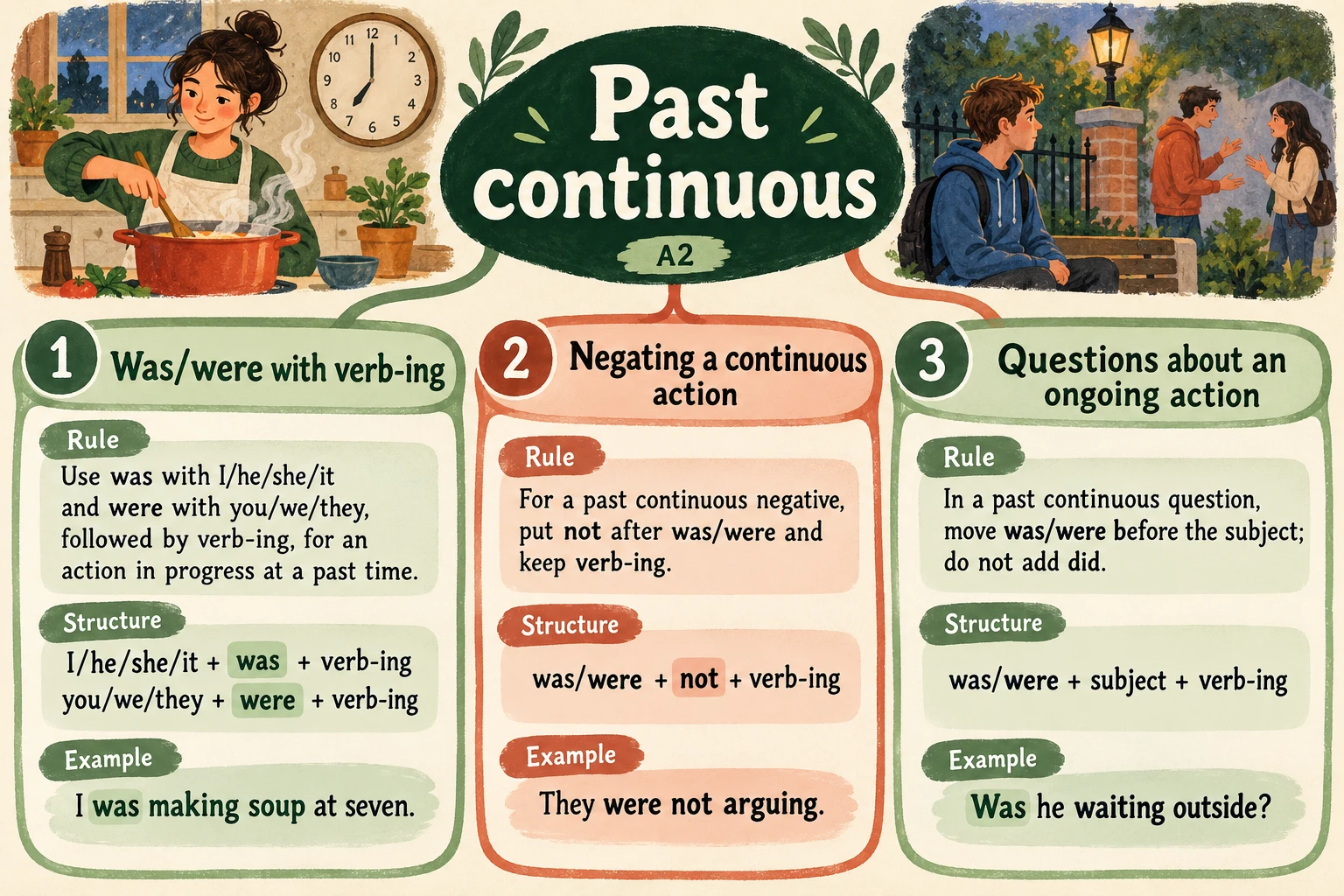
과거 진행 동작은 I/he/she/it에 was, you/we/they에 were를 쓰고 동사-ing를 붙입니다.
I was making soup at seven.
과거진행형 · A2. 과거 진행 동작은 I/he/she/it에 was, you/we/they에 were를 쓰고 동사-ing를 붙입니다.
짧은 상황에서 ‘과거진행형’을 연습합니다. 단서를 읽고 형태를 고르거나 쓴 뒤 이유를 확인하세요. 수준은 편집상 안내입니다.
과거 진행 동작은 I/he/she/it에 was, you/we/they에 were를 쓰고 동사-ing를 붙입니다.
I was making soup at seven.과거진행 부정은 was/were 뒤에 not을 두고 동사-ing를 유지합니다.
They were not arguing.과거진행 의문문은 was/were를 주어 앞에 두며 did를 넣지 않습니다.
Was he waiting outside?
At nine last night, I ___ a report. (write)
과거 진행 동작은 I/he/she/it에 was, you/we/they에 were를 쓰고 동사-ing를 붙입니다.
I was making soup at seven.과거진행 부정은 was/were 뒤에 not을 두고 동사-ing를 유지합니다.
They were not arguing.과거진행 의문문은 was/were를 주어 앞에 두며 did를 넣지 않습니다.
Was he waiting outside?첫 시도를 남기고 변화의 이유를 이해한 뒤 새로운 상황에서 확인해 보세요.
아직 복습 노트가 없어요. 짧은 워밍업부터 해보세요.
과거 진행 동작은 I/he/she/it에 was, you/we/they에 were를 쓰고 동사-ing를 붙입니다.
I was making soup at seven.과거진행 부정은 was/were 뒤에 not을 두고 동사-ing를 유지합니다.
They were not arguing.과거진행 의문문은 was/were를 주어 앞에 두며 did를 넣지 않습니다.
Was he waiting outside?정답을 열면 해당 문제에 도움 사용이 기록돼요.
At nine last night, I ___ a report. (write)
“At nine last night, I ___ a report. (write)”를 보세요. 과거 진행 동작은 I/he/she/it에 was, you/we/they에 were를 쓰고 동사-ing를 붙입니다. 완성 문장: “At nine last night, I was writing a report. (write)”.
At midnight we were awake. We ___. (not sleep)
“At midnight we were awake. We ___. (not sleep)”를 보세요. 과거진행 부정은 was/were 뒤에 not을 두고 동사-ing를 유지합니다. 완성 문장: “At midnight we were awake. We were not sleeping. (not sleep)”.
___ you working at six yesterday?
“___ you working at six yesterday?”를 보세요. 과거진행 의문문은 was/were를 주어 앞에 두며 did를 넣지 않습니다. 완성 문장: “Were you working at six yesterday?”.
At this time yesterday, the children ___ in the pool. (swim)
완성 예문: “At this time yesterday, the children were swimming in the pool. (swim)”. 과거 진행 동작은 I/he/she/it에 was, you/we/they에 were를 쓰고 동사-ing를 붙입니다.
The engine was off. The driver ___ at that moment. (not drive)
“The engine was off. The driver ___ at that moment. (not drive)”를 보세요. 과거진행 부정은 was/were 뒤에 not을 두고 동사-ing를 유지합니다. 완성 문장: “The engine was off. The driver was not driving at that moment. (not drive)”.
___ Mina studying when you called?
“___ Mina studying when you called?”를 보세요. 과거진행 의문문은 was/were를 주어 앞에 두며 did를 넣지 않습니다. 완성 문장: “Was Mina studying when you called?”.
At ten yesterday morning, Dad ___ the gate. (paint)
완성 예문: “At ten yesterday morning, Dad was painting the gate. (paint)”. 과거 진행 동작은 I/he/she/it에 was, you/we/they에 were를 쓰고 동사-ing를 붙입니다.
The birds ___ loudly at sunrise yesterday. (sing)
“The birds ___ loudly at sunrise yesterday. (sing)”를 보세요. 과거 진행 동작은 I/he/she/it에 was, you/we/they에 were를 쓰고 동사-ing를 붙입니다. 완성 문장: “The birds were singing loudly at sunrise yesterday. (sing)”.
At eight I was on the train. I ___ at home. (not sit)
“At eight I was on the train. I ___ at home. (not sit)”를 보세요. 과거진행 부정은 was/were 뒤에 not을 두고 동사-ing를 유지합니다. 완성 문장: “At eight I was on the train. I was not sitting at home. (not sit)”.
What ___ the guests eating when you arrived?
완성 예문: “What were the guests eating when you arrived?”. 과거진행 의문문은 was/were를 주어 앞에 두며 did를 넣지 않습니다.
The lights were off. They ___ in the office at nine. (not work)
“The lights were off. They ___ in the office at nine. (not work)”를 보세요. 과거진행 부정은 was/were 뒤에 not을 두고 동사-ing를 유지합니다. 완성 문장: “The lights were off. They were not working in the office at nine. (not work)”.
Where ___ your sister staying last week?
완성 예문: “Where was your sister staying last week?”. 과거진행 의문문은 was/were를 주어 앞에 두며 did를 넣지 않습니다.