01was/were مع ing
للفعل الجاري في وقت ماضٍ نستخدم was مع I/he/she/it وwere مع you/we/they ثم ing.
I was making soup at seven.
الماضي المستمر · A2. للفعل الجاري في وقت ماضٍ نستخدم was مع I/he/she/it وwere مع you/we/they ثم ing.
تدرّب على الماضي المستمر في مواقف قصيرة. اقرأ القرينة واختر الصيغة أو اكتبها، ثم راجع السبب. المستوى دليل تحريري تقريبي.
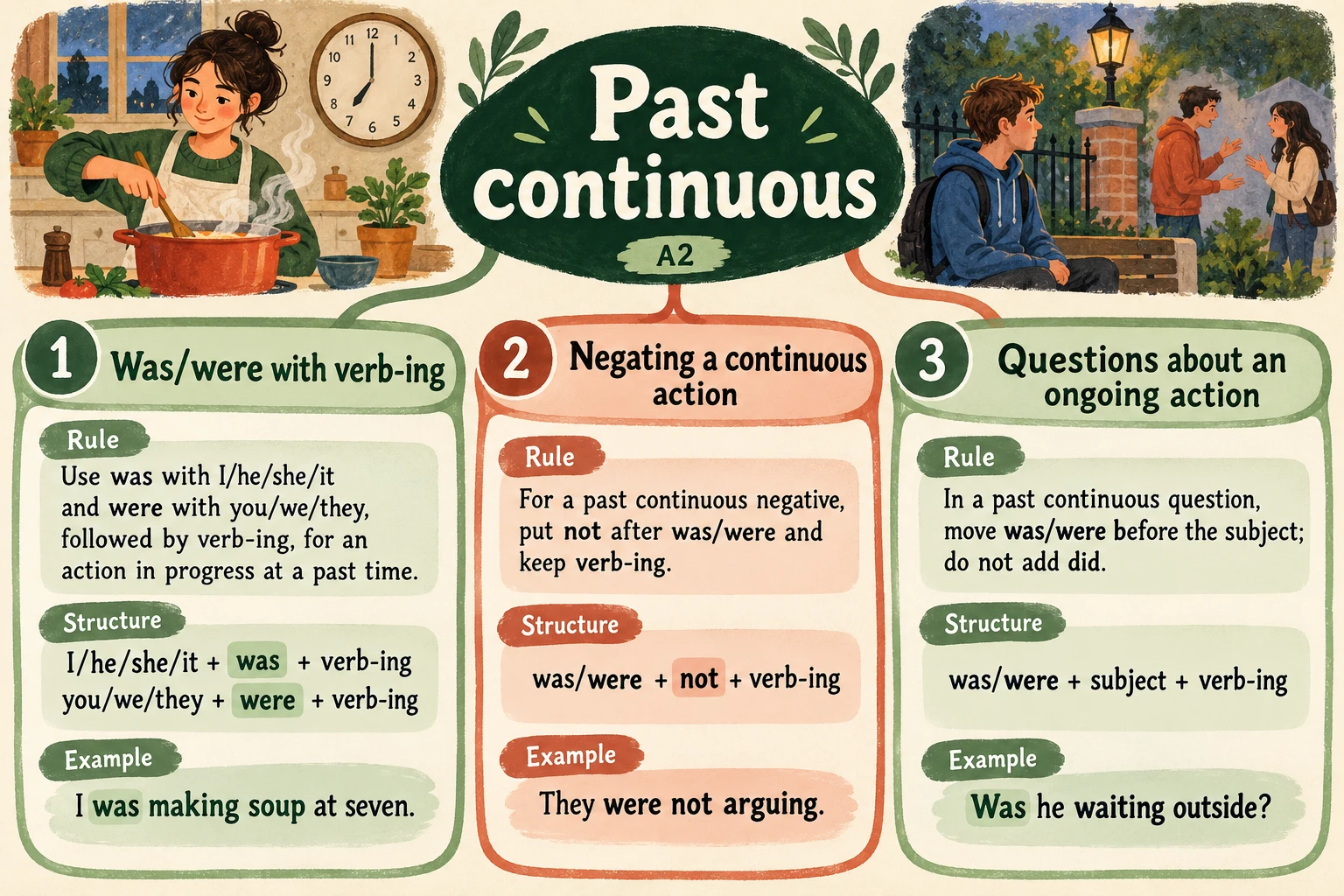
للفعل الجاري في وقت ماضٍ نستخدم was مع I/he/she/it وwere مع you/we/they ثم ing.
I was making soup at seven.في نفي الماضي المستمر نضع not بعد was/were ونحتفظ بـing.
They were not arguing.في سؤال الماضي المستمر نضع was/were قبل الفاعل دون did.
Was he waiting outside?
At nine last night, I ___ a report. (write)
للفعل الجاري في وقت ماضٍ نستخدم was مع I/he/she/it وwere مع you/we/they ثم ing.
I was making soup at seven.في نفي الماضي المستمر نضع not بعد was/were ونحتفظ بـing.
They were not arguing.في سؤال الماضي المستمر نضع was/were قبل الفاعل دون did.
Was he waiting outside?احتفظ بالمحاولة الأولى، وافهم التغيير، ثم اختبر فهمك في موقف جديد.
لا توجد ملاحظات بعد. جرّب تهيئة قصيرة.
للفعل الجاري في وقت ماضٍ نستخدم was مع I/he/she/it وwere مع you/we/they ثم ing.
I was making soup at seven.في نفي الماضي المستمر نضع not بعد was/were ونحتفظ بـing.
They were not arguing.في سؤال الماضي المستمر نضع was/were قبل الفاعل دون did.
Was he waiting outside?فتح إجابة يسجّل استخدام المساعدة لذلك السؤال.
At nine last night, I ___ a report. (write)
انظر إلى «At nine last night, I ___ a report. (write)». للفعل الجاري في وقت ماضٍ نستخدم was مع I/he/she/it وwere مع you/we/they ثم ing. الجملة المكتملة: «At nine last night, I was writing a report. (write)».
At midnight we were awake. We ___. (not sleep)
انظر إلى «At midnight we were awake. We ___. (not sleep)». في نفي الماضي المستمر نضع not بعد was/were ونحتفظ بـing. الجملة المكتملة: «At midnight we were awake. We were not sleeping. (not sleep)».
___ you working at six yesterday?
انظر إلى «___ you working at six yesterday?». في سؤال الماضي المستمر نضع was/were قبل الفاعل دون did. الجملة المكتملة: «Were you working at six yesterday?».
At this time yesterday, the children ___ in the pool. (swim)
إكمال مرجعي: «At this time yesterday, the children were swimming in the pool. (swim)». للفعل الجاري في وقت ماضٍ نستخدم was مع I/he/she/it وwere مع you/we/they ثم ing.
The engine was off. The driver ___ at that moment. (not drive)
انظر إلى «The engine was off. The driver ___ at that moment. (not drive)». في نفي الماضي المستمر نضع not بعد was/were ونحتفظ بـing. الجملة المكتملة: «The engine was off. The driver was not driving at that moment. (not drive)».
___ Mina studying when you called?
انظر إلى «___ Mina studying when you called?». في سؤال الماضي المستمر نضع was/were قبل الفاعل دون did. الجملة المكتملة: «Was Mina studying when you called?».
At ten yesterday morning, Dad ___ the gate. (paint)
إكمال مرجعي: «At ten yesterday morning, Dad was painting the gate. (paint)». للفعل الجاري في وقت ماضٍ نستخدم was مع I/he/she/it وwere مع you/we/they ثم ing.
The birds ___ loudly at sunrise yesterday. (sing)
انظر إلى «The birds ___ loudly at sunrise yesterday. (sing)». للفعل الجاري في وقت ماضٍ نستخدم was مع I/he/she/it وwere مع you/we/they ثم ing. الجملة المكتملة: «The birds were singing loudly at sunrise yesterday. (sing)».
At eight I was on the train. I ___ at home. (not sit)
انظر إلى «At eight I was on the train. I ___ at home. (not sit)». في نفي الماضي المستمر نضع not بعد was/were ونحتفظ بـing. الجملة المكتملة: «At eight I was on the train. I was not sitting at home. (not sit)».
What ___ the guests eating when you arrived?
إكمال مرجعي: «What were the guests eating when you arrived?». في سؤال الماضي المستمر نضع was/were قبل الفاعل دون did.
The lights were off. They ___ in the office at nine. (not work)
انظر إلى «The lights were off. They ___ in the office at nine. (not work)». في نفي الماضي المستمر نضع not بعد was/were ونحتفظ بـing. الجملة المكتملة: «The lights were off. They were not working in the office at nine. (not work)».
Where ___ your sister staying last week?
إكمال مرجعي: «Where was your sister staying last week?». في سؤال الماضي المستمر نضع was/were قبل الفاعل دون did.