01Was/were con verbo-ing
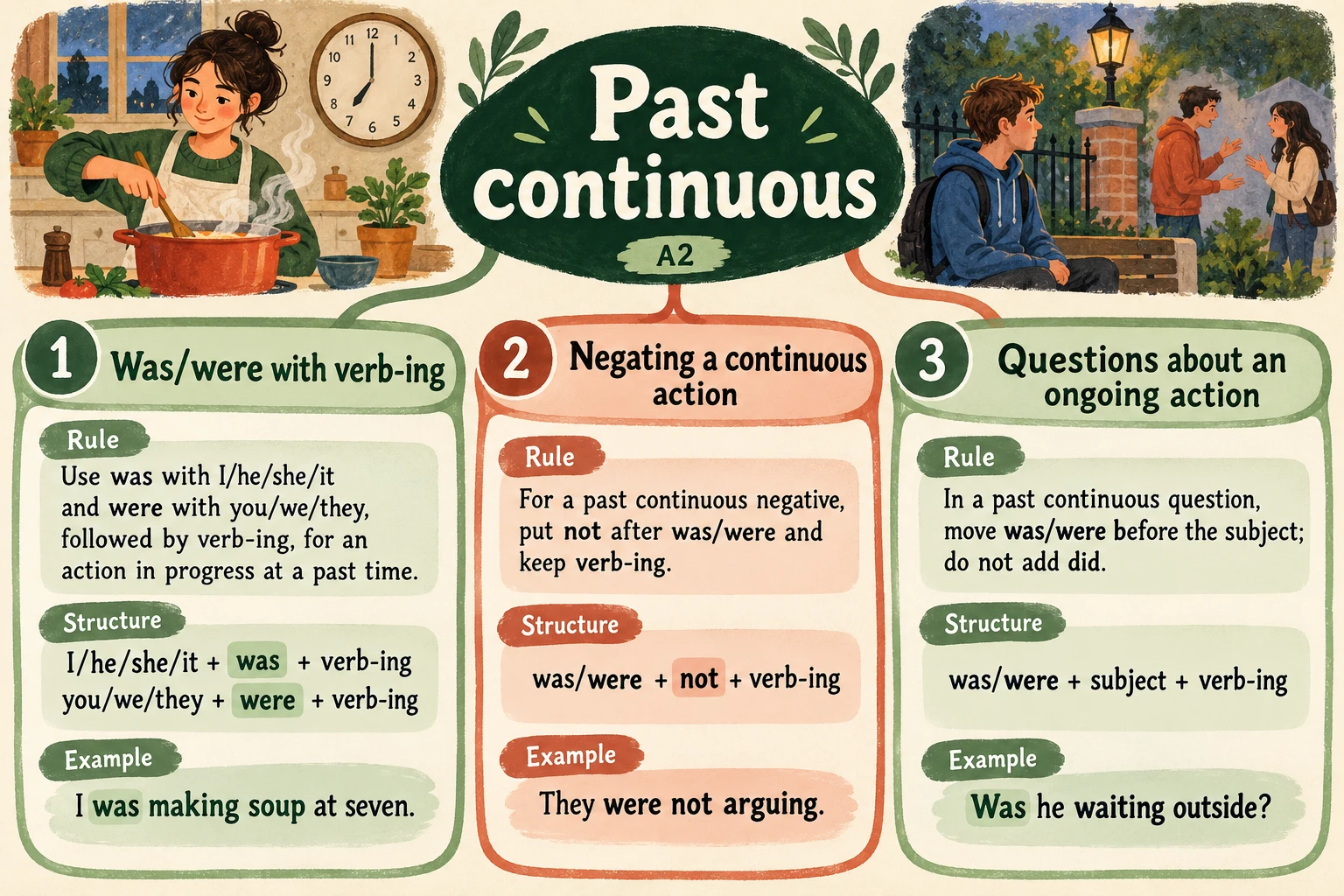
Para acciones en curso en el pasado usa was con I/he/she/it y were con you/we/they, seguido de verbo-ing.
I was making soup at seven.
Pasado continuo · A2. Para acciones en curso en el pasado usa was con I/he/she/it y were con you/we/they, seguido de verbo-ing.
Practica Pasado continuo en situaciones breves. Lee la pista, elige o escribe una forma y revisa la explicación. El nivel es una orientación editorial.
Para acciones en curso en el pasado usa was con I/he/she/it y were con you/we/they, seguido de verbo-ing.
I was making soup at seven.Para negar el pasado continuo coloca not tras was/were y conserva verbo-ing.
They were not arguing.En preguntas del pasado continuo, was/were va antes del sujeto; no añadas did.
Was he waiting outside?
At nine last night, I ___ a report. (write)
Para acciones en curso en el pasado usa was con I/he/she/it y were con you/we/they, seguido de verbo-ing.
I was making soup at seven.Para negar el pasado continuo coloca not tras was/were y conserva verbo-ing.
They were not arguing.En preguntas del pasado continuo, was/were va antes del sujeto; no añadas did.
Was he waiting outside?Conserva el primer intento, entiende el cambio y compruébalo en otra situación.
Aún no hay repasos. Prueba un calentamiento corto.
Para acciones en curso en el pasado usa was con I/he/she/it y were con you/we/they, seguido de verbo-ing.
I was making soup at seven.Para negar el pasado continuo coloca not tras was/were y conserva verbo-ing.
They were not arguing.En preguntas del pasado continuo, was/were va antes del sujeto; no añadas did.
Was he waiting outside?Abrir una respuesta registra ayuda para esa pregunta.
At nine last night, I ___ a report. (write)
Mira «At nine last night, I ___ a report. (write)». Para acciones en curso en el pasado usa was con I/he/she/it y were con you/we/they, seguido de verbo-ing. Oración completa: «At nine last night, I was writing a report. (write)».
At midnight we were awake. We ___. (not sleep)
Mira «At midnight we were awake. We ___. (not sleep)». Para negar el pasado continuo coloca not tras was/were y conserva verbo-ing. Oración completa: «At midnight we were awake. We were not sleeping. (not sleep)».
___ you working at six yesterday?
Mira «___ you working at six yesterday?». En preguntas del pasado continuo, was/were va antes del sujeto; no añadas did. Oración completa: «Were you working at six yesterday?».
At this time yesterday, the children ___ in the pool. (swim)
Oración de referencia: «At this time yesterday, the children were swimming in the pool. (swim)». Para acciones en curso en el pasado usa was con I/he/she/it y were con you/we/they, seguido de verbo-ing.
The engine was off. The driver ___ at that moment. (not drive)
Mira «The engine was off. The driver ___ at that moment. (not drive)». Para negar el pasado continuo coloca not tras was/were y conserva verbo-ing. Oración completa: «The engine was off. The driver was not driving at that moment. (not drive)».
___ Mina studying when you called?
Mira «___ Mina studying when you called?». En preguntas del pasado continuo, was/were va antes del sujeto; no añadas did. Oración completa: «Was Mina studying when you called?».
At ten yesterday morning, Dad ___ the gate. (paint)
Oración de referencia: «At ten yesterday morning, Dad was painting the gate. (paint)». Para acciones en curso en el pasado usa was con I/he/she/it y were con you/we/they, seguido de verbo-ing.
The birds ___ loudly at sunrise yesterday. (sing)
Mira «The birds ___ loudly at sunrise yesterday. (sing)». Para acciones en curso en el pasado usa was con I/he/she/it y were con you/we/they, seguido de verbo-ing. Oración completa: «The birds were singing loudly at sunrise yesterday. (sing)».
At eight I was on the train. I ___ at home. (not sit)
Mira «At eight I was on the train. I ___ at home. (not sit)». Para negar el pasado continuo coloca not tras was/were y conserva verbo-ing. Oración completa: «At eight I was on the train. I was not sitting at home. (not sit)».
What ___ the guests eating when you arrived?
Oración de referencia: «What were the guests eating when you arrived?». En preguntas del pasado continuo, was/were va antes del sujeto; no añadas did.
The lights were off. They ___ in the office at nine. (not work)
Mira «The lights were off. They ___ in the office at nine. (not work)». Para negar el pasado continuo coloca not tras was/were y conserva verbo-ing. Oración completa: «The lights were off. They were not working in the office at nine. (not work)».
Where ___ your sister staying last week?
Oración de referencia: «Where was your sister staying last week?». En preguntas del pasado continuo, was/were va antes del sujeto; no añadas did.