01going to의 사전 계획
미리 정한 계획은 am/is/are going to+원형이며 be를 주어에 맞춥니다.
I am going to learn chess.
going to 미래표현 · A2. 미리 정한 계획은 am/is/are going to+원형이며 be를 주어에 맞춥니다.
짧은 상황에서 ‘going to 미래표현’을 연습합니다. 단서를 읽고 형태를 고르거나 쓴 뒤 이유를 확인하세요. 수준은 편집상 안내입니다.
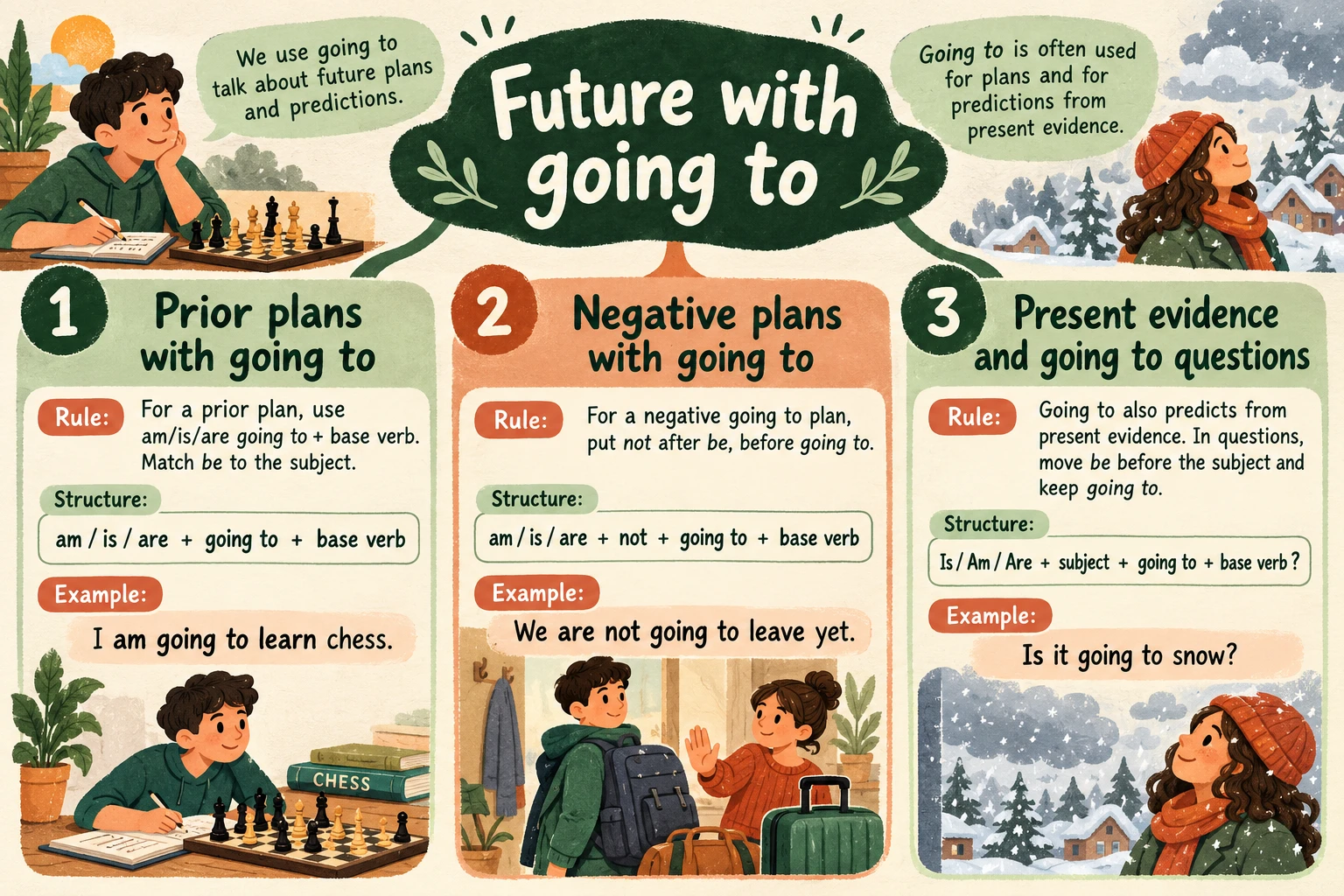
미리 정한 계획은 am/is/are going to+원형이며 be를 주어에 맞춥니다.
I am going to learn chess.계획의 부정은 be 뒤, going to 앞에 not을 둡니다.
We are not going to leave yet.going to는 현재 증거를 바탕으로 한 예측에도 씁니다. 질문에서는 be를 주어 앞에 둡니다.
Is it going to snow?
We have decided to move. We ___ going to rent a bigger flat.
미리 정한 계획은 am/is/are going to+원형이며 be를 주어에 맞춥니다.
I am going to learn chess.계획의 부정은 be 뒤, going to 앞에 not을 둡니다.
We are not going to leave yet.going to는 현재 증거를 바탕으로 한 예측에도 씁니다. 질문에서는 be를 주어 앞에 둡니다.
Is it going to snow?첫 시도를 남기고 변화의 이유를 이해한 뒤 새로운 상황에서 확인해 보세요.
아직 복습 노트가 없어요. 짧은 워밍업부터 해보세요.
미리 정한 계획은 am/is/are going to+원형이며 be를 주어에 맞춥니다.
I am going to learn chess.계획의 부정은 be 뒤, going to 앞에 not을 둡니다.
We are not going to leave yet.going to는 현재 증거를 바탕으로 한 예측에도 씁니다. 질문에서는 be를 주어 앞에 둡니다.
Is it going to snow?정답을 열면 해당 문제에 도움 사용이 기록돼요.
We have decided to move. We ___ going to rent a bigger flat.
“We have decided to move. We ___ going to rent a bigger flat.”를 보세요. 미리 정한 계획은 am/is/are going to+원형이며 be를 주어에 맞춥니다. 완성 문장: “We have decided to move. We are going to rent a bigger flat.”.
He has cancelled the trip. He ___ going to travel tomorrow.
“He has cancelled the trip. He ___ going to travel tomorrow.”를 보세요. 계획의 부정은 be 뒤, going to 앞에 not을 둡니다. 완성 문장: “He has cancelled the trip. He is not going to travel tomorrow.”.
Look at that loose glass! It is going to ___. (fall)
“Look at that loose glass! It is going to ___. (fall)”를 보세요. going to는 현재 증거를 바탕으로 한 예측에도 씁니다. 질문에서는 be를 주어 앞에 둡니다. 완성 문장: “Look at that loose glass! It is going to fall. (fall)”.
I have saved for a course. I ___ going to study design.
완성 예문: “I have saved for a course. I am going to study design.”. 미리 정한 계획은 am/is/are going to+원형이며 be를 주어에 맞춥니다. 이 문제에서는 다음 표현도 확인된 답으로 인정합니다: 'm. 가능한 모든 영어 표현의 목록은 아닙니다.
We have other plans. We ___ going to join the tour.
“We have other plans. We ___ going to join the tour.”를 보세요. 계획의 부정은 be 뒤, going to 앞에 not을 둡니다. 완성 문장: “We have other plans. We are not going to join the tour.”.
___ Nina going to take the early train?
“___ Nina going to take the early train?”를 보세요. going to는 현재 증거를 바탕으로 한 예측에도 씁니다. 질문에서는 be를 주어 앞에 둡니다. 완성 문장: “Is Nina going to take the early train?”.
My brother has chosen a recipe. He ___ going to bake a cake.
완성 예문: “My brother has chosen a recipe. He is going to bake a cake.”. 미리 정한 계획은 am/is/are going to+원형이며 be를 주어에 맞춥니다. 이 문제에서는 다음 표현도 확인된 답으로 인정합니다: 's. 가능한 모든 영어 표현의 목록은 아닙니다.
The neighbours have bought paint. They ___ going to paint the fence.
“The neighbours have bought paint. They ___ going to paint the fence.”를 보세요. 미리 정한 계획은 am/is/are going to+원형이며 be를 주어에 맞춥니다. 완성 문장: “The neighbours have bought paint. They are going to paint the fence.”.
I have decided to keep my car. I ___ going to sell it.
“I have decided to keep my car. I ___ going to sell it.”를 보세요. 계획의 부정은 be 뒤, going to 앞에 not을 둡니다. 완성 문장: “I have decided to keep my car. I am not going to sell it.”.
___ your friends going to stay at a hotel?
완성 예문: “Are your friends going to stay at a hotel?”. going to는 현재 증거를 바탕으로 한 예측에도 씁니다. 질문에서는 be를 주어 앞에 둡니다.
The tickets cost too much. She ___ going to buy them.
“The tickets cost too much. She ___ going to buy them.”를 보세요. 계획의 부정은 be 뒤, going to 앞에 not을 둡니다. 완성 문장: “The tickets cost too much. She is not going to buy them.”.
Watch out! Those boxes are going to ___. (fall)
완성 예문: “Watch out! Those boxes are going to fall. (fall)”. going to는 현재 증거를 바탕으로 한 예측에도 씁니다. 질문에서는 be를 주어 앞에 둡니다.