01예측·약속·결정
예측·약속·즉석 결정은 will+원형이며 주어에 따라 will이 바뀌지 않습니다.
I will call you tonight.
will 미래표현 · A2. 예측·약속·즉석 결정은 will+원형이며 주어에 따라 will이 바뀌지 않습니다.
짧은 상황에서 ‘will 미래표현’을 연습합니다. 단서를 읽고 형태를 고르거나 쓴 뒤 이유를 확인하세요. 수준은 편집상 안내입니다.
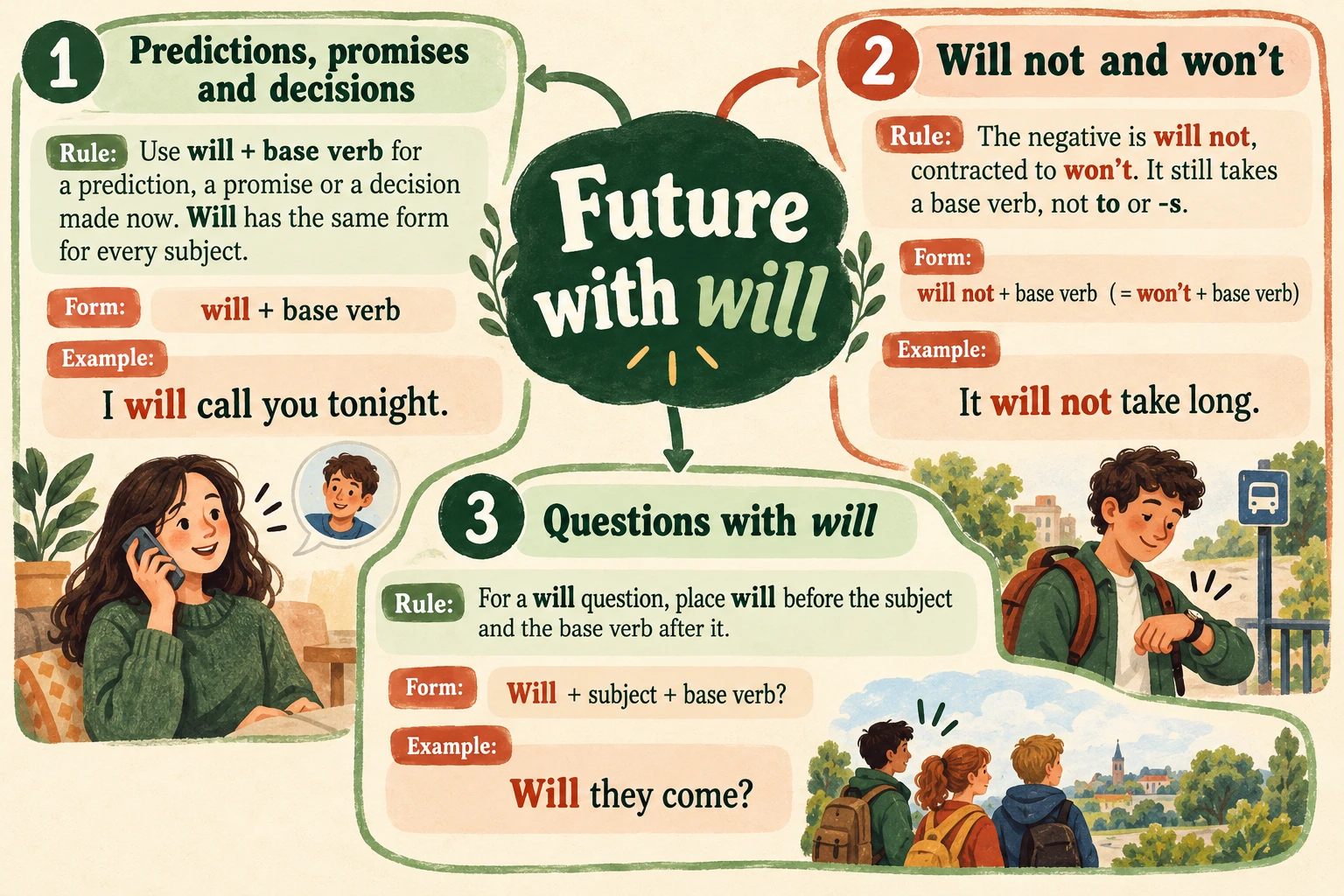
예측·약속·즉석 결정은 will+원형이며 주어에 따라 will이 바뀌지 않습니다.
I will call you tonight.부정형은 will not, 줄이면 won’t입니다. 뒤에는 to나 -s 없는 원형을 씁니다.
It will not take long.will 의문문은 will을 주어 앞, 동사원형을 주어 뒤에 둡니다.
Will they come?
The phone is ringing. I ___ it now. (answer; use will)
예측·약속·즉석 결정은 will+원형이며 주어에 따라 will이 바뀌지 않습니다.
I will call you tonight.부정형은 will not, 줄이면 won’t입니다. 뒤에는 to나 -s 없는 원형을 씁니다.
It will not take long.will 의문문은 will을 주어 앞, 동사원형을 주어 뒤에 둡니다.
Will they come?첫 시도를 남기고 변화의 이유를 이해한 뒤 새로운 상황에서 확인해 보세요.
아직 복습 노트가 없어요. 짧은 워밍업부터 해보세요.
예측·약속·즉석 결정은 will+원형이며 주어에 따라 will이 바뀌지 않습니다.
I will call you tonight.부정형은 will not, 줄이면 won’t입니다. 뒤에는 to나 -s 없는 원형을 씁니다.
It will not take long.will 의문문은 will을 주어 앞, 동사원형을 주어 뒤에 둡니다.
Will they come?정답을 열면 해당 문제에 도움 사용이 기록돼요.
The phone is ringing. I ___ it now. (answer; use will)
“The phone is ringing. I ___ it now. (answer; use will)”를 보세요. 예측·약속·즉석 결정은 will+원형이며 주어에 따라 will이 바뀌지 않습니다. 완성 문장: “The phone is ringing. I will answer it now. (answer; use will)”.
I promise I ___ forget your birthday. (negative will)
“I promise I ___ forget your birthday. (negative will)”를 보세요. 부정형은 will not, 줄이면 won’t입니다. 뒤에는 to나 -s 없는 원형을 씁니다. 완성 문장: “I promise I will not forget your birthday. (negative will)”.
___ you help me with this box? (use will)
“___ you help me with this box? (use will)”를 보세요. will 의문문은 will을 주어 앞, 동사원형을 주어 뒤에 둡니다. 완성 문장: “Will you help me with this box? (use will)”.
I think the new café ___ popular. (be; use will)
완성 예문: “I think the new café will be popular. (be; use will)”. 예측·약속·즉석 결정은 will+원형이며 주어에 따라 will이 바뀌지 않습니다.
The shop is closed tomorrow, so it ___ open. (negative will)
“The shop is closed tomorrow, so it ___ open. (negative will)”를 보세요. 부정형은 will not, 줄이면 won’t입니다. 뒤에는 to나 -s 없는 원형을 씁니다. 완성 문장: “The shop is closed tomorrow, so it will not open. (negative will)”.
Will the parcel ___ tomorrow? (arrive)
“Will the parcel ___ tomorrow? (arrive)”를 보세요. will 의문문은 will을 주어 앞, 동사원형을 주어 뒤에 둡니다. 완성 문장: “Will the parcel arrive tomorrow? (arrive)”.
I promise I ___ the door. (lock; use will)
완성 예문: “I promise I will lock the door. (lock; use will)”. 예측·약속·즉석 결정은 will+원형이며 주어에 따라 will이 바뀌지 않습니다. 이 문제에서는 다음 표현도 확인된 답으로 인정합니다: 'll lock. 가능한 모든 영어 표현의 목록은 아닙니다.
That bag looks heavy. I ___ it for you. (carry; use will)
“That bag looks heavy. I ___ it for you. (carry; use will)”를 보세요. 예측·약속·즉석 결정은 will+원형이며 주어에 따라 will이 바뀌지 않습니다. 완성 문장: “That bag looks heavy. I will carry it for you. (carry; use will)”.
We have decided to refuse. We ___ accept the offer. (negative will)
“We have decided to refuse. We ___ accept the offer. (negative will)”를 보세요. 부정형은 will not, 줄이면 won’t입니다. 뒤에는 to나 -s 없는 원형을 씁니다. 완성 문장: “We have decided to refuse. We will not accept the offer. (negative will)”.
Where ___ they wait for us? (use will)
완성 예문: “Where will they wait for us? (use will)”. will 의문문은 will을 주어 앞, 동사원형을 주어 뒤에 둡니다.
He promises he ___ tell anyone the secret. (negative will)
“He promises he ___ tell anyone the secret. (negative will)”를 보세요. 부정형은 will not, 줄이면 won’t입니다. 뒤에는 to나 -s 없는 원형을 씁니다. 완성 문장: “He promises he will not tell anyone the secret. (negative will)”.
Will your sister ___ us at the station? (meet)
완성 예문: “Will your sister meet us at the station? (meet)”. will 의문문은 will을 주어 앞, 동사원형을 주어 뒤에 둡니다.