01have to의 의무
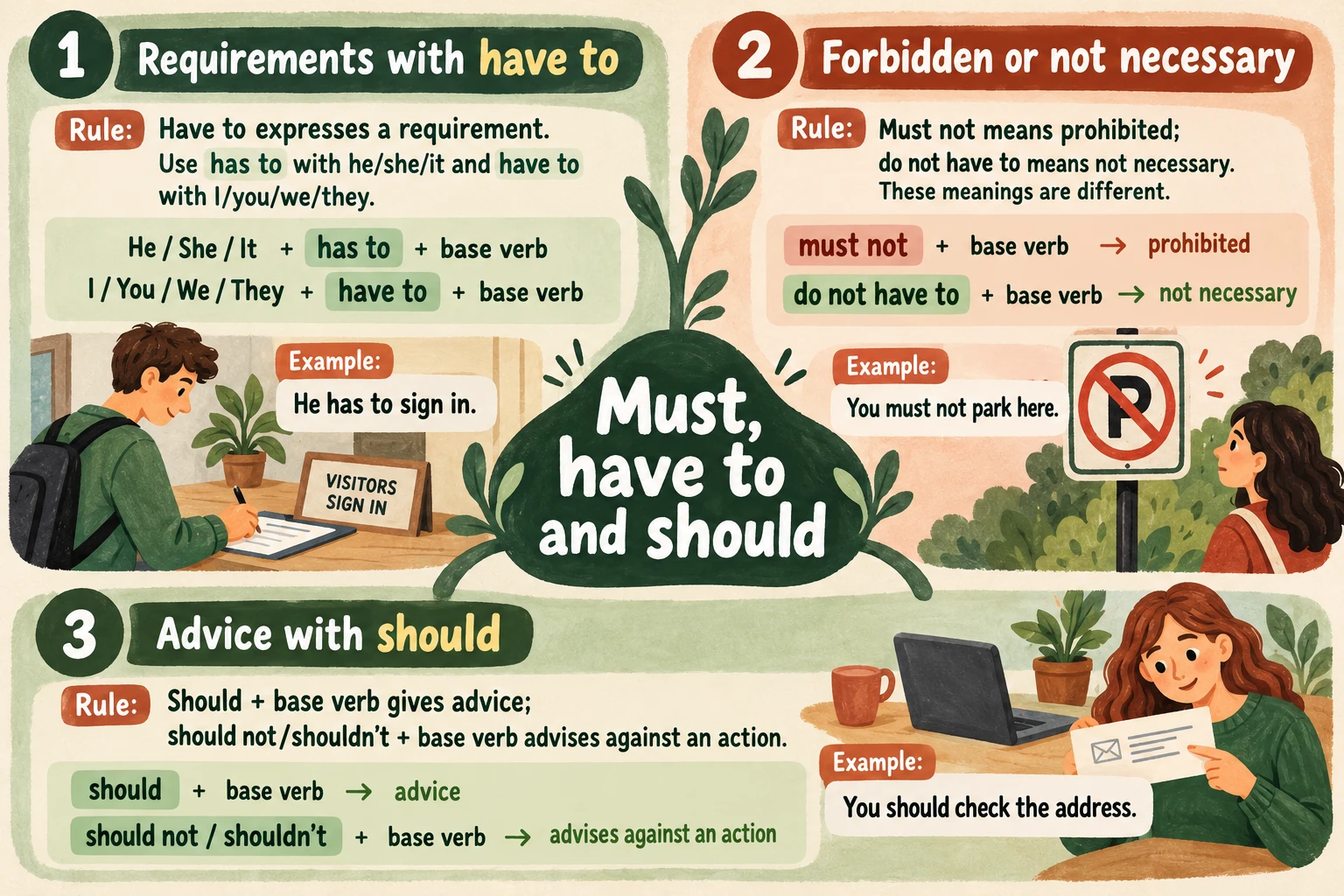
의무를 나타내는 have to는 he/she/it에서 has to, 나머지는 have to입니다.
He has to sign in.
must·have to·should · A2. 의무를 나타내는 have to는 he/she/it에서 has to, 나머지는 have to입니다.
짧은 상황에서 ‘must·have to·should’을 연습합니다. 단서를 읽고 형태를 고르거나 쓴 뒤 이유를 확인하세요. 수준은 편집상 안내입니다.
의무를 나타내는 have to는 he/she/it에서 has to, 나머지는 have to입니다.
He has to sign in.must not은 금지, do not have to는 불필요이며 뜻이 다릅니다.
You must not park here.should+원형은 조언, should not/shouldn’t+원형은 하지 말라는 조언입니다.
You should check the address.
The rule says all staff have to wear badges. Nina ___ to wear one too.
의무를 나타내는 have to는 he/she/it에서 has to, 나머지는 have to입니다.
He has to sign in.must not은 금지, do not have to는 불필요이며 뜻이 다릅니다.
You must not park here.should+원형은 조언, should not/shouldn’t+원형은 하지 말라는 조언입니다.
You should check the address.첫 시도를 남기고 변화의 이유를 이해한 뒤 새로운 상황에서 확인해 보세요.
아직 복습 노트가 없어요. 짧은 워밍업부터 해보세요.
의무를 나타내는 have to는 he/she/it에서 has to, 나머지는 have to입니다.
He has to sign in.must not은 금지, do not have to는 불필요이며 뜻이 다릅니다.
You must not park here.should+원형은 조언, should not/shouldn’t+원형은 하지 말라는 조언입니다.
You should check the address.정답을 열면 해당 문제에 도움 사용이 기록돼요.
The rule says all staff have to wear badges. Nina ___ to wear one too.
“The rule says all staff have to wear badges. Nina ___ to wear one too.”를 보세요. 의무를 나타내는 have to는 he/she/it에서 has to, 나머지는 have to입니다. 완성 문장: “The rule says all staff have to wear badges. Nina has to wear one too.”.
It is optional to bring lunch. You ___ bring it.
“It is optional to bring lunch. You ___ bring it.”를 보세요. must not은 금지, do not have to는 불필요이며 뜻이 다릅니다. 완성 문장: “It is optional to bring lunch. You do not have to bring it.”.
My advice is to rest. You should ___ a break. (take)
“My advice is to rest. You should ___ a break. (take)”를 보세요. should+원형은 조언, should not/shouldn’t+원형은 하지 말라는 조언입니다. 완성 문장: “My advice is to rest. You should take a break. (take)”.
I ___ to show my ticket before entering. (have)
완성 예문: “I have to show my ticket before entering. (have)”. 의무를 나타내는 have to는 he/she/it에서 has to, 나머지는 have to입니다.
The sign says entry is forbidden. You ___ enter.
“The sign says entry is forbidden. You ___ enter.”를 보세요. must not은 금지, do not have to는 불필요이며 뜻이 다릅니다. 완성 문장: “The sign says entry is forbidden. You must not enter.”.
For safety, you should not ___ while driving. (text)
“For safety, you should not ___ while driving. (text)”를 보세요. should+원형은 조언, should not/shouldn’t+원형은 하지 말라는 조언입니다. 완성 문장: “For safety, you should not text while driving. (text)”.
Each player ___ to arrive by eight. (have)
완성 예문: “Each player has to arrive by eight. (have)”. 의무를 나타내는 have to는 he/she/it에서 has to, 나머지는 have to입니다.
The children ___ to wait for a teacher. (have)
“The children ___ to wait for a teacher. (have)”를 보세요. 의무를 나타내는 have to는 he/she/it에서 has to, 나머지는 have to입니다. 완성 문장: “The children have to wait for a teacher. (have)”.
The museum is free today. You ___ pay.
“The museum is free today. You ___ pay.”를 보세요. must not은 금지, do not have to는 불필요이며 뜻이 다릅니다. 완성 문장: “The museum is free today. You do not have to pay.”.
If you want better sleep, you should ___ less coffee. (drink)
완성 예문: “If you want better sleep, you should drink less coffee. (drink)”. should+원형은 조언, should not/shouldn’t+원형은 하지 말라는 조언입니다.
Touching the cable is prohibited. You ___ touch it.
“Touching the cable is prohibited. You ___ touch it.”를 보세요. must not은 금지, do not have to는 불필요이며 뜻이 다릅니다. 완성 문장: “Touching the cable is prohibited. You must not touch it.”.
You look ill. You should ___ a doctor. (see)
완성 예문: “You look ill. You should see a doctor. (see)”. should+원형은 조언, should not/shouldn’t+원형은 하지 말라는 조언입니다.