01الإلزام باستخدام have to
للإلزام نستخدم has to مع he/she/it وhave to مع I/you/we/they.
He has to sign in.
must وhave to وshould · A2. للإلزام نستخدم has to مع he/she/it وhave to مع I/you/we/they.
تدرّب على must وhave to وshould في مواقف قصيرة. اقرأ القرينة واختر الصيغة أو اكتبها، ثم راجع السبب. المستوى دليل تحريري تقريبي.
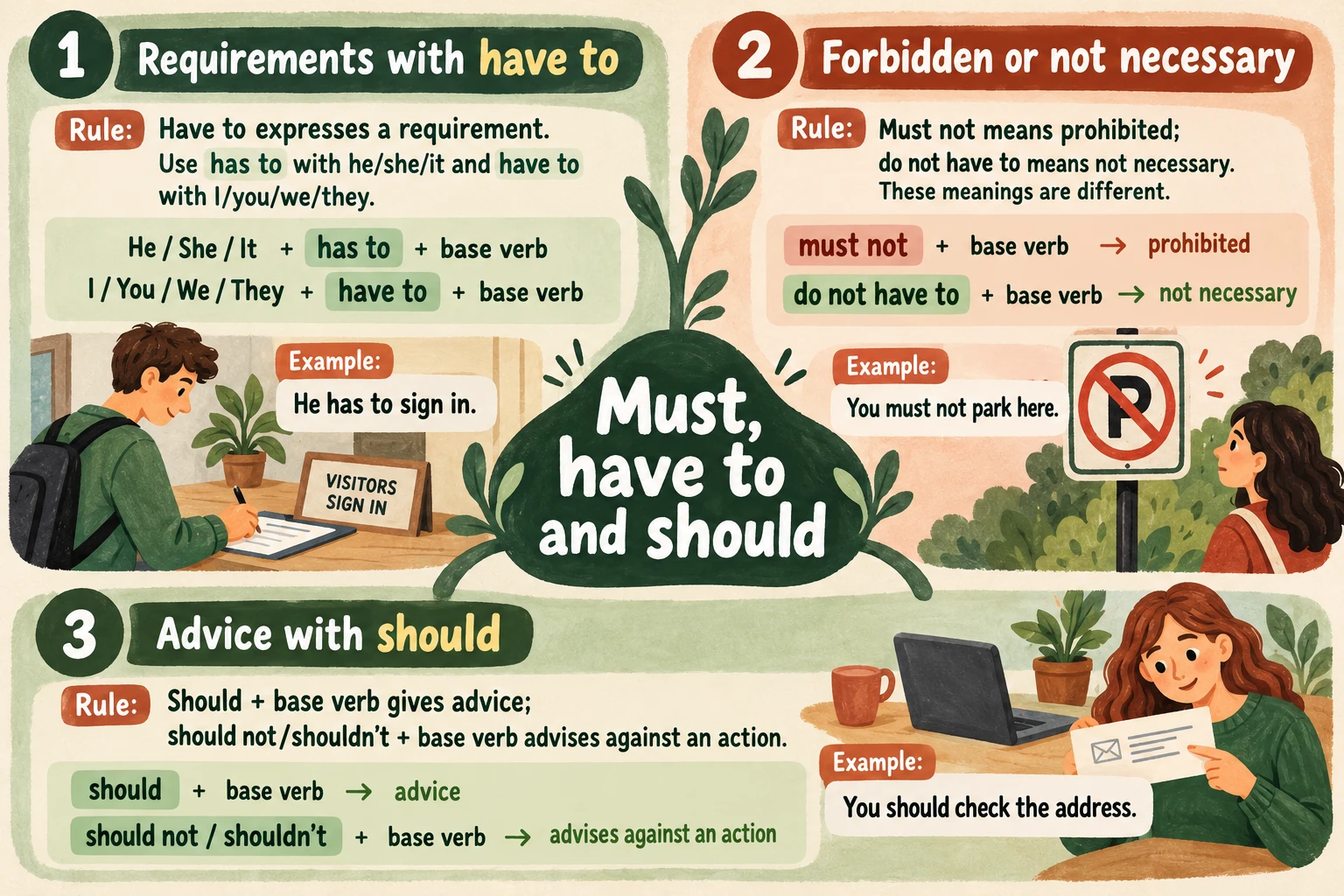
للإلزام نستخدم has to مع he/she/it وhave to مع I/you/we/they.
He has to sign in.تعني must not المنع، أما do not have to فتعني عدم الضرورة، وهما مختلفتان.
You must not park here.تعطي should مع الفعل الأساسي نصيحة، وshould not أوshouldn’t تنصح بعدم الفعل.
You should check the address.
The rule says all staff have to wear badges. Nina ___ to wear one too.
للإلزام نستخدم has to مع he/she/it وhave to مع I/you/we/they.
He has to sign in.تعني must not المنع، أما do not have to فتعني عدم الضرورة، وهما مختلفتان.
You must not park here.تعطي should مع الفعل الأساسي نصيحة، وshould not أوshouldn’t تنصح بعدم الفعل.
You should check the address.احتفظ بالمحاولة الأولى، وافهم التغيير، ثم اختبر فهمك في موقف جديد.
لا توجد ملاحظات بعد. جرّب تهيئة قصيرة.
للإلزام نستخدم has to مع he/she/it وhave to مع I/you/we/they.
He has to sign in.تعني must not المنع، أما do not have to فتعني عدم الضرورة، وهما مختلفتان.
You must not park here.تعطي should مع الفعل الأساسي نصيحة، وshould not أوshouldn’t تنصح بعدم الفعل.
You should check the address.فتح إجابة يسجّل استخدام المساعدة لذلك السؤال.
The rule says all staff have to wear badges. Nina ___ to wear one too.
انظر إلى «The rule says all staff have to wear badges. Nina ___ to wear one too.». للإلزام نستخدم has to مع he/she/it وhave to مع I/you/we/they. الجملة المكتملة: «The rule says all staff have to wear badges. Nina has to wear one too.».
It is optional to bring lunch. You ___ bring it.
انظر إلى «It is optional to bring lunch. You ___ bring it.». تعني must not المنع، أما do not have to فتعني عدم الضرورة، وهما مختلفتان. الجملة المكتملة: «It is optional to bring lunch. You do not have to bring it.».
My advice is to rest. You should ___ a break. (take)
انظر إلى «My advice is to rest. You should ___ a break. (take)». تعطي should مع الفعل الأساسي نصيحة، وshould not أوshouldn’t تنصح بعدم الفعل. الجملة المكتملة: «My advice is to rest. You should take a break. (take)».
I ___ to show my ticket before entering. (have)
إكمال مرجعي: «I have to show my ticket before entering. (have)». للإلزام نستخدم has to مع he/she/it وhave to مع I/you/we/they.
The sign says entry is forbidden. You ___ enter.
انظر إلى «The sign says entry is forbidden. You ___ enter.». تعني must not المنع، أما do not have to فتعني عدم الضرورة، وهما مختلفتان. الجملة المكتملة: «The sign says entry is forbidden. You must not enter.».
For safety, you should not ___ while driving. (text)
انظر إلى «For safety, you should not ___ while driving. (text)». تعطي should مع الفعل الأساسي نصيحة، وshould not أوshouldn’t تنصح بعدم الفعل. الجملة المكتملة: «For safety, you should not text while driving. (text)».
Each player ___ to arrive by eight. (have)
إكمال مرجعي: «Each player has to arrive by eight. (have)». للإلزام نستخدم has to مع he/she/it وhave to مع I/you/we/they.
The children ___ to wait for a teacher. (have)
انظر إلى «The children ___ to wait for a teacher. (have)». للإلزام نستخدم has to مع he/she/it وhave to مع I/you/we/they. الجملة المكتملة: «The children have to wait for a teacher. (have)».
The museum is free today. You ___ pay.
انظر إلى «The museum is free today. You ___ pay.». تعني must not المنع، أما do not have to فتعني عدم الضرورة، وهما مختلفتان. الجملة المكتملة: «The museum is free today. You do not have to pay.».
If you want better sleep, you should ___ less coffee. (drink)
إكمال مرجعي: «If you want better sleep, you should drink less coffee. (drink)». تعطي should مع الفعل الأساسي نصيحة، وshould not أوshouldn’t تنصح بعدم الفعل.
Touching the cable is prohibited. You ___ touch it.
انظر إلى «Touching the cable is prohibited. You ___ touch it.». تعني must not المنع، أما do not have to فتعني عدم الضرورة، وهما مختلفتان. الجملة المكتملة: «Touching the cable is prohibited. You must not touch it.».
You look ill. You should ___ a doctor. (see)
إكمال مرجعي: «You look ill. You should see a doctor. (see)». تعطي should مع الفعل الأساسي نصيحة، وshould not أوshouldn’t تنصح بعدم الفعل.