01Obligaciones con have to
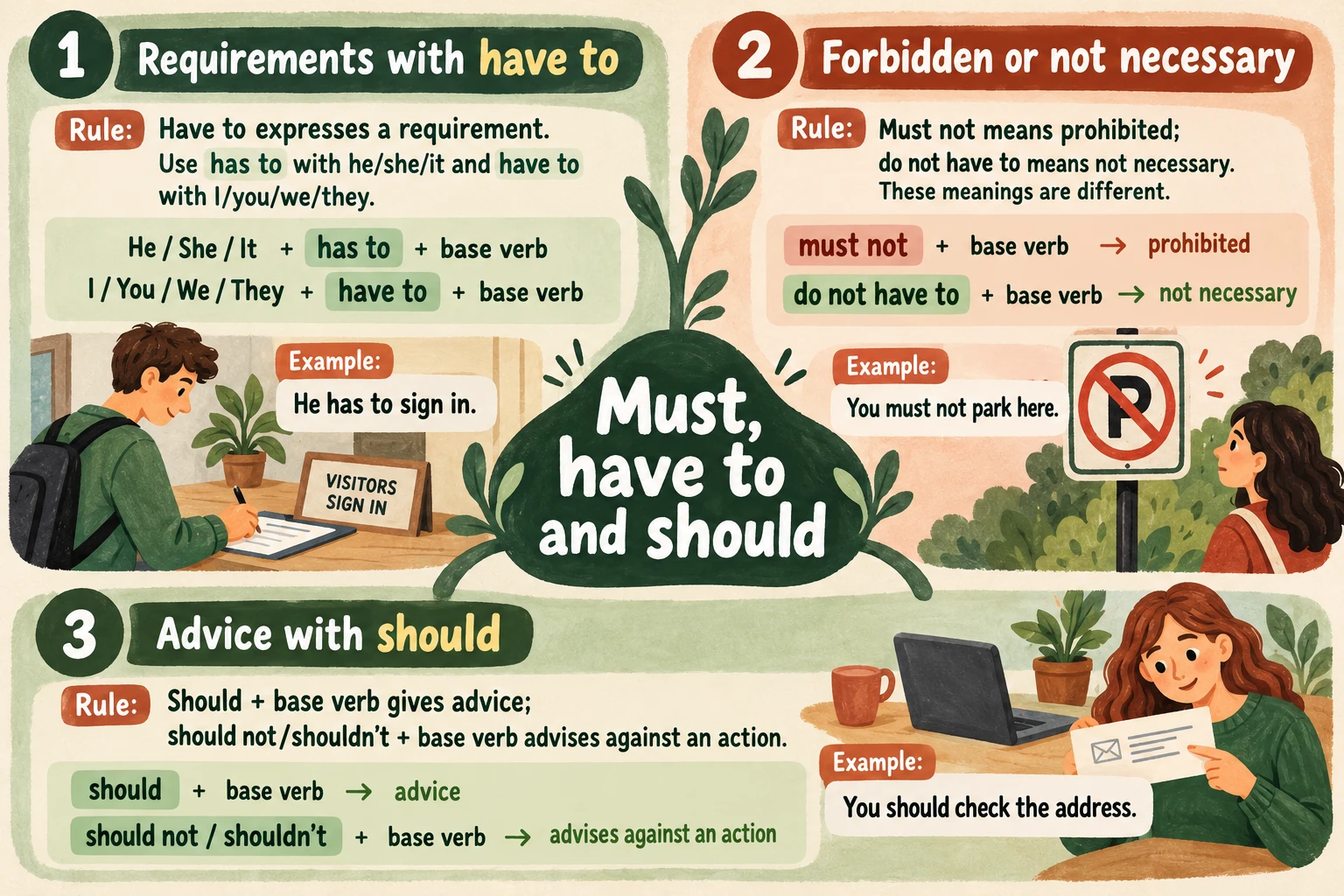
Have to expresa obligación: has to con he/she/it y have to con I/you/we/they.
He has to sign in.
Must, have to y should · A2. Have to expresa obligación: has to con he/she/it y have to con I/you/we/they.
Practica Must, have to y should en situaciones breves. Lee la pista, elige o escribe una forma y revisa la explicación. El nivel es una orientación editorial.
Have to expresa obligación: has to con he/she/it y have to con I/you/we/they.
He has to sign in.Must not significa prohibido; do not have to significa que no es necesario. Son sentidos distintos.
You must not park here.Should + verbo base da consejo; should not/shouldn’t + verbo base desaconseja una acción.
You should check the address.
The rule says all staff have to wear badges. Nina ___ to wear one too.
Have to expresa obligación: has to con he/she/it y have to con I/you/we/they.
He has to sign in.Must not significa prohibido; do not have to significa que no es necesario. Son sentidos distintos.
You must not park here.Should + verbo base da consejo; should not/shouldn’t + verbo base desaconseja una acción.
You should check the address.Conserva el primer intento, entiende el cambio y compruébalo en otra situación.
Aún no hay repasos. Prueba un calentamiento corto.
Have to expresa obligación: has to con he/she/it y have to con I/you/we/they.
He has to sign in.Must not significa prohibido; do not have to significa que no es necesario. Son sentidos distintos.
You must not park here.Should + verbo base da consejo; should not/shouldn’t + verbo base desaconseja una acción.
You should check the address.Abrir una respuesta registra ayuda para esa pregunta.
The rule says all staff have to wear badges. Nina ___ to wear one too.
Mira «The rule says all staff have to wear badges. Nina ___ to wear one too.». Have to expresa obligación: has to con he/she/it y have to con I/you/we/they. Oración completa: «The rule says all staff have to wear badges. Nina has to wear one too.».
It is optional to bring lunch. You ___ bring it.
Mira «It is optional to bring lunch. You ___ bring it.». Must not significa prohibido; do not have to significa que no es necesario. Son sentidos distintos. Oración completa: «It is optional to bring lunch. You do not have to bring it.».
My advice is to rest. You should ___ a break. (take)
Mira «My advice is to rest. You should ___ a break. (take)». Should + verbo base da consejo; should not/shouldn’t + verbo base desaconseja una acción. Oración completa: «My advice is to rest. You should take a break. (take)».
I ___ to show my ticket before entering. (have)
Oración de referencia: «I have to show my ticket before entering. (have)». Have to expresa obligación: has to con he/she/it y have to con I/you/we/they.
The sign says entry is forbidden. You ___ enter.
Mira «The sign says entry is forbidden. You ___ enter.». Must not significa prohibido; do not have to significa que no es necesario. Son sentidos distintos. Oración completa: «The sign says entry is forbidden. You must not enter.».
For safety, you should not ___ while driving. (text)
Mira «For safety, you should not ___ while driving. (text)». Should + verbo base da consejo; should not/shouldn’t + verbo base desaconseja una acción. Oración completa: «For safety, you should not text while driving. (text)».
Each player ___ to arrive by eight. (have)
Oración de referencia: «Each player has to arrive by eight. (have)». Have to expresa obligación: has to con he/she/it y have to con I/you/we/they.
The children ___ to wait for a teacher. (have)
Mira «The children ___ to wait for a teacher. (have)». Have to expresa obligación: has to con he/she/it y have to con I/you/we/they. Oración completa: «The children have to wait for a teacher. (have)».
The museum is free today. You ___ pay.
Mira «The museum is free today. You ___ pay.». Must not significa prohibido; do not have to significa que no es necesario. Son sentidos distintos. Oración completa: «The museum is free today. You do not have to pay.».
If you want better sleep, you should ___ less coffee. (drink)
Oración de referencia: «If you want better sleep, you should drink less coffee. (drink)». Should + verbo base da consejo; should not/shouldn’t + verbo base desaconseja una acción.
Touching the cable is prohibited. You ___ touch it.
Mira «Touching the cable is prohibited. You ___ touch it.». Must not significa prohibido; do not have to significa que no es necesario. Son sentidos distintos. Oración completa: «Touching the cable is prohibited. You must not touch it.».
You look ill. You should ___ a doctor. (see)
Oración de referencia: «You look ill. You should see a doctor. (see)». Should + verbo base da consejo; should not/shouldn’t + verbo base desaconseja una acción.