01Obligations avec have to
Have to exprime une obligation : has to avec he/she/it, have to avec I/you/we/they.
He has to sign in.
Must, have to et should · A2. Have to exprime une obligation : has to avec he/she/it, have to avec I/you/we/they.
Travaille Must, have to et should dans de courtes situations. Lis l’indice, choisis ou écris une forme, puis vérifie l’explication. Le niveau est une indication éditoriale.
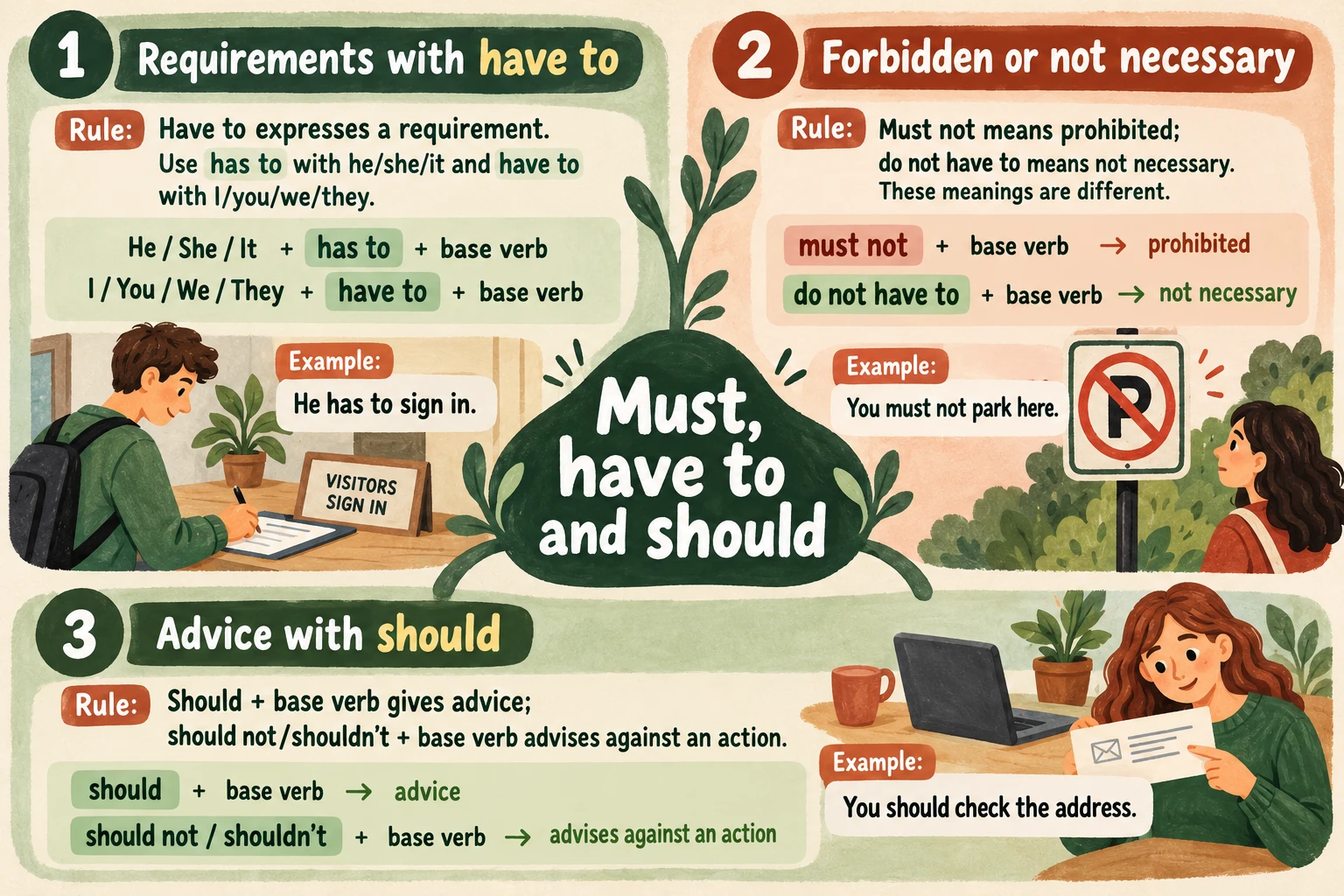
Have to exprime une obligation : has to avec he/she/it, have to avec I/you/we/they.
He has to sign in.Must not signifie interdit ; do not have to signifie non nécessaire. Les sens diffèrent.
You must not park here.Should + base verbale donne un conseil ; should not/shouldn’t déconseille une action.
You should check the address.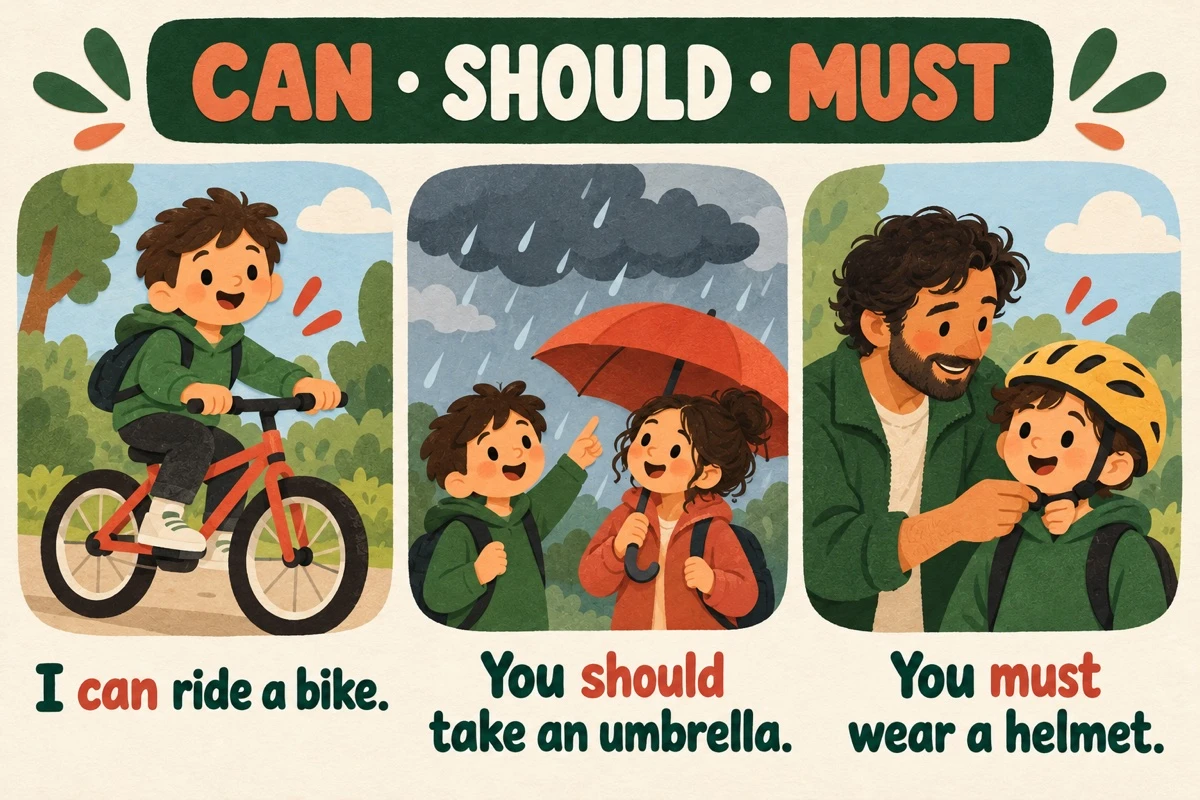
The rule says all staff have to wear badges. Nina ___ to wear one too.
Have to exprime une obligation : has to avec he/she/it, have to avec I/you/we/they.
He has to sign in.Must not signifie interdit ; do not have to signifie non nécessaire. Les sens diffèrent.
You must not park here.Should + base verbale donne un conseil ; should not/shouldn’t déconseille une action.
You should check the address.Gardez la première tentative, comprenez le changement et essayez dans une nouvelle situation.
Pas encore de notes. Essayez un court échauffement.
Have to exprime une obligation : has to avec he/she/it, have to avec I/you/we/they.
He has to sign in.Must not signifie interdit ; do not have to signifie non nécessaire. Les sens diffèrent.
You must not park here.Should + base verbale donne un conseil ; should not/shouldn’t déconseille une action.
You should check the address.Ouvrir une réponse enregistre une aide pour cette question.
The rule says all staff have to wear badges. Nina ___ to wear one too.
Observe « The rule says all staff have to wear badges. Nina ___ to wear one too. ». Have to exprime une obligation : has to avec he/she/it, have to avec I/you/we/they. Phrase complète : « The rule says all staff have to wear badges. Nina has to wear one too. ».
It is optional to bring lunch. You ___ bring it.
Observe « It is optional to bring lunch. You ___ bring it. ». Must not signifie interdit ; do not have to signifie non nécessaire. Les sens diffèrent. Phrase complète : « It is optional to bring lunch. You do not have to bring it. ».
My advice is to rest. You should ___ a break. (take)
Observe « My advice is to rest. You should ___ a break. (take) ». Should + base verbale donne un conseil ; should not/shouldn’t déconseille une action. Phrase complète : « My advice is to rest. You should take a break. (take) ».
I ___ to show my ticket before entering. (have)
Phrase de référence : « I have to show my ticket before entering. (have) ». Have to exprime une obligation : has to avec he/she/it, have to avec I/you/we/they.
The sign says entry is forbidden. You ___ enter.
Observe « The sign says entry is forbidden. You ___ enter. ». Must not signifie interdit ; do not have to signifie non nécessaire. Les sens diffèrent. Phrase complète : « The sign says entry is forbidden. You must not enter. ».
For safety, you should not ___ while driving. (text)
Observe « For safety, you should not ___ while driving. (text) ». Should + base verbale donne un conseil ; should not/shouldn’t déconseille une action. Phrase complète : « For safety, you should not text while driving. (text) ».
Each player ___ to arrive by eight. (have)
Phrase de référence : « Each player has to arrive by eight. (have) ». Have to exprime une obligation : has to avec he/she/it, have to avec I/you/we/they.
The children ___ to wait for a teacher. (have)
Observe « The children ___ to wait for a teacher. (have) ». Have to exprime une obligation : has to avec he/she/it, have to avec I/you/we/they. Phrase complète : « The children have to wait for a teacher. (have) ».
The museum is free today. You ___ pay.
Observe « The museum is free today. You ___ pay. ». Must not signifie interdit ; do not have to signifie non nécessaire. Les sens diffèrent. Phrase complète : « The museum is free today. You do not have to pay. ».
If you want better sleep, you should ___ less coffee. (drink)
Phrase de référence : « If you want better sleep, you should drink less coffee. (drink) ». Should + base verbale donne un conseil ; should not/shouldn’t déconseille une action.
Touching the cable is prohibited. You ___ touch it.
Observe « Touching the cable is prohibited. You ___ touch it. ». Must not signifie interdit ; do not have to signifie non nécessaire. Les sens diffèrent. Phrase complète : « Touching the cable is prohibited. You must not touch it. ».
You look ill. You should ___ a doctor. (see)
Phrase de référence : « You look ill. You should see a doctor. (see) ». Should + base verbale donne un conseil ; should not/shouldn’t déconseille une action.