01실현 가능한 미래 조건
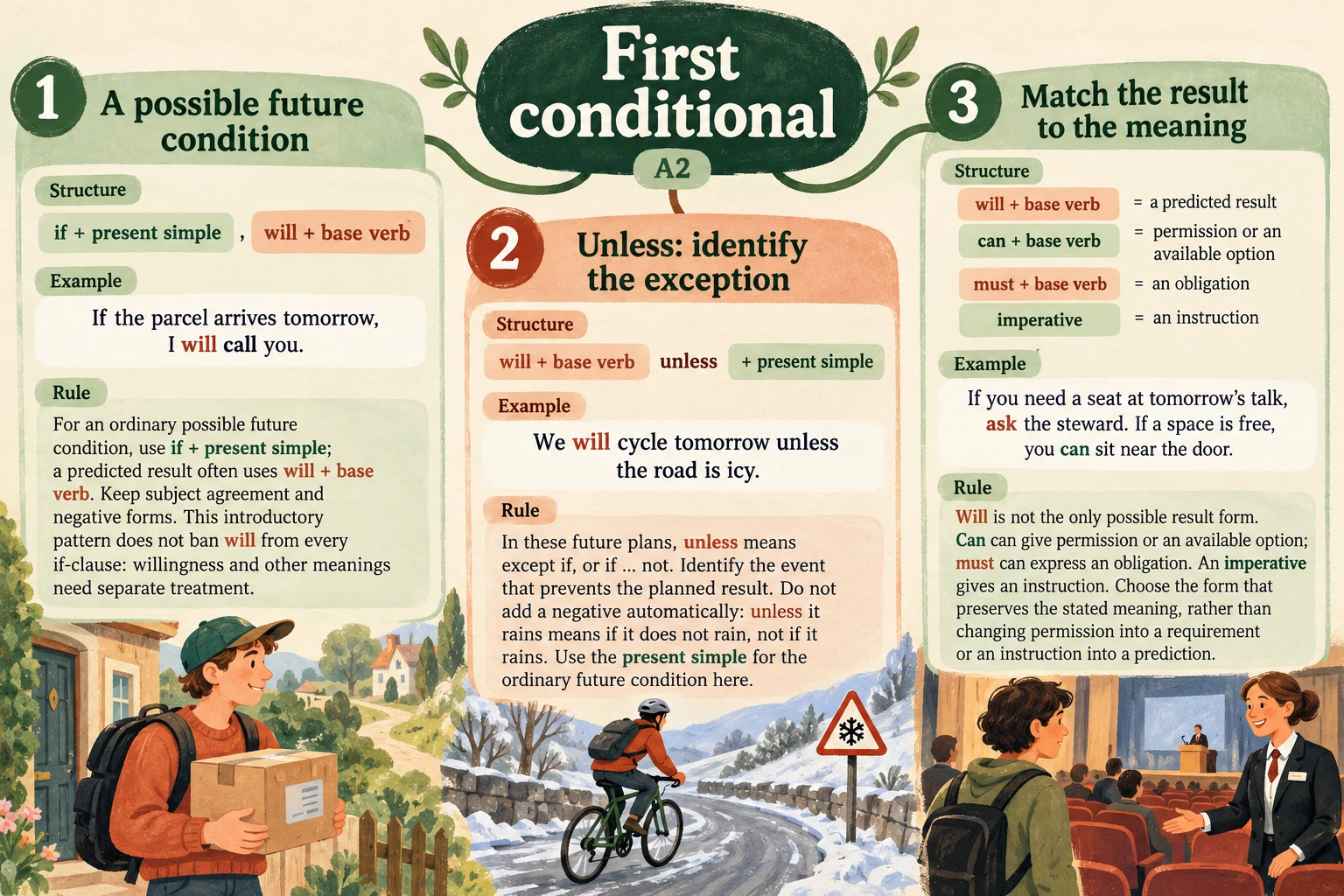
일반적으로 실현 가능한 미래 조건은 if + 현재형으로, 예상 결과는 흔히 will + 동사원형으로 나타냅니다. 주어와 동사의 일치 및 부정형에 유의하세요. 이 기초 패턴이 모든 if절에서 will을 금지하는 것은 아닙니다. 의향 등 다른 의미는 별도로 다룹니다.
If + present simple, will + base verb
실현 가능한 미래 조건문 · A2. 일반적으로 실현 가능한 미래 조건은 if + 현재형으로, 예상 결과는 흔히 will + 동사원형으로 나타냅니다. 주어와 동사의 일치 및 부정형에 유의하세요. 이 기초 패턴이 모든 if절에서 will을 금지하는 것은 아닙니다. 의향 등 다른 의미는 별도로 다룹니다.
if와 unless로 가능한 미래 조건을 표현하고 상황에 맞는 결과를 골라보세요.
일반적으로 실현 가능한 미래 조건은 if + 현재형으로, 예상 결과는 흔히 will + 동사원형으로 나타냅니다. 주어와 동사의 일치 및 부정형에 유의하세요. 이 기초 패턴이 모든 if절에서 will을 금지하는 것은 아닙니다. 의향 등 다른 의미는 별도로 다룹니다.
If + present simple, will + base verb이 단원의 미래 계획에서 unless는 ‘~인 경우를 제외하면’, 즉 if ... not의 뜻입니다. 예정된 결과를 막는 사건이 무엇인지 확인하세요. 부정을 기계적으로 더하지 마세요. unless it rains는 if it does not rain의 뜻이며 if it rains가 아닙니다. 여기서 일반적인 미래 조건은 현재형으로 나타냅니다.
unless = except if결과를 나타내는 형태가 will만 있는 것은 아닙니다. can은 허가나 이용 가능한 선택지를, must는 의무를 나타낼 수 있습니다. 명령문은 지시를 전달합니다. 허가를 의무로, 지시를 예측으로 바꾸지 말고 주어진 뜻을 유지하는 표현을 고르세요.
If you need help, ask. · If it is free, you can sit here.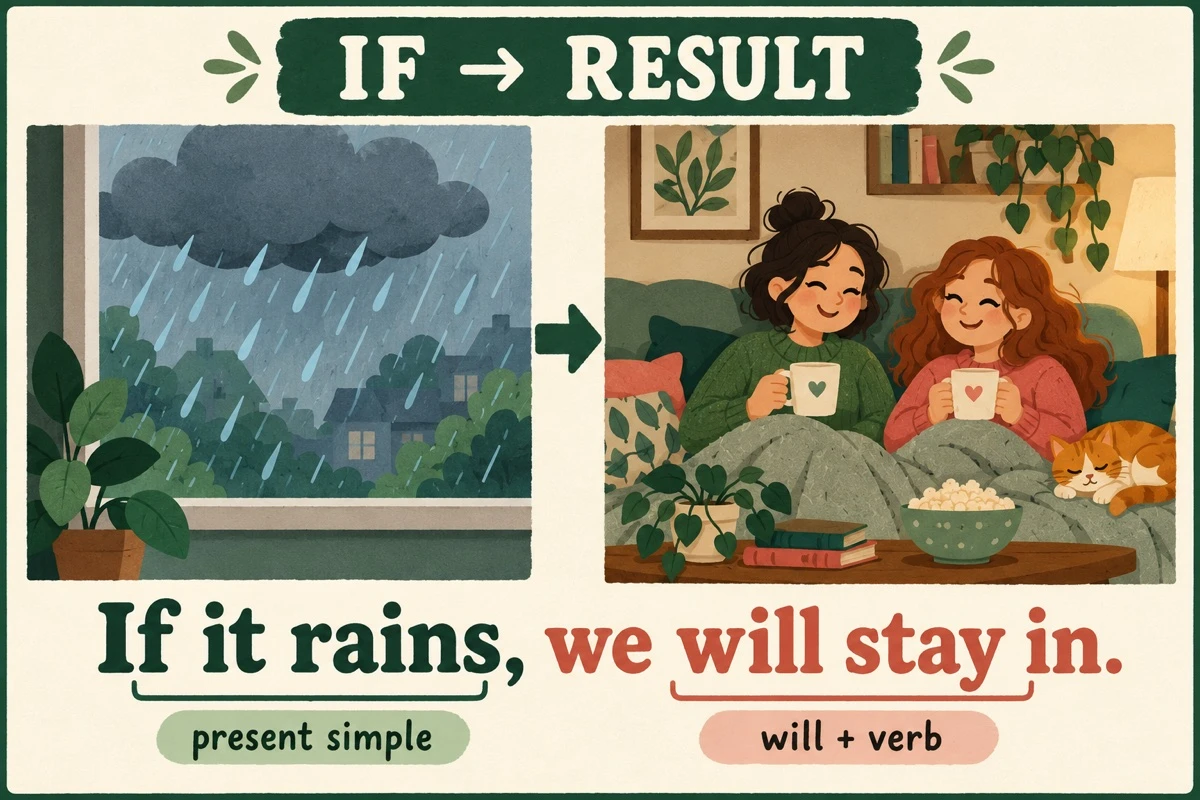
Mina may finish her work early tomorrow. If that happens, she plans to join us. Choose an ordinary possible-future prediction.
일반적으로 실현 가능한 미래 조건은 if + 현재형으로, 예상 결과는 흔히 will + 동사원형으로 나타냅니다. 주어와 동사의 일치 및 부정형에 유의하세요. 이 기초 패턴이 모든 if절에서 will을 금지하는 것은 아닙니다. 의향 등 다른 의미는 별도로 다룹니다.
If the parcel arrives tomorrow, I will call you.이 단원의 미래 계획에서 unless는 ‘~인 경우를 제외하면’, 즉 if ... not의 뜻입니다. 예정된 결과를 막는 사건이 무엇인지 확인하세요. 부정을 기계적으로 더하지 마세요. unless it rains는 if it does not rain의 뜻이며 if it rains가 아닙니다. 여기서 일반적인 미래 조건은 현재형으로 나타냅니다.
We will cycle tomorrow unless the road is icy.결과를 나타내는 형태가 will만 있는 것은 아닙니다. can은 허가나 이용 가능한 선택지를, must는 의무를 나타낼 수 있습니다. 명령문은 지시를 전달합니다. 허가를 의무로, 지시를 예측으로 바꾸지 말고 주어진 뜻을 유지하는 표현을 고르세요.
If you need a seat at tomorrow’s talk, ask the steward. If a space is free, you can sit near the door.첫 시도를 남기고 변화의 이유를 이해한 뒤 새로운 상황에서 확인해 보세요.
아직 복습 노트가 없어요. 짧은 워밍업부터 해보세요.
일반적으로 실현 가능한 미래 조건은 if + 현재형으로, 예상 결과는 흔히 will + 동사원형으로 나타냅니다. 주어와 동사의 일치 및 부정형에 유의하세요. 이 기초 패턴이 모든 if절에서 will을 금지하는 것은 아닙니다. 의향 등 다른 의미는 별도로 다룹니다.
If the parcel arrives tomorrow, I will call you.이 단원의 미래 계획에서 unless는 ‘~인 경우를 제외하면’, 즉 if ... not의 뜻입니다. 예정된 결과를 막는 사건이 무엇인지 확인하세요. 부정을 기계적으로 더하지 마세요. unless it rains는 if it does not rain의 뜻이며 if it rains가 아닙니다. 여기서 일반적인 미래 조건은 현재형으로 나타냅니다.
We will cycle tomorrow unless the road is icy.결과를 나타내는 형태가 will만 있는 것은 아닙니다. can은 허가나 이용 가능한 선택지를, must는 의무를 나타낼 수 있습니다. 명령문은 지시를 전달합니다. 허가를 의무로, 지시를 예측으로 바꾸지 말고 주어진 뜻을 유지하는 표현을 고르세요.
If you need a seat at tomorrow’s talk, ask the steward. If a space is free, you can sit near the door.정답을 열면 해당 문제에 도움 사용이 기록돼요.
Mina may finish her work early tomorrow. If that happens, she plans to join us. Choose an ordinary possible-future prediction.
“Mina may finish her work early tomorrow. If that happens, she plans to join us. Choose an ordinary possible-future prediction.”를 보세요. 일반적으로 실현 가능한 미래 조건은 if + 현재형으로, 예상 결과는 흔히 will + 동사원형으로 나타냅니다. 주어와 동사의 일치 및 부정형에 유의하세요. 이 기초 패턴이 모든 if절에서 will을 금지하는 것은 아닙니다. 의향 등 다른 의미는 별도로 다룹니다. 완성 문장: “If Mina finishes early tomorrow, she will join us.”.
We plan to walk beside the river tomorrow. Flooding is the one event that would cancel the walk.
“We plan to walk beside the river tomorrow. Flooding is the one event that would cancel the walk.”를 보세요. 이 단원의 미래 계획에서 unless는 ‘~인 경우를 제외하면’, 즉 if ... not의 뜻입니다. 예정된 결과를 막는 사건이 무엇인지 확인하세요. 부정을 기계적으로 더하지 마세요. unless it rains는 if it does not rain의 뜻이며 if it rains가 아닙니다. 여기서 일반적인 미래 조건은 현재형으로 나타냅니다. 완성 문장: “We will walk beside the river tomorrow unless the path floods.”.
For tomorrow’s video call, the manager gives you permission to use a spare tablet if your laptop stops working. Using it is optional.
“For tomorrow’s video call, the manager gives you permission to use a spare tablet if your laptop stops working. Using it is optional.”를 보세요. 결과를 나타내는 형태가 will만 있는 것은 아닙니다. can은 허가나 이용 가능한 선택지를, must는 의무를 나타낼 수 있습니다. 명령문은 지시를 전달합니다. 허가를 의무로, 지시를 예측으로 바꾸지 말고 주어진 뜻을 유지하는 표현을 고르세요. 완성 문장: “If your laptop stops working tomorrow, you can use the spare tablet.”.
The courier may arrive before noon tomorrow. If that happens, we predict that we will pack the parcel immediately. Use the ordinary possible-future pattern.
“The courier may arrive before noon tomorrow. If that happens, we predict that we will pack the parcel immediately. Use the ordinary possible-future pattern.”를 보세요. 일반적으로 실현 가능한 미래 조건은 if + 현재형으로, 예상 결과는 흔히 will + 동사원형으로 나타냅니다. 주어와 동사의 일치 및 부정형에 유의하세요. 이 기초 패턴이 모든 if절에서 will을 금지하는 것은 아닙니다. 의향 등 다른 의미는 별도로 다룹니다. 완성 문장: “If the courier arrives before noon tomorrow, we will pack the parcel immediately.”.
Leo may not need the car tomorrow. In that case, I plan to drive to the clinic.
조건은 부정형 Leo does not need the car입니다. does not 뒤의 need는 동사원형을 유지합니다. 계획된 결과는 I will drive로 나타내며 I’ll은 같은 뜻의 축약형입니다.
We plan to show a film outside tomorrow evening. Rain would stop that outdoor showing.
“We plan to show a film outside tomorrow evening. Rain would stop that outdoor showing.”를 보세요. 이 단원의 미래 계획에서 unless는 ‘~인 경우를 제외하면’, 즉 if ... not의 뜻입니다. 예정된 결과를 막는 사건이 무엇인지 확인하세요. 부정을 기계적으로 더하지 마세요. unless it rains는 if it does not rain의 뜻이며 if it rains가 아닙니다. 여기서 일반적인 미래 조건은 현재형으로 나타냅니다. 완성 문장: “We will show the film outside tomorrow unless it rains.”.
For tomorrow’s boat trip, wearing a life jacket is compulsory if you take the boat out. Express this requirement.
“For tomorrow’s boat trip, wearing a life jacket is compulsory if you take the boat out. Express this requirement.”를 보세요. 결과를 나타내는 형태가 will만 있는 것은 아닙니다. can은 허가나 이용 가능한 선택지를, must는 의무를 나타낼 수 있습니다. 명령문은 지시를 전달합니다. 허가를 의무로, 지시를 예측으로 바꾸지 말고 주어진 뜻을 유지하는 표현을 고르세요. 완성 문장: “If you take the boat out tomorrow, you must wear a life jacket.”.
The library may close early tomorrow. We will meet at my flat if that happens. A learner wrote: If the library close early tomorrow, we will meet at my flat.
단수 주어 the library는 이 현재형 조건절에서 closes를 씁니다. will meet는 이미 올바른 형태이므로 그대로 둡니다.
We will go for a run this evening if no thunderstorm starts. A learner wrote: Unless a thunderstorm does not start this evening, we will go for a run. This reverses the intended condition.
뇌우가 달리기를 취소하게 하는 예외입니다. unless a thunderstorm starts는 ‘뇌우가 시작되지 않으면’이라는 뜻입니다. 불필요한 does not은 그 뜻을 뒤집습니다. 절의 순서는 바뀌어도 계획의 의미를 유지할 수 있습니다. 이 문제에서는 다음 표현도 확인된 답으로 인정합니다: We will go for a run this evening unless a thunderstorm starts. / We'll go for a run this evening unless a thunderstorm starts.. 가능한 모든 영어 표현의 목록은 아닙니다.
During tomorrow’s rehearsal, the safety instruction is to leave the room if you smell smoke. A learner wrote: If you smell smoke during tomorrow’s rehearsal, to leave the room.
결과가 지시이므로 to 없이 명령형 leave the room을 씁니다. 실현 가능한 미래 조건인 if you smell smoke는 그대로 둡니다. 이 지시에는 will이 필요하지 않습니다.
Tonight’s workshop may sell out. If it does, we promise to add another workshop tomorrow. This is a real possibility.
주어 workshop이 단수이므로 실현 가능한 미래 조건에 sells out을 씁니다. will add는 약속한 결과를 나타냅니다. we will의 축약형도 같은 약속의 뜻을 유지합니다.
You have permission to borrow the camera tomorrow. The one exception is if Priya needs it.
unless Priya needs it는 허가의 예외를 나타냅니다. can borrow는 빌려도 된다는 뜻을 유지하며 must borrow는 의무가 됩니다. 일반적인 미래 조건에서 needs는 Priya에 맞춘 형태입니다.