01未来に起こり得る条件
通常の、未来に起こり得る条件には if+現在形を使い、予想される結果には will+動詞の原形をよく使います。主語と動詞の一致、否定形にも注意しましょう。この入門の型は、すべてのif節でwillを禁止するものではありません。意志などを表す用法は別に扱います。
If + present simple, will + base verb
未来の可能性を表す条件文 · A2. 通常の、未来に起こり得る条件には if+現在形を使い、予想される結果には will+動詞の原形をよく使います。主語と動詞の一致、否定形にも注意しましょう。この入門の型は、すべてのif節でwillを禁止するものではありません。意志などを表す用法は別に扱います。
ifやunlessで起こりうる未来の条件を表し、文脈に合う結果を選びましょう。
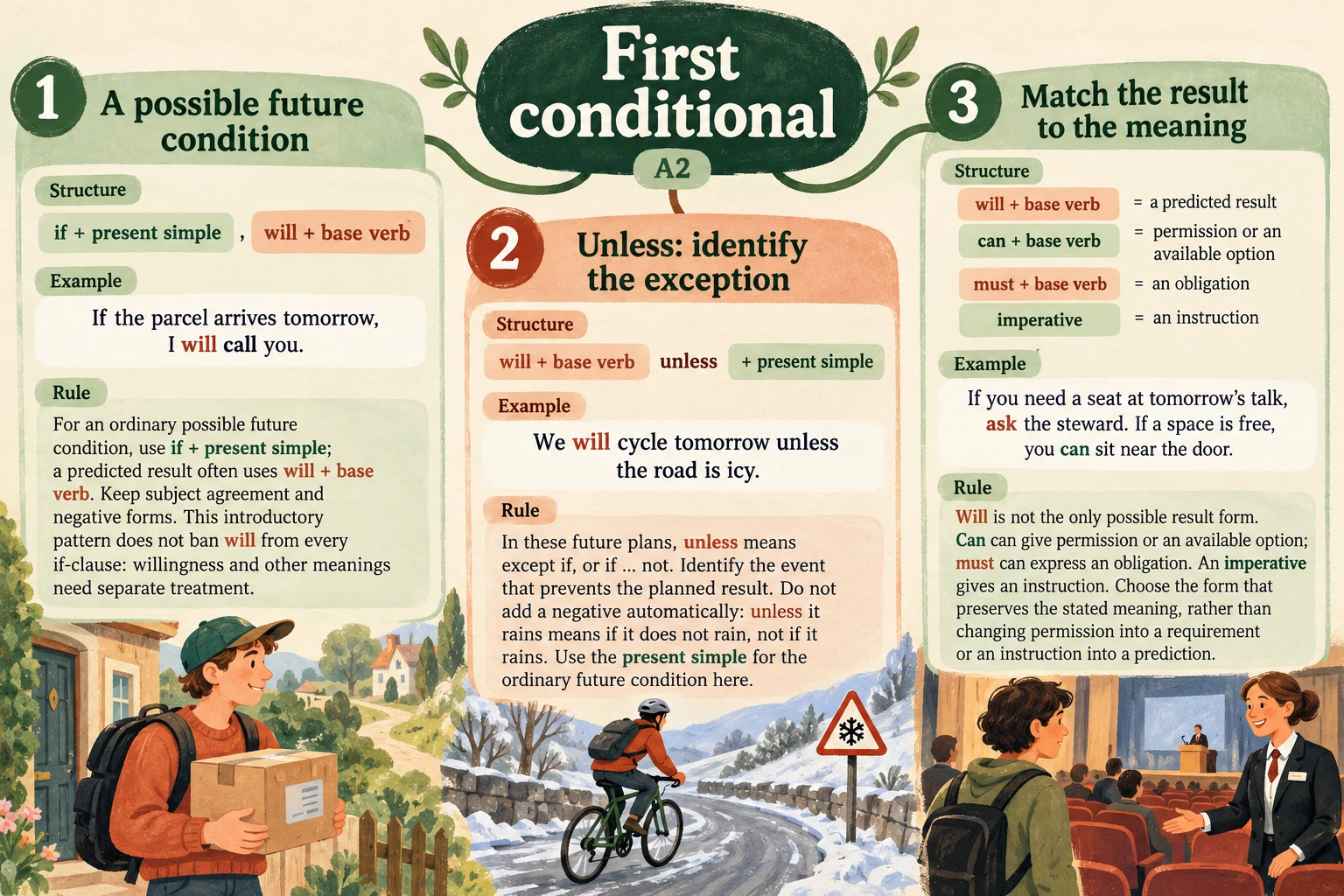
通常の、未来に起こり得る条件には if+現在形を使い、予想される結果には will+動詞の原形をよく使います。主語と動詞の一致、否定形にも注意しましょう。この入門の型は、すべてのif節でwillを禁止するものではありません。意志などを表す用法は別に扱います。
If + present simple, will + base verbこの単元の未来の予定では、unlessは「〜の場合を除いて」、またはif ... notに相当します。予定の結果を妨げる出来事を確認しましょう。自動的に否定を加えてはいけません。unless it rainsはif it does not rainの意味で、if it rainsではありません。ここでの通常の未来の条件には現在形を使います。
unless = except if結果を表す形はwillだけではありません。canは許可や利用できる選択肢を、mustは義務を表せます。命令文は指示を伝えます。許可を義務に変えたり、指示を予測に変えたりせず、指定された意味を保つ形を選びましょう。
If you need help, ask. · If it is free, you can sit here.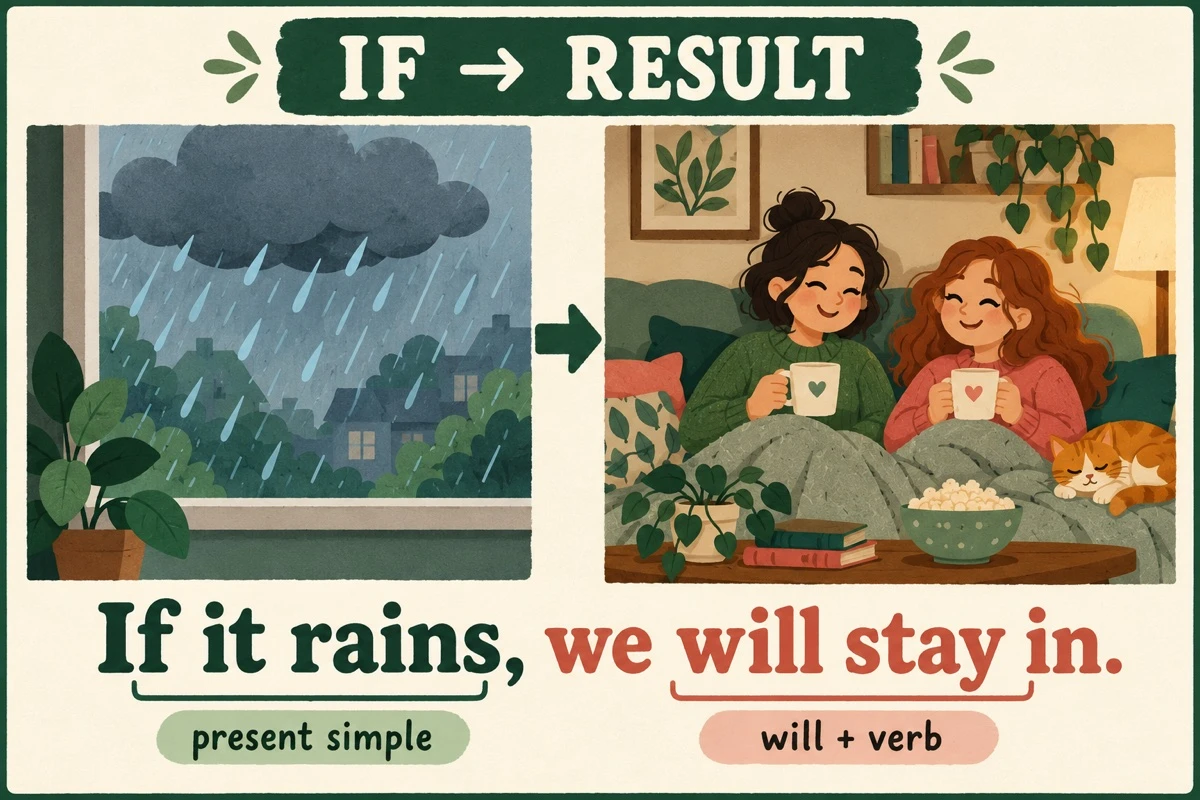
Mina may finish her work early tomorrow. If that happens, she plans to join us. Choose an ordinary possible-future prediction.
通常の、未来に起こり得る条件には if+現在形を使い、予想される結果には will+動詞の原形をよく使います。主語と動詞の一致、否定形にも注意しましょう。この入門の型は、すべてのif節でwillを禁止するものではありません。意志などを表す用法は別に扱います。
If the parcel arrives tomorrow, I will call you.この単元の未来の予定では、unlessは「〜の場合を除いて」、またはif ... notに相当します。予定の結果を妨げる出来事を確認しましょう。自動的に否定を加えてはいけません。unless it rainsはif it does not rainの意味で、if it rainsではありません。ここでの通常の未来の条件には現在形を使います。
We will cycle tomorrow unless the road is icy.結果を表す形はwillだけではありません。canは許可や利用できる選択肢を、mustは義務を表せます。命令文は指示を伝えます。許可を義務に変えたり、指示を予測に変えたりせず、指定された意味を保つ形を選びましょう。
If you need a seat at tomorrow’s talk, ask the steward. If a space is free, you can sit near the door.初回答を残し、変化の理由を理解して、別の場面で確かめます。
まだ復習ノートはありません。まずは短いウォームアップを。
通常の、未来に起こり得る条件には if+現在形を使い、予想される結果には will+動詞の原形をよく使います。主語と動詞の一致、否定形にも注意しましょう。この入門の型は、すべてのif節でwillを禁止するものではありません。意志などを表す用法は別に扱います。
If the parcel arrives tomorrow, I will call you.この単元の未来の予定では、unlessは「〜の場合を除いて」、またはif ... notに相当します。予定の結果を妨げる出来事を確認しましょう。自動的に否定を加えてはいけません。unless it rainsはif it does not rainの意味で、if it rainsではありません。ここでの通常の未来の条件には現在形を使います。
We will cycle tomorrow unless the road is icy.結果を表す形はwillだけではありません。canは許可や利用できる選択肢を、mustは義務を表せます。命令文は指示を伝えます。許可を義務に変えたり、指示を予測に変えたりせず、指定された意味を保つ形を選びましょう。
If you need a seat at tomorrow’s talk, ask the steward. If a space is free, you can sit near the door.解答を開くと、その問題にヒント利用が記録されます。
Mina may finish her work early tomorrow. If that happens, she plans to join us. Choose an ordinary possible-future prediction.
「Mina may finish her work early tomorrow. If that happens, she plans to join us. Choose an ordinary possible-future prediction.」に注目しましょう。通常の、未来に起こり得る条件には if+現在形を使い、予想される結果には will+動詞の原形をよく使います。主語と動詞の一致、否定形にも注意しましょう。この入門の型は、すべてのif節でwillを禁止するものではありません。意志などを表す用法は別に扱います。 完成文:「If Mina finishes early tomorrow, she will join us.」。
We plan to walk beside the river tomorrow. Flooding is the one event that would cancel the walk.
「We plan to walk beside the river tomorrow. Flooding is the one event that would cancel the walk.」に注目しましょう。この単元の未来の予定では、unlessは「〜の場合を除いて」、またはif ... notに相当します。予定の結果を妨げる出来事を確認しましょう。自動的に否定を加えてはいけません。unless it rainsはif it does not rainの意味で、if it rainsではありません。ここでの通常の未来の条件には現在形を使います。 完成文:「We will walk beside the river tomorrow unless the path floods.」。
For tomorrow’s video call, the manager gives you permission to use a spare tablet if your laptop stops working. Using it is optional.
「For tomorrow’s video call, the manager gives you permission to use a spare tablet if your laptop stops working. Using it is optional.」に注目しましょう。結果を表す形はwillだけではありません。canは許可や利用できる選択肢を、mustは義務を表せます。命令文は指示を伝えます。許可を義務に変えたり、指示を予測に変えたりせず、指定された意味を保つ形を選びましょう。 完成文:「If your laptop stops working tomorrow, you can use the spare tablet.」。
The courier may arrive before noon tomorrow. If that happens, we predict that we will pack the parcel immediately. Use the ordinary possible-future pattern.
「The courier may arrive before noon tomorrow. If that happens, we predict that we will pack the parcel immediately. Use the ordinary possible-future pattern.」に注目しましょう。通常の、未来に起こり得る条件には if+現在形を使い、予想される結果には will+動詞の原形をよく使います。主語と動詞の一致、否定形にも注意しましょう。この入門の型は、すべてのif節でwillを禁止するものではありません。意志などを表す用法は別に扱います。 完成文:「If the courier arrives before noon tomorrow, we will pack the parcel immediately.」。
Leo may not need the car tomorrow. In that case, I plan to drive to the clinic.
条件は否定のLeo does not need the carです。does notの後のneedは原形のままです。予定の結果はI will driveで表し、短縮形I’llも同じ意味です。
We plan to show a film outside tomorrow evening. Rain would stop that outdoor showing.
「We plan to show a film outside tomorrow evening. Rain would stop that outdoor showing.」に注目しましょう。この単元の未来の予定では、unlessは「〜の場合を除いて」、またはif ... notに相当します。予定の結果を妨げる出来事を確認しましょう。自動的に否定を加えてはいけません。unless it rainsはif it does not rainの意味で、if it rainsではありません。ここでの通常の未来の条件には現在形を使います。 完成文:「We will show the film outside tomorrow unless it rains.」。
For tomorrow’s boat trip, wearing a life jacket is compulsory if you take the boat out. Express this requirement.
「For tomorrow’s boat trip, wearing a life jacket is compulsory if you take the boat out. Express this requirement.」に注目しましょう。結果を表す形はwillだけではありません。canは許可や利用できる選択肢を、mustは義務を表せます。命令文は指示を伝えます。許可を義務に変えたり、指示を予測に変えたりせず、指定された意味を保つ形を選びましょう。 完成文:「If you take the boat out tomorrow, you must wear a life jacket.」。
The library may close early tomorrow. We will meet at my flat if that happens. A learner wrote: If the library close early tomorrow, we will meet at my flat.
単数の主語the libraryには、この現在形の条件節でclosesを使います。will meetはすでに正しい形なので変えません。
We will go for a run this evening if no thunderstorm starts. A learner wrote: Unless a thunderstorm does not start this evening, we will go for a run. This reverses the intended condition.
雷雨が走りに行くのを取りやめる例外です。unless a thunderstorm startsは「雷雨が始まらなければ」です。余分なdoes notがあると逆の意味になります。節の順序を逆にしても予定の意味は保てます。 この問題では次の別表現も確認済みです:We will go for a run this evening unless a thunderstorm starts. / We'll go for a run this evening unless a thunderstorm starts.。可能な英語表現をすべて列挙したものではありません。
During tomorrow’s rehearsal, the safety instruction is to leave the room if you smell smoke. A learner wrote: If you smell smoke during tomorrow’s rehearsal, to leave the room.
結果は指示なので、toを付けず命令形leave the roomにします。未来の可能性を表す条件if you smell smokeはそのままです。この指示にwillは必要ありません。
Tonight’s workshop may sell out. If it does, we promise to add another workshop tomorrow. This is a real possibility.
主語workshopが単数なので、未来の可能性を表す条件にはsells outを使います。will addは約束した結果を表します。we willを短縮しても約束の意味は同じです。
You have permission to borrow the camera tomorrow. The one exception is if Priya needs it.
unless Priya needs itは許可の例外を示します。can borrowは借りてもよいという意味を保ち、must borrowでは義務になります。通常の未来の条件で、needsはPriyaに一致します。