01foco contrastivo em pessoa, coisa ou tempo sem mudar o fato básico
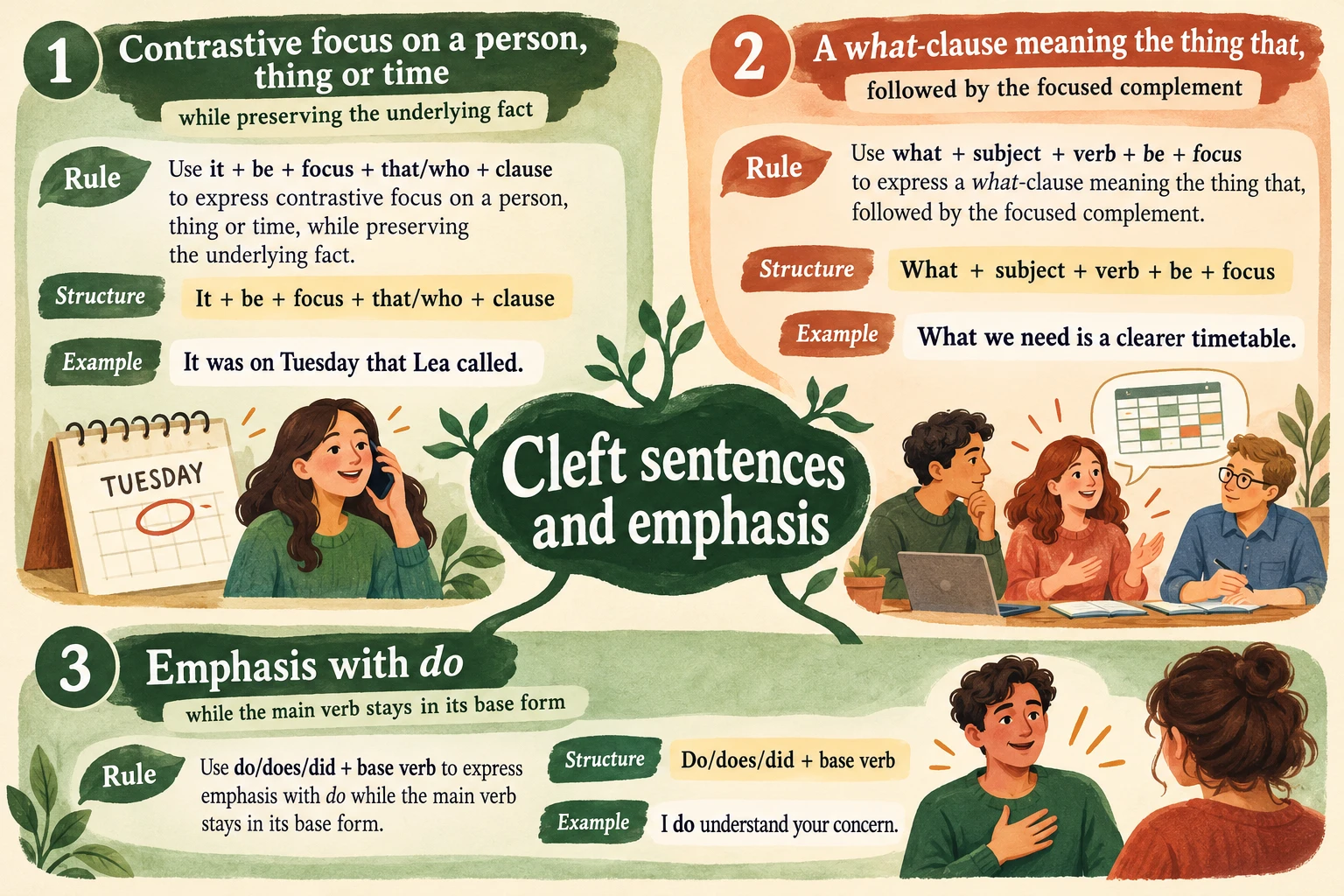
Use it + be + focus + that/who + clause para expressar foco contrastivo em pessoa, coisa ou tempo sem mudar o fato básico.
It was on Tuesday that Lea called.
Frases clivadas e ênfase · B2. Use it + be + focus + that/who + clause para expressar foco contrastivo em pessoa, coisa ou tempo sem mudar o fato básico.
Resolva 12 tarefas originais. Use a situação para interpretar o sentido, praticar a estrutura e aplicá-la em um novo contexto.
Use it + be + focus + that/who + clause para expressar foco contrastivo em pessoa, coisa ou tempo sem mudar o fato básico.
It was on Tuesday that Lea called.Use what + subject + verb + be + focus para expressar uma oração com what no sentido de aquilo que, seguida do complemento em foco.
What we need is a clearer timetable.Use do/does/did + base verb para expressar ênfase com do e verbo principal na forma base.
I do understand your concern.
Contrast Tuesday with Monday without changing who called.
Use it + be + focus + that/who + clause para expressar foco contrastivo em pessoa, coisa ou tempo sem mudar o fato básico.
It was on Tuesday that Lea called.Use what + subject + verb + be + focus para expressar uma oração com what no sentido de aquilo que, seguida do complemento em foco.
What we need is a clearer timetable.Use do/does/did + base verb para expressar ênfase com do e verbo principal na forma base.
I do understand your concern.Guarde a primeira tentativa, entenda a mudança e confira em outra situação.
Ainda não há revisões. Faça um aquecimento curto.
Use it + be + focus + that/who + clause para expressar foco contrastivo em pessoa, coisa ou tempo sem mudar o fato básico.
It was on Tuesday that Lea called.Use what + subject + verb + be + focus para expressar uma oração com what no sentido de aquilo que, seguida do complemento em foco.
What we need is a clearer timetable.Use do/does/did + base verb para expressar ênfase com do e verbo principal na forma base.
I do understand your concern.Abrir uma resposta registra ajuda para essa questão.
Contrast Tuesday with Monday without changing who called.
A pista decisiva é “Contrast Tuesday with Monday without changing who called.”. Use it + be + focus + that/who + clause para expressar foco contrastivo em pessoa, coisa ou tempo sem mudar o fato básico. Nesta tarefa, a frase completa é “It was on Tuesday that Lea called.”.
The clause means the thing we need.
A pista decisiva é “The clause means the thing we need.”. Use what + subject + verb + be + focus para expressar uma oração com what no sentido de aquilo que, seguida do complemento em foco. Nesta tarefa, a frase completa é “What we need is a clearer timetable.”.
Use an emphatic auxiliary but keep understand in the base form.
A pista decisiva é “Use an emphatic auxiliary but keep understand in the base form.”. Use do/does/did + base verb para expressar ênfase com do e verbo principal na forma base. Nesta tarefa, a frase completa é “I do understand your concern.”.
Contrast Ravi with the other people who might have solved it.
A pista decisiva é “Contrast Ravi with the other people who might have solved it.”. Use it + be + focus + that/who + clause para expressar foco contrastivo em pessoa, coisa ou tempo sem mudar o fato básico. Nesta tarefa, a frase completa é “It was Ravi who solved the puzzle.”.
Introduce a nominal clause meaning the thing that she wanted.
Frase completa: “What she wanted was a chance to explain.” Use what + subject + verb + be + focus para expressar uma oração com what no sentido de aquilo que, seguida do complemento em foco. O sujeito, o tempo e o sentido da tarefa determinam esta forma. Só as respostas revisadas são comparadas automaticamente; outras formulações não estão automaticamente erradas.
The verb following emphatic did stays in the base form.
A pista decisiva é “The verb following emphatic did stays in the base form.”. Use do/does/did + base verb para expressar ênfase com do e verbo principal na forma base. Nesta tarefa, a frase completa é “He did warn us about the delay.”.
Supply the normal linker for an it-cleft focusing on the missing folder.
Frase completa: “It was the blue folder that they had misplaced.” Use it + be + focus + that/who + clause para expressar foco contrastivo em pessoa, coisa ou tempo sem mudar o fato básico. O sujeito, o tempo e o sentido da tarefa determinam esta forma. Só as respostas revisadas são comparadas automaticamente; outras formulações não estão automaticamente erradas.
Focus the timing, preserving the underlying fact that the lights failed at midnight.
A pista decisiva é “Focus the timing, preserving the underlying fact that the lights failed at midnight.”. Use it + be + focus + that/who + clause para expressar foco contrastivo em pessoa, coisa ou tempo sem mudar o fato básico. Nesta tarefa, a frase completa é “It was at midnight that the lights failed.”.
Introduce a nominal clause meaning the thing that the committee rejected.
Frase completa: “What the committee rejected was the proposed deadline.” Use what + subject + verb + be + focus para expressar uma oração com what no sentido de aquilo que, seguida do complemento em foco. O sujeito, o tempo e o sentido da tarefa determinam esta forma. Só as respostas revisadas são comparadas automaticamente; outras formulações não estão automaticamente erradas.
The emphatic positive statement is present simple, third-person singular.
A pista decisiva é “The emphatic positive statement is present simple, third-person singular.”. Use do/does/did + base verb para expressar ênfase com do e verbo principal na forma base. Nesta tarefa, a frase completa é “She does care about the outcome.”.
A what-clause functions as the subject meaning the thing I regret.
A pista decisiva é “A what-clause functions as the subject meaning the thing I regret.”. Use what + subject + verb + be + focus para expressar uma oração com what no sentido de aquilo que, seguida do complemento em foco. Nesta tarefa, a frase completa é “What I regret most is the lack of consultation.”.
Use an emphatic past auxiliary with explain to contradict a claim that no explanation occurred.
Frase completa: “I did explain the change yesterday; you were absent.” Use do/does/did + base verb para expressar ênfase com do e verbo principal na forma base. O sujeito, o tempo e o sentido da tarefa determinam esta forma. Só as respostas revisadas são comparadas automaticamente; outras formulações não estão automaticamente erradas.