01元の事実を保ちながら人・物・時を対比して強調すること
it + be + focus + that/who + clause を用います。表す内容:元の事実を保ちながら人・物・時を対比して強調すること。
It was on Tuesday that Lea called.
強調構文 · B2. it + be + focus + that/who + clause を用います。表す内容:元の事実を保ちながら人・物・時を対比して強調すること。
12問のオリジナル問題です。状況から意味を読み取り、形を練習して、新しい場面で応用します。
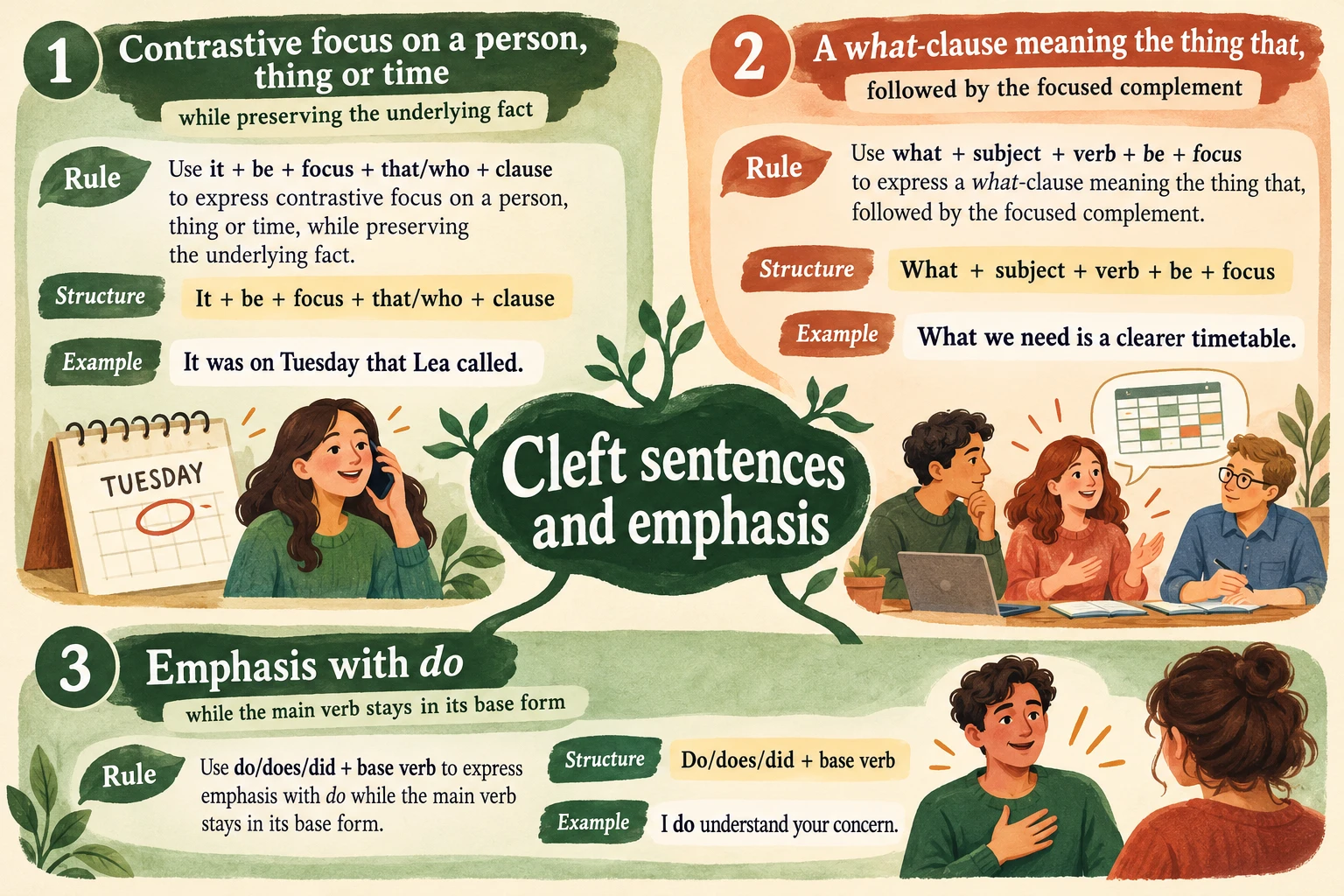
it + be + focus + that/who + clause を用います。表す内容:元の事実を保ちながら人・物・時を対比して強調すること。
It was on Tuesday that Lea called.what + subject + verb + be + focus を用います。表す内容:「〜するもの」を表す what 節と、後ろの強調される補語。
What we need is a clearer timetable.do/does/did + base verb を用います。表す内容:本動詞を原形に保つ do による強調。
I do understand your concern.
Contrast Tuesday with Monday without changing who called.
it + be + focus + that/who + clause を用います。表す内容:元の事実を保ちながら人・物・時を対比して強調すること。
It was on Tuesday that Lea called.what + subject + verb + be + focus を用います。表す内容:「〜するもの」を表す what 節と、後ろの強調される補語。
What we need is a clearer timetable.do/does/did + base verb を用います。表す内容:本動詞を原形に保つ do による強調。
I do understand your concern.初回答を残し、変化の理由を理解して、別の場面で確かめます。
まだ復習ノートはありません。まずは短いウォームアップを。
it + be + focus + that/who + clause を用います。表す内容:元の事実を保ちながら人・物・時を対比して強調すること。
It was on Tuesday that Lea called.what + subject + verb + be + focus を用います。表す内容:「〜するもの」を表す what 節と、後ろの強調される補語。
What we need is a clearer timetable.do/does/did + base verb を用います。表す内容:本動詞を原形に保つ do による強調。
I do understand your concern.解答を開くと、その問題にヒント利用が記録されます。
Contrast Tuesday with Monday without changing who called.
判断の手掛かりは「Contrast Tuesday with Monday without changing who called.」です。it + be + focus + that/who + clause を用います。表す内容:元の事実を保ちながら人・物・時を対比して強調すること。 この課題で完成する文は「It was on Tuesday that Lea called.」です。
The clause means the thing we need.
判断の手掛かりは「The clause means the thing we need.」です。what + subject + verb + be + focus を用います。表す内容:「〜するもの」を表す what 節と、後ろの強調される補語。 この課題で完成する文は「What we need is a clearer timetable.」です。
Use an emphatic auxiliary but keep understand in the base form.
判断の手掛かりは「Use an emphatic auxiliary but keep understand in the base form.」です。do/does/did + base verb を用います。表す内容:本動詞を原形に保つ do による強調。 この課題で完成する文は「I do understand your concern.」です。
Contrast Ravi with the other people who might have solved it.
判断の手掛かりは「Contrast Ravi with the other people who might have solved it.」です。it + be + focus + that/who + clause を用います。表す内容:元の事実を保ちながら人・物・時を対比して強調すること。 この課題で完成する文は「It was Ravi who solved the puzzle.」です。
Introduce a nominal clause meaning the thing that she wanted.
完成文:「What she wanted was a chance to explain.」 what + subject + verb + be + focus を用います。表す内容:「〜するもの」を表す what 節と、後ろの強調される補語。 問題の主語・時間・意味に合わせた形です。確認済みの解答だけを自動照合します。別の表現を自動的に誤りとはしません。
The verb following emphatic did stays in the base form.
判断の手掛かりは「The verb following emphatic did stays in the base form.」です。do/does/did + base verb を用います。表す内容:本動詞を原形に保つ do による強調。 この課題で完成する文は「He did warn us about the delay.」です。
Supply the normal linker for an it-cleft focusing on the missing folder.
完成文:「It was the blue folder that they had misplaced.」 it + be + focus + that/who + clause を用います。表す内容:元の事実を保ちながら人・物・時を対比して強調すること。 問題の主語・時間・意味に合わせた形です。確認済みの解答だけを自動照合します。別の表現を自動的に誤りとはしません。
Focus the timing, preserving the underlying fact that the lights failed at midnight.
判断の手掛かりは「Focus the timing, preserving the underlying fact that the lights failed at midnight.」です。it + be + focus + that/who + clause を用います。表す内容:元の事実を保ちながら人・物・時を対比して強調すること。 この課題で完成する文は「It was at midnight that the lights failed.」です。
Introduce a nominal clause meaning the thing that the committee rejected.
完成文:「What the committee rejected was the proposed deadline.」 what + subject + verb + be + focus を用います。表す内容:「〜するもの」を表す what 節と、後ろの強調される補語。 問題の主語・時間・意味に合わせた形です。確認済みの解答だけを自動照合します。別の表現を自動的に誤りとはしません。
The emphatic positive statement is present simple, third-person singular.
判断の手掛かりは「The emphatic positive statement is present simple, third-person singular.」です。do/does/did + base verb を用います。表す内容:本動詞を原形に保つ do による強調。 この課題で完成する文は「She does care about the outcome.」です。
A what-clause functions as the subject meaning the thing I regret.
判断の手掛かりは「A what-clause functions as the subject meaning the thing I regret.」です。what + subject + verb + be + focus を用います。表す内容:「〜するもの」を表す what 節と、後ろの強調される補語。 この課題で完成する文は「What I regret most is the lack of consultation.」です。
Use an emphatic past auxiliary with explain to contradict a claim that no explanation occurred.
完成文:「I did explain the change yesterday; you were absent.」 do/does/did + base verb を用います。表す内容:本動詞を原形に保つ do による強調。 問題の主語・時間・意味に合わせた形です。確認済みの解答だけを自動照合します。別の表現を自動的に誤りとはしません。