01uma condição irreal sobre um fato passado já encerrado
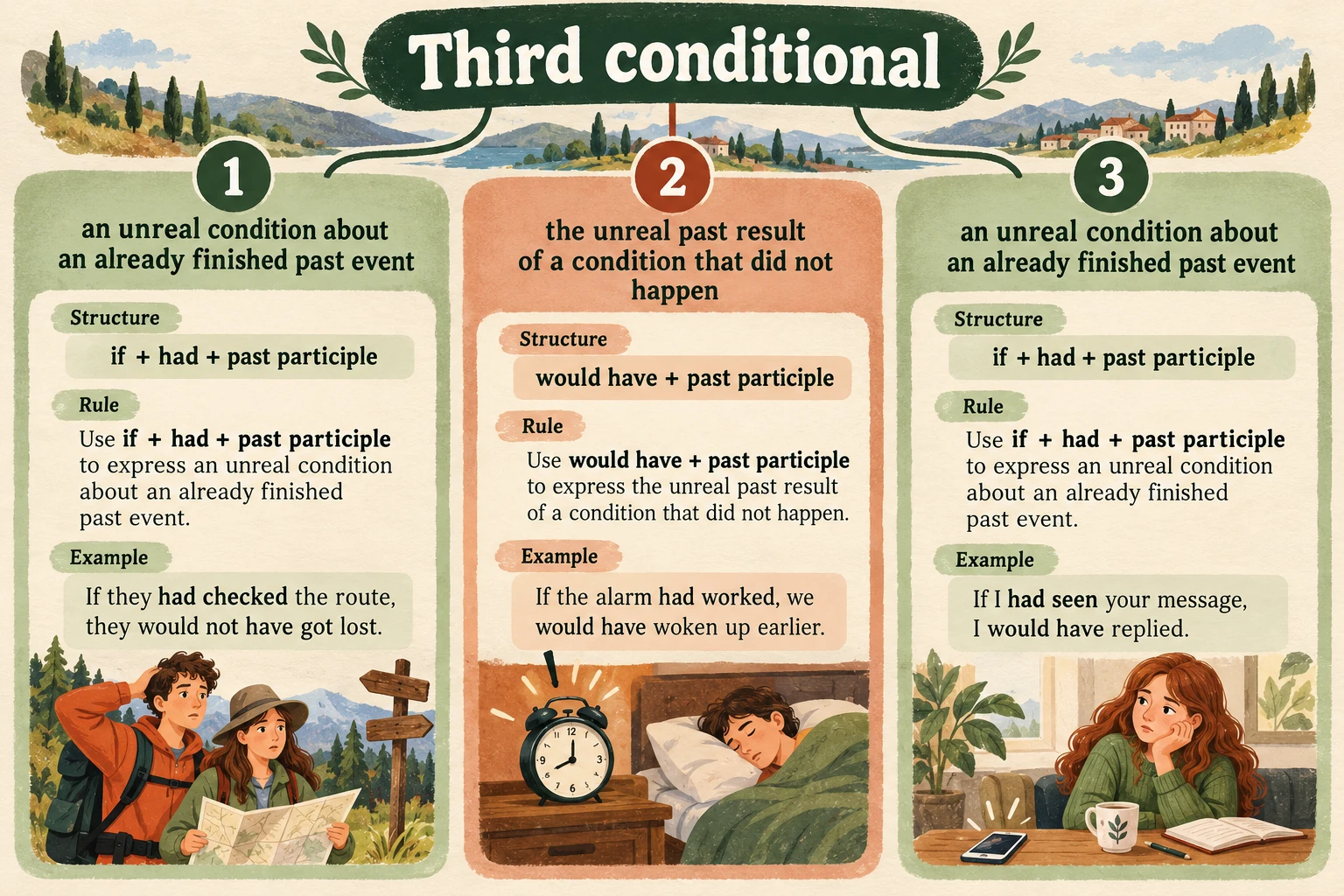
Use if + had + past participle para expressar uma condição irreal sobre um fato passado já encerrado.
If they had checked the route, they would not have got lost.
Terceira condicional · B2. Use if + had + past participle para expressar uma condição irreal sobre um fato passado já encerrado.
Resolva 12 tarefas originais. Use a situação para interpretar o sentido, praticar a estrutura e aplicá-la em um novo contexto.
Use if + had + past participle para expressar uma condição irreal sobre um fato passado já encerrado.
If they had checked the route, they would not have got lost.Use would have + past participle para expressar o resultado passado irreal de uma condição que não aconteceu.
If the alarm had worked, we would have woken up earlier.Use if + had + past participle para expressar uma condição irreal sobre um fato passado já encerrado.
If I had seen your message, I would have replied.
They did not check the route yesterday and got lost. Imagine the opposite past.
Use if + had + past participle para expressar uma condição irreal sobre um fato passado já encerrado.
If they had checked the route, they would not have got lost.Use would have + past participle para expressar o resultado passado irreal de uma condição que não aconteceu.
If the alarm had worked, we would have woken up earlier.Use if + had + past participle para expressar uma condição irreal sobre um fato passado já encerrado.
If I had seen your message, I would have replied.Guarde a primeira tentativa, entenda a mudança e confira em outra situação.
Ainda não há revisões. Faça um aquecimento curto.
Use if + had + past participle para expressar uma condição irreal sobre um fato passado já encerrado.
If they had checked the route, they would not have got lost.Use would have + past participle para expressar o resultado passado irreal de uma condição que não aconteceu.
If the alarm had worked, we would have woken up earlier.Use if + had + past participle para expressar uma condição irreal sobre um fato passado já encerrado.
If I had seen your message, I would have replied.Abrir uma resposta registra ajuda para essa questão.
They did not check the route yesterday and got lost. Imagine the opposite past.
A pista decisiva é “They did not check the route yesterday and got lost. Imagine the opposite past.”. Use if + had + past participle para expressar uma condição irreal sobre um fato passado já encerrado. Nesta tarefa, a frase completa é “If they had checked the route, they would not have got lost.”.
The alarm did not work, so nobody woke up in time.
A pista decisiva é “The alarm did not work, so nobody woke up in time.”. Use would have + past participle para expressar o resultado passado irreal de uma condição que não aconteceu. Nesta tarefa, a frase completa é “If the alarm had worked, we would have woken up earlier.”.
I did not see the message yesterday.
A pista decisiva é “I did not see the message yesterday.”. Use if + had + past participle para expressar uma condição irreal sobre um fato passado já encerrado. Nesta tarefa, a frase completa é “If I had seen your message, I would have replied.”.
The doors were not locked, allowing the theft last night.
A pista decisiva é “The doors were not locked, allowing the theft last night.”. Use if + had + past participle para expressar uma condição irreal sobre um fato passado já encerrado. Nesta tarefa, a frase completa é “If we had locked the doors, the theft would not have happened.”.
Use a would-result with attend for a counterfactual past consequence.
Frase completa: “If she had received the invitation, she would have attended the ceremony.” Use would have + past participle para expressar o resultado passado irreal de uma condição que não aconteceu. O sujeito, o tempo e o sentido da tarefa determinam esta forma. Só as respostas revisadas são comparadas automaticamente; outras formulações não estão automaticamente erradas.
The engineers did not detect the fault before launch.
A pista decisiva é “The engineers did not detect the fault before launch.”. Use if + had + past participle para expressar uma condição irreal sobre um fato passado já encerrado. Nesta tarefa, a frase completa é “If they had detected the fault, they would have postponed the launch.”.
Use the past perfect of leave for the unreal past condition.
Frase completa: “If we had left earlier, we would have caught the ferry.” Use if + had + past participle para expressar uma condição irreal sobre um fato passado já encerrado. O sujeito, o tempo e o sentido da tarefa determinam esta forma. Só as respostas revisadas são comparadas automaticamente; outras formulações não estão automaticamente erradas.
The backup was absent, so the records were lost.
A pista decisiva é “The backup was absent, so the records were lost.”. Use if + had + past participle para expressar uma condição irreal sobre um fato passado já encerrado. Nesta tarefa, a frase completa é “If a backup had existed, we would have recovered the records.”.
Use a negative would-result with fail for the past result opposite to what actually happened.
Frase completa: “If the battery had been charged, the device would not have failed.” Use would have + past participle para expressar o resultado passado irreal de uma condição que não aconteceu. O sujeito, o tempo e o sentido da tarefa determinam esta forma. Só as respostas revisadas são comparadas automaticamente; outras formulações não estão automaticamente erradas.
We did not book in advance and paid more last weekend.
A pista decisiva é “We did not book in advance and paid more last weekend.”. Use if + had + past participle para expressar uma condição irreal sobre um fato passado já encerrado. Nesta tarefa, a frase completa é “If we had booked in advance, we would have paid less.”.
A fact about last year is being imagined differently.
A pista decisiva é “A fact about last year is being imagined differently.”. Use would have + past participle para expressar o resultado passado irreal de uma condição que não aconteceu. Nesta tarefa, a frase completa é “If the museum had extended its hours, more visitors would have visited it.”.
Use the past perfect passive of repair for the unreal condition before yesterday’s accident.
Frase completa: “If the brakes had been repaired properly, the accident would not have happened.” Use if + had + past participle para expressar uma condição irreal sobre um fato passado já encerrado. O sujeito, o tempo e o sentido da tarefa determinam esta forma. Só as respostas revisadas são comparadas automaticamente; outras formulações não estão automaticamente erradas.