
B1

A food rescue project

About this lesson

A food rescue project · B1. Keep the requested person, time, place or amount attached to the correct event.

Listen to the original English recording, answer the questions, then open the transcript to check the evidence. These related questions use the same recording; the level is an editorial guide, not a certified result.

10 items
Save it to find it in My collection.
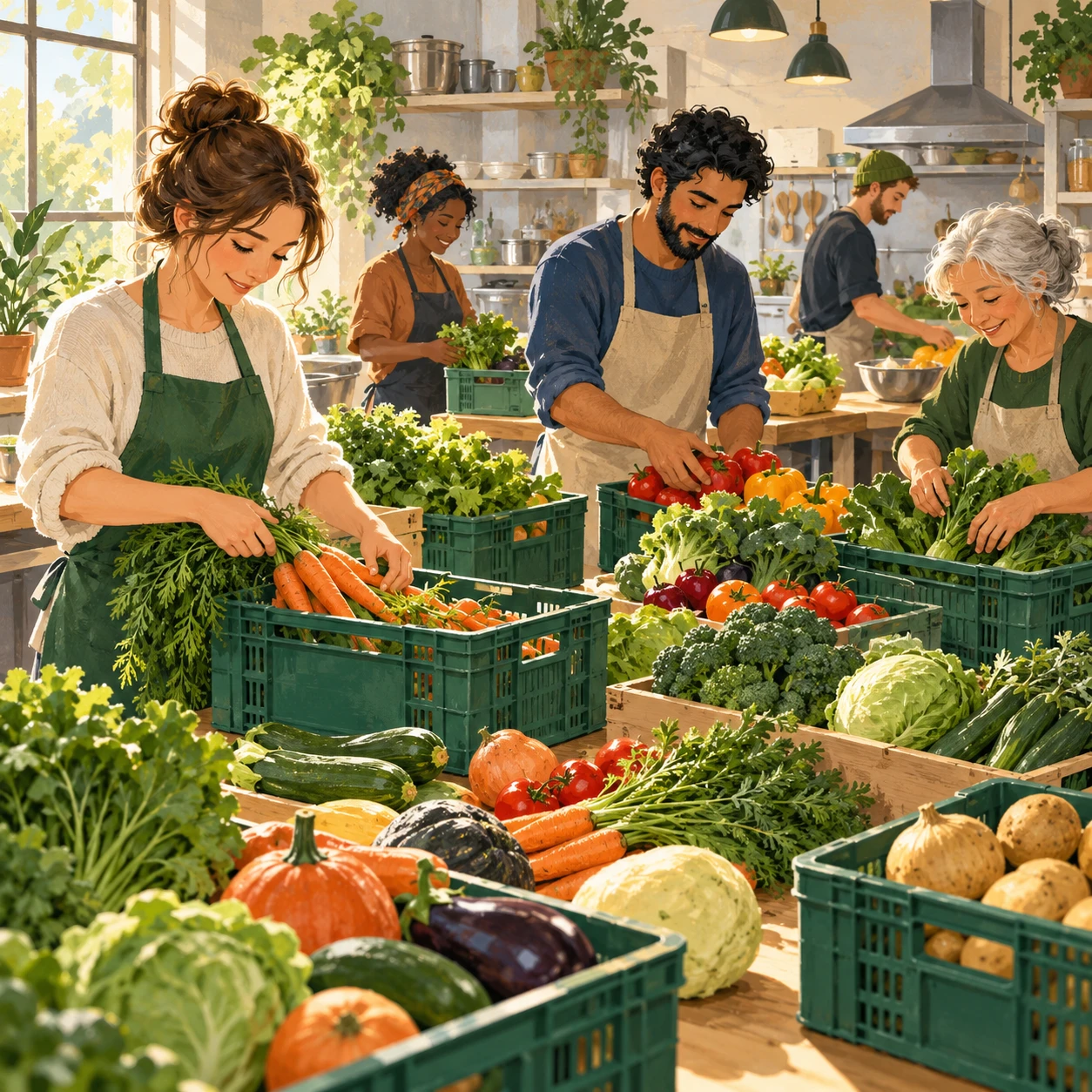
A food rescue project — context illustration
ListeningB1

Learning to organise surplus food

Listen to the original English recording, answer the questions, then open the transcript to check the evidence. These related questions use the same recording; the level is an editorial guide, not a certified result.

A little clarity first

Stated details · Conditions and permissions · Reasons

Keep the requested person, time, place or amount attached to the correct event. Keep the stated condition or permission; a rule does not prove that an event happened. Use the reason actually given; a plausible reason from outside the text is not enough.

The doors open at eight. The class starts at nine.

Conditions and permissions · Viewpoint and evaluation

Keep the stated condition or permission; a rule does not prove that an event happened. Look for evaluations and reservations; do not turn a positive fact into unconditional approval.

If the front door is locked, use the side entrance.

Learning material
A food rescue project — context illustration
ListeningB1

Learning to organise surplus food

Listen to the original English recording, answer the questions, then open the transcript to check the evidence. These related questions use the same recording; the level is an editorial guide, not a certified result.

0/10
Questions
01 / 10D01Save it to find it in My collection.

Learning to organise surplus food

Who decides what a stall can donate?

Your answer
1 / 10

Your learning route

01
Step 1 · Warm-up

Warm-up

0/3
02
Step 2 · Build the skill

Stated details

0/1

Keep the requested person, time, place or amount attached to the correct event.

The doors open at eight. The class starts at nine.
03
Step 3 · Build the skill

Stated details · Conditions and permissions · Reasons

0/1

Keep the requested person, time, place or amount attached to the correct event. Keep the stated condition or permission; a rule does not prove that an event happened. Use the reason actually given; a plausible reason from outside the text is not enough.

The doors open at eight. The class starts at nine.
04
Step 4 · Build the skill

Conditions and permissions · Viewpoint and evaluation

0/1

Keep the stated condition or permission; a rule does not prove that an event happened. Look for evaluations and reservations; do not turn a positive fact into unconditional approval.

If the front door is locked, use the side entrance.
05
Step 5 · Related practice

Related practice

0/2
06
Step 6 · Text challenge

Text challenge

0/2
Practice notes in this unit

Make mistakes useful.

Keep your first attempt, check the evidence and try another question. A follow-up on the same material does not prove transfer to a new text.

0

No practice notes yet. Try a short warm-up.

Lesson map

A food rescue project

B1
A food rescue project

Lesson points

01

Stated details · Conditions and permissions · Reasons

Keep the requested person, time, place or amount attached to the correct event. Keep the stated condition or permission; a rule does not prove that an event happened. Use the reason actually given; a plausible reason from outside the text is not enough.

The doors open at eight. The class starts at nine.
02

Conditions and permissions · Viewpoint and evaluation

Keep the stated condition or permission; a rule does not prove that an event happened. Look for evaluations and reservations; do not turn a positive fact into unconditional approval.

If the front door is locked, use the side entrance.

Questions & answers

Opening an answer records help for that question.

D01 · Warm-up

Learning to organise surplus food

Who decides what a stall can donate?

  1. The cook, who selects food from the stalls without asking.
  2. The volunteer carrying crates to the van.
  3. The stallholder.
  4. The volunteer checking the collection list.
Answer & explanation
The stallholder.

Answer: “The stallholder.”. Evidence: “The stallholders choose what they can donate; volunteers do not take anything without permission.”. Check “The volunteer checking the collection list.”: This gives the action or role to the wrong person or group. Evidence: “One volunteer checks the collection list”. Check “The volunteer carrying crates to the van.”: This gives the action or role to the wrong person or group. Evidence: “another carries the crates to our van.”.

D02 · Warm-up

Learning to organise surplus food

What occupied most of the speaker’s first month?

  1. Teaching the kitchen staff how to grow vegetables.
  2. Selling the donated food at market stalls.
  3. Learning to organise useful, safe collections.
  4. Collecting boxes, with little time spent planning.
Answer & explanation
Learning to organise useful, safe collections.

Answer: “Learning to organise useful, safe collections.”. Evidence: “my first month was mainly about learning how to organise collections safely and finding out what the community kitchen could actually use.”. Check “Collecting boxes, with little time spent planning.”: This was expected at first. It is not the later, unexpected result asked about. Evidence: “I expected to spend most of my time collecting boxes.”. Check “Teaching the kitchen staff how to grow vegetables.”: The text does not give this detail. Do not add it.

D03 · Warm-up

Learning to organise surplus food

What should a visitor understand about the bags of fresh produce?

  1. Their contents vary, so a particular item is not guaranteed.
  2. The contents are selected in advance to suit every visitor.
  3. A requested vegetable can always be reserved until the next week.
  4. All visitors receive the same produce whenever they attend.
Answer & explanation
Their contents vary, so a particular item is not guaranteed.

Answer: “Their contents vary, so a particular item is not guaranteed.”. Evidence: “We do not promise that every visitor will receive the same selection, because the supply changes from week to week.”. Check “The contents are selected in advance to suit every visitor.”: This makes the statement wider or stronger than the text allows. Check “A requested vegetable can always be reserved until the next week.”: This makes the statement wider or stronger than the text allows.

P01 · Build the skill

Learning to organise surplus food

When does the project collect food?

  1. On Wednesday afternoons.
  2. On Thursday afternoons.
  3. On the day meals are served at the kitchen.
  4. On Wednesday mornings.
Answer & explanation
On Wednesday afternoons.

Answer: “On Wednesday afternoons.”. Evidence: “We collect surplus food from three market stalls on Wednesday afternoons.”. Check “On Wednesday mornings.”: This is not the time asked for. Check “On the day meals are served at the kitchen.”: This mixes up the time of this event with another time. Evidence: “The vegetables go into meals served at the kitchen the next day.”.

P02 · Build the skill

Learning to organise surplus food

What happens if volunteers are uncertain about an unexpected donation?

  1. They automatically accept every box.
  2. Leave the uncertain donation with visitors at the market.
  3. Reject any item that is not already on the list.
  4. They phone the cook before accepting an uncertain amount or use.
Answer & explanation
They phone the cook before accepting an uncertain amount or use.

Answer: “They phone the cook before accepting an uncertain amount or use.”. Evidence: “we phone the cook if we are unsure about the quantity or how an item can be used.”. Check “They automatically accept every box.”: This was the earlier plan, not the final one. Evidence: “At first we accepted every donation because refusing food felt wrong.”. Check “Reject any item that is not already on the list.”: This makes the statement wider or stronger than the text allows. Evidence: “We still welcome unexpected donations”.

P03 · Build the skill

Learning to organise surplus food

What does the speaker now consider the most important sign of success?

  1. Useful food reaching people in time.
  2. Giving every visitor an identical bag of produce.
  3. The number of different donations accepted without refusals.
  4. The weight collected, regardless of use.
Answer & explanation
Useful food reaching people in time.

Answer: “Useful food reaching people in time.”. Evidence: “Collecting a large weight of food looks impressive, but it matters more whether the food is usable and reaches people in time.”. Check “The weight collected, regardless of use.”: This uses a different test of success from the one in the text. Evidence: “Collecting a large weight of food looks impressive”. Check “The number of different donations accepted without refusals.”: This uses a different test of success from the one in the text.

R01 · Related practice

Learning to organise surplus food

Why does the kitchen now send a list before collection?

  1. An unsuitable large donation had led to some waste.
  2. The reusable crates cannot hold mixed vegetables.
  3. The stalls required the project to collect identical amounts each week.
  4. Visitors wanted the kitchen to stop cooking surplus food.
Answer & explanation
An unsuitable large donation had led to some waste.

Answer: “An unsuitable large donation had led to some waste.”. Evidence: “Then we received six boxes of an unfamiliar vegetable that nobody at the kitchen knew how to prepare. Some of it was wasted. Now the kitchen sends us a short list before each collection.”. Check “The reusable crates cannot hold mixed vegetables.”: The text does not give this detail. Do not add it. Check “Visitors wanted the kitchen to stop cooking surplus food.”: The text does not give this detail. Do not add it.

R02 · Related practice

Learning to organise surplus food

From how many market stalls does the project collect food?

  1. One.
  2. Four.
  3. Three.
  4. Six.
Answer & explanation
Three.

Answer: “Three.”. Evidence: “We collect surplus food from three market stalls on Wednesday afternoons.”. Check “Four.”: This is the wrong number for the thing asked about. Check “One.”: This is the wrong number for the thing asked about.

X01 · Text challenge

Learning to organise surplus food

When are the collected vegetables used in kitchen meals?

  1. Only when the same produce arrives again the following week.
  2. On the afternoon before they are collected.
  3. The next day.
  4. On the next collection afternoon.
Answer & explanation
The next day.

Answer: “The next day.”. Evidence: “The vegetables go into meals served at the kitchen the next day.”. Check “On the afternoon before they are collected.”: This changes the order of the actions. Check “On the next collection afternoon.”: This mixes up the time of this event with another time. Evidence: “We collect surplus food from three market stalls on Wednesday afternoons.”.

X02 · Text challenge

Learning to organise surplus food

What new information will the project record?

  1. Which stalls sell the most produce before collection.
  2. Only the number and weight of collections.
  3. What food is actually cooked or distributed.
  4. Only how much each collection weighs.
Answer & explanation
What food is actually cooked or distributed.

Answer: “What food is actually cooked or distributed.”. Evidence: “We are starting to record what is actually cooked or distributed, rather than counting collections alone.”. Check “Only the number and weight of collections.”: This uses a different test of success from the one in the text. Evidence: “rather than counting collections alone.”. Check “Only how much each collection weighs.”: This uses a different test of success from the one in the text. Evidence: “Collecting a large weight of food looks impressive”.