01습관과 반복
습관이나 반복은 현재시제로 쓰고 he/she/it에는 보통 -s를 붙입니다.
She walks to class daily.
현재시제와 현재진행형 · A1. 습관이나 반복은 현재시제로 쓰고 he/she/it에는 보통 -s를 붙입니다.
짧은 상황에서 ‘현재시제와 현재진행형’을 연습합니다. 단서를 읽고 형태를 고르거나 쓴 뒤 이유를 확인하세요. 수준은 편집상 안내입니다.
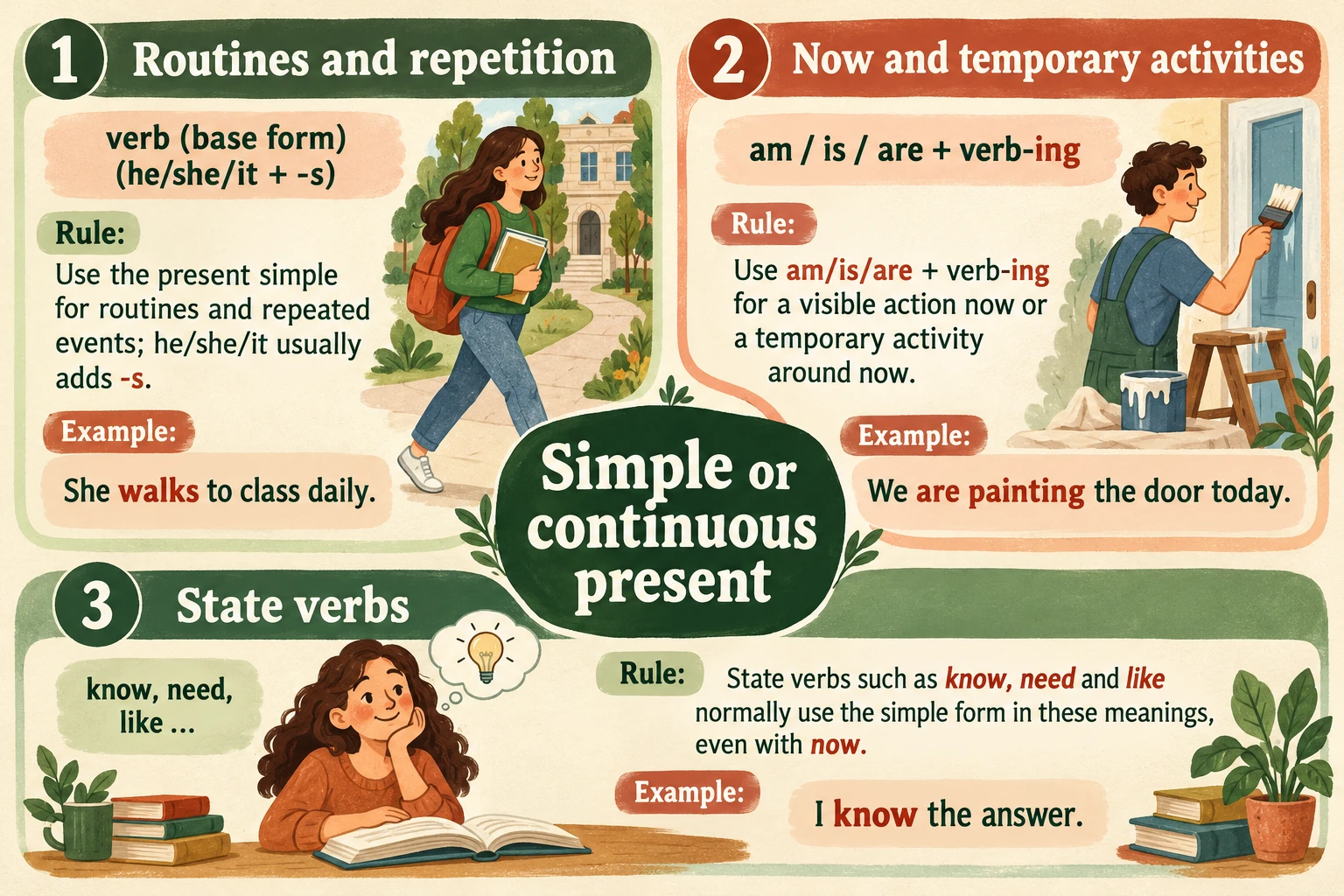
습관이나 반복은 현재시제로 쓰고 he/she/it에는 보통 -s를 붙입니다.
She walks to class daily.지금 보이는 동작이나 일시적인 활동에는 am/is/are+동사-ing를 씁니다.
We are painting the door today.know·need·like가 상태를 나타내면 now가 있어도 보통 현재시제를 씁니다.
I know the answer.
Every Monday, Ben ___ to work. (cycle)
습관이나 반복은 현재시제로 쓰고 he/she/it에는 보통 -s를 붙입니다.
She walks to class daily.지금 보이는 동작이나 일시적인 활동에는 am/is/are+동사-ing를 씁니다.
We are painting the door today.know·need·like가 상태를 나타내면 now가 있어도 보통 현재시제를 씁니다.
I know the answer.첫 시도를 남기고 변화의 이유를 이해한 뒤 새로운 상황에서 확인해 보세요.
아직 복습 노트가 없어요. 짧은 워밍업부터 해보세요.
습관이나 반복은 현재시제로 쓰고 he/she/it에는 보통 -s를 붙입니다.
She walks to class daily.지금 보이는 동작이나 일시적인 활동에는 am/is/are+동사-ing를 씁니다.
We are painting the door today.know·need·like가 상태를 나타내면 now가 있어도 보통 현재시제를 씁니다.
I know the answer.정답을 열면 해당 문제에 도움 사용이 기록돼요.
Every Monday, Ben ___ to work. (cycle)
“Every Monday, Ben ___ to work. (cycle)”를 보세요. 습관이나 반복은 현재시제로 쓰고 he/she/it에는 보통 -s를 붙입니다. 완성 문장: “Every Monday, Ben cycles to work. (cycle)”.
Be quiet! The baby ___ now. (sleep)
“Be quiet! The baby ___ now. (sleep)”를 보세요. 지금 보이는 동작이나 일시적인 활동에는 am/is/are+동사-ing를 씁니다. 완성 문장: “Be quiet! The baby is sleeping now. (sleep)”.
I ___ your address now; you told me yesterday. (know)
“I ___ your address now; you told me yesterday. (know)”를 보세요. know·need·like가 상태를 나타내면 now가 있어도 보통 현재시제를 씁니다. 완성 문장: “I know your address now; you told me yesterday. (know)”.
My parents ___ coffee every morning. (drink)
완성 예문: “My parents drink coffee every morning. (drink)”. 습관이나 반복은 현재시제로 쓰고 he/she/it에는 보통 -s를 붙입니다.
I usually work at home, but this week I ___ in the office. (work)
“I usually work at home, but this week I ___ in the office. (work)”를 보세요. 지금 보이는 동작이나 일시적인 활동에는 am/is/are+동사-ing를 씁니다. 완성 문장: “I usually work at home, but this week I am working in the office. (work)”.
We ___ a larger table; this one is too small. (need)
“We ___ a larger table; this one is too small. (need)”를 보세요. know·need·like가 상태를 나타내면 now가 있어도 보통 현재시제를 씁니다. 완성 문장: “We need a larger table; this one is too small. (need)”.
This bus ___ here at six every day. (stop)
완성 예문: “This bus stops here at six every day. (stop)”. 습관이나 반복은 현재시제로 쓰고 he/she/it에는 보통 -s를 붙입니다.
Kai ___ his grandmother every Sunday. (visit)
“Kai ___ his grandmother every Sunday. (visit)”를 보세요. 습관이나 반복은 현재시제로 쓰고 he/she/it에는 보통 -s를 붙입니다. 완성 문장: “Kai visits his grandmother every Sunday. (visit)”.
Look at Mia! She ___ a kite. (fly)
“Look at Mia! She ___ a kite. (fly)”를 보세요. 지금 보이는 동작이나 일시적인 활동에는 am/is/are+동사-ing를 씁니다. 완성 문장: “Look at Mia! She is flying a kite. (fly)”.
Sara ___ this song. It is her favourite. (like)
완성 예문: “Sara likes this song. It is her favourite. (like)”. know·need·like가 상태를 나타내면 now가 있어도 보통 현재시제를 씁니다.
The shop is closed for repairs, so we ___ online this month. (sell)
“The shop is closed for repairs, so we ___ online this month. (sell)”를 보세요. 지금 보이는 동작이나 일시적인 활동에는 am/is/are+동사-ing를 씁니다. 완성 문장: “The shop is closed for repairs, so we are selling online this month. (sell)”.
This soup ___ wonderful. I can smell the garlic. (smell)
완성 예문: “This soup smells wonderful. I can smell the garlic. (smell)”. know·need·like가 상태를 나타내면 now가 있어도 보통 현재시제를 씁니다.