01규칙 복수 -s와 -es
보통 -s를 붙이고 -sh·-ch·-s·-x로 끝나면 -es를 붙입니다.
Two cups are clean.
단수와 복수 명사 · A1. 보통 -s를 붙이고 -sh·-ch·-s·-x로 끝나면 -es를 붙입니다.
짧은 상황에서 ‘단수와 복수 명사’을 연습합니다. 단서를 읽고 형태를 고르거나 쓴 뒤 이유를 확인하세요. 수준은 편집상 안내입니다.
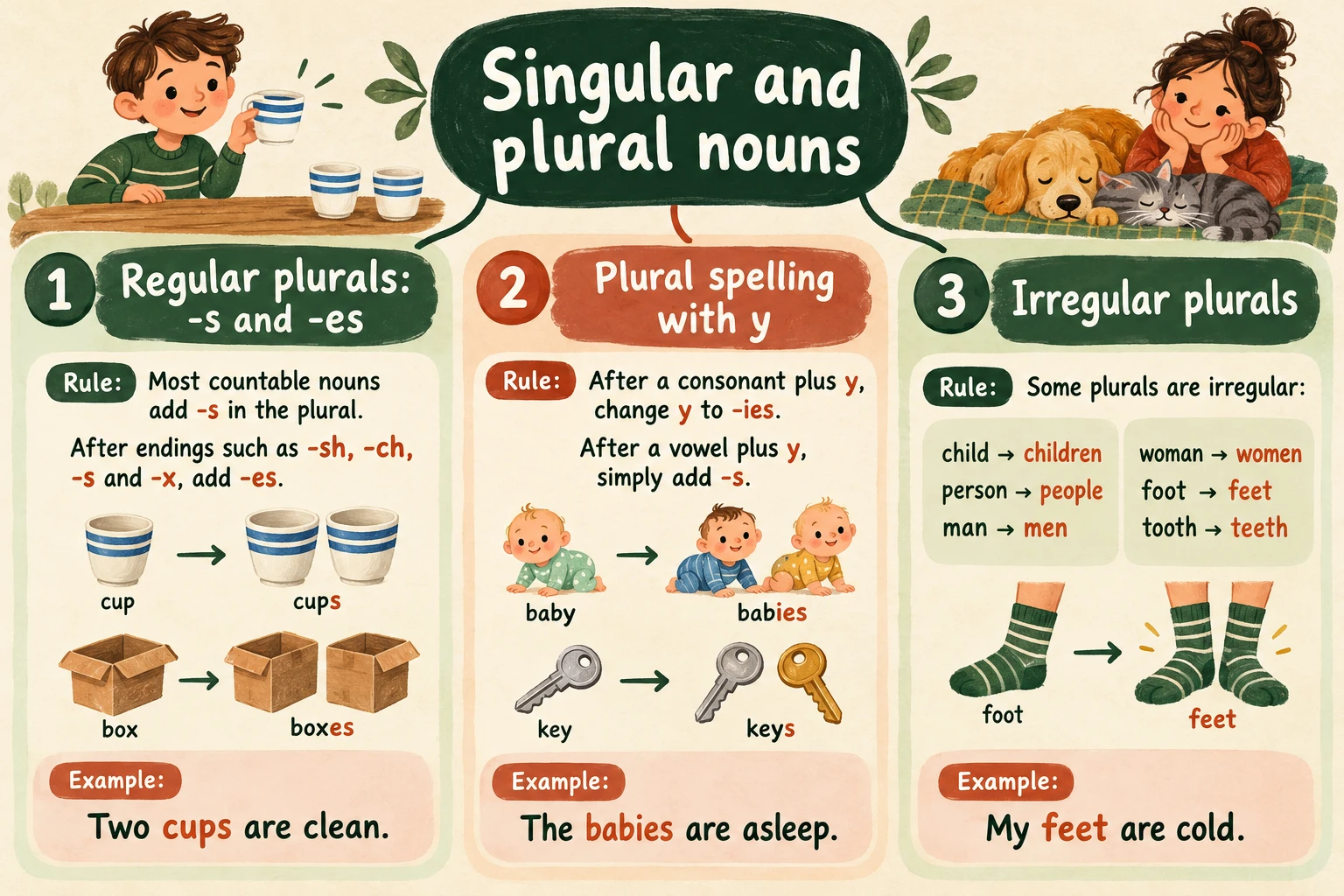
보통 -s를 붙이고 -sh·-ch·-s·-x로 끝나면 -es를 붙입니다.
Two cups are clean.자음+y는 y를 -ies로 바꾸고 모음+y는 -s만 붙입니다.
The babies are asleep.불규칙 복수형은 child→children, person→people, man→men, woman→women, foot→feet, tooth→teeth 등입니다.
My feet are cold.
The removal team carried three large ___ upstairs. (box)
보통 -s를 붙이고 -sh·-ch·-s·-x로 끝나면 -es를 붙입니다.
Two cups are clean.자음+y는 y를 -ies로 바꾸고 모음+y는 -s만 붙입니다.
The babies are asleep.불규칙 복수형은 child→children, person→people, man→men, woman→women, foot→feet, tooth→teeth 등입니다.
My feet are cold.첫 시도를 남기고 변화의 이유를 이해한 뒤 새로운 상황에서 확인해 보세요.
아직 복습 노트가 없어요. 짧은 워밍업부터 해보세요.
보통 -s를 붙이고 -sh·-ch·-s·-x로 끝나면 -es를 붙입니다.
Two cups are clean.자음+y는 y를 -ies로 바꾸고 모음+y는 -s만 붙입니다.
The babies are asleep.불규칙 복수형은 child→children, person→people, man→men, woman→women, foot→feet, tooth→teeth 등입니다.
My feet are cold.정답을 열면 해당 문제에 도움 사용이 기록돼요.
The removal team carried three large ___ upstairs. (box)
“The removal team carried three large ___ upstairs. (box)”를 보세요. 보통 -s를 붙이고 -sh·-ch·-s·-x로 끝나면 -es를 붙입니다. 완성 문장: “The removal team carried three large boxes upstairs. (box)”.
Our street has two new ___. (family)
“Our street has two new ___. (family)”를 보세요. 자음+y는 y를 -ies로 바꾸고 모음+y는 -s만 붙입니다. 완성 문장: “Our street has two new families. (family)”.
The school has sixty ___. (child)
“The school has sixty ___. (child)”를 보세요. 불규칙 복수형은 child→children, person→people, man→men, woman→women, foot→feet, tooth→teeth 등입니다. 완성 문장: “The school has sixty children. (child)”.
There are four ___ on this route. (bus)
완성 예문: “There are four buses on this route. (bus)”. 보통 -s를 붙이고 -sh·-ch·-s·-x로 끝나면 -es를 붙입니다. 보통 buses를 배우지만, busses도 bus의 표준 복수 철자이므로 인정합니다.
The twins share their ___. (toy)
“The twins share their ___. (toy)”를 보세요. 과제는 복수형입니다. toy는 모음+y이므로 y를 남기고 -s를 붙여 toys로 만듭니다. 완성 문장: “The twins share their toys. (toy)”.
Five ___ work in the laboratory. (woman)
“Five ___ work in the laboratory. (woman)”를 보세요. 불규칙 복수형은 child→children, person→people, man→men, woman→women, foot→feet, tooth→teeth 등입니다. 완성 문장: “Five women work in the laboratory. (woman)”.
I washed six ___ after lunch. (dish)
완성 예문: “I washed six dishes after lunch. (dish)”. 보통 -s를 붙이고 -sh·-ch·-s·-x로 끝나면 -es를 붙입니다.
We packed eight ___ for the art class. (brush)
“We packed eight ___ for the art class. (brush)”를 보세요. 보통 -s를 붙이고 -sh·-ch·-s·-x로 끝나면 -es를 붙입니다. 완성 문장: “We packed eight brushes for the art class. (brush)”.
The library serves three nearby ___. (city)
“The library serves three nearby ___. (city)”를 보세요. 자음+y는 y를 -ies로 바꾸고 모음+y는 -s만 붙입니다. 완성 문장: “The library serves three nearby cities. (city)”.
The baby has two new ___. (tooth)
완성 예문: “The baby has two new teeth. (tooth)”. 불규칙 복수형은 child→children, person→people, man→men, woman→women, foot→feet, tooth→teeth 등입니다.
The shop sells small ___ for doors. (key)
“The shop sells small ___ for doors. (key)”를 보세요. 자음+y는 y를 -ies로 바꾸고 모음+y는 -s만 붙입니다. 완성 문장: “The shop sells small keys for doors. (key)”.
Two ___ are waiting at reception. (person)
two 뒤에는 복수형이 필요합니다. person의 일상적인 복수형은 people이지만, 더 격식 있는 표준 복수형 persons도 인정합니다. 이 문제에서는 다음 표현도 확인된 답으로 인정합니다: persons. 가능한 모든 영어 표현의 목록은 아닙니다.