01주어 대명사
행동을 하는 주어에는 I·you·he·she·it·we·they를 씁니다.
We play tennis.
주격과 목적격 대명사 · A1. 행동을 하는 주어에는 I·you·he·she·it·we·they를 씁니다.
짧은 상황에서 ‘주격과 목적격 대명사’을 연습합니다. 단서를 읽고 형태를 고르거나 쓴 뒤 이유를 확인하세요. 수준은 편집상 안내입니다.
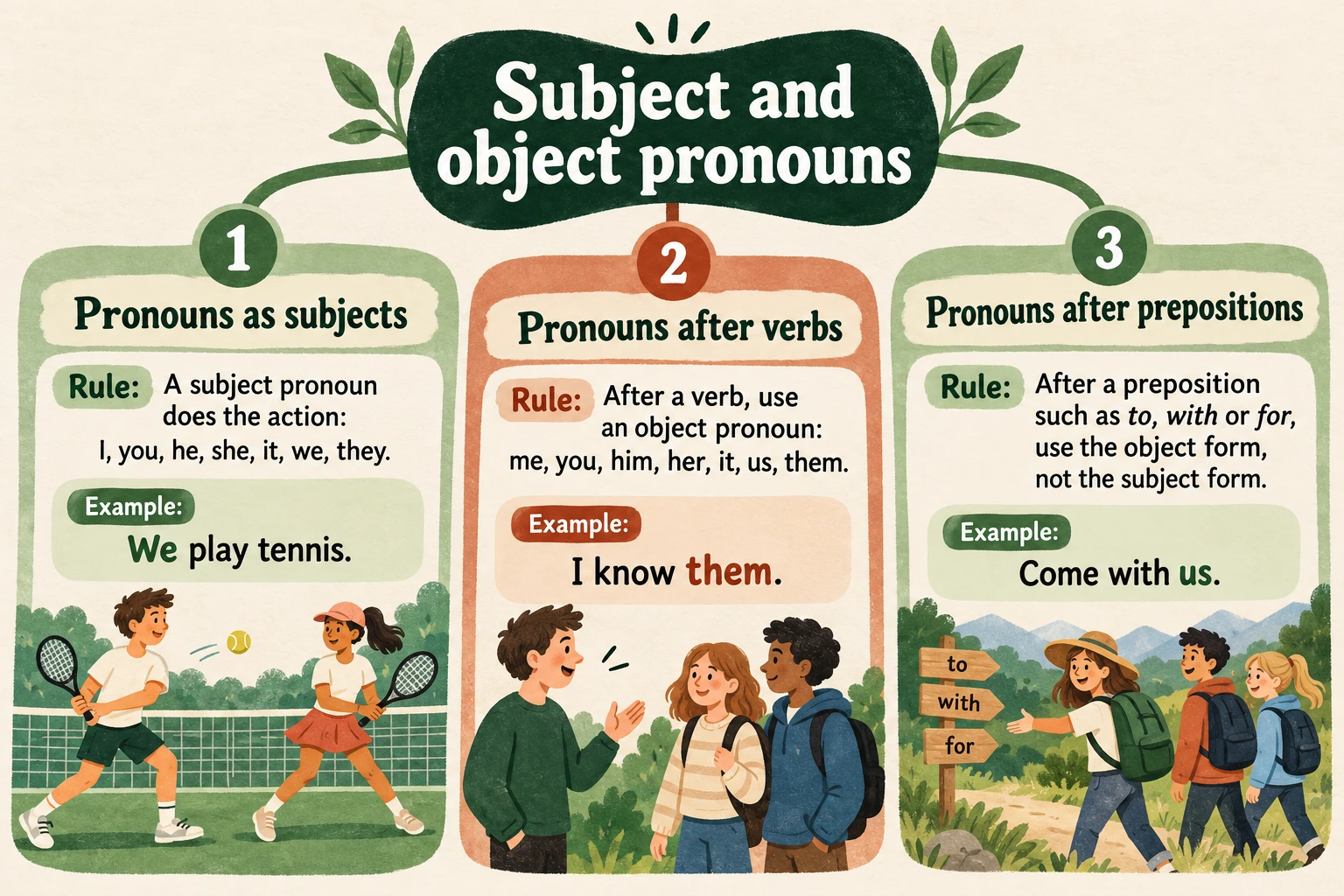
행동을 하는 주어에는 I·you·he·she·it·we·they를 씁니다.
We play tennis.동사의 목적어에는 me·you·him·her·it·us·them을 씁니다.
I know them.to·with·for 같은 전치사 뒤에는 목적격을 씁니다.
Come with us.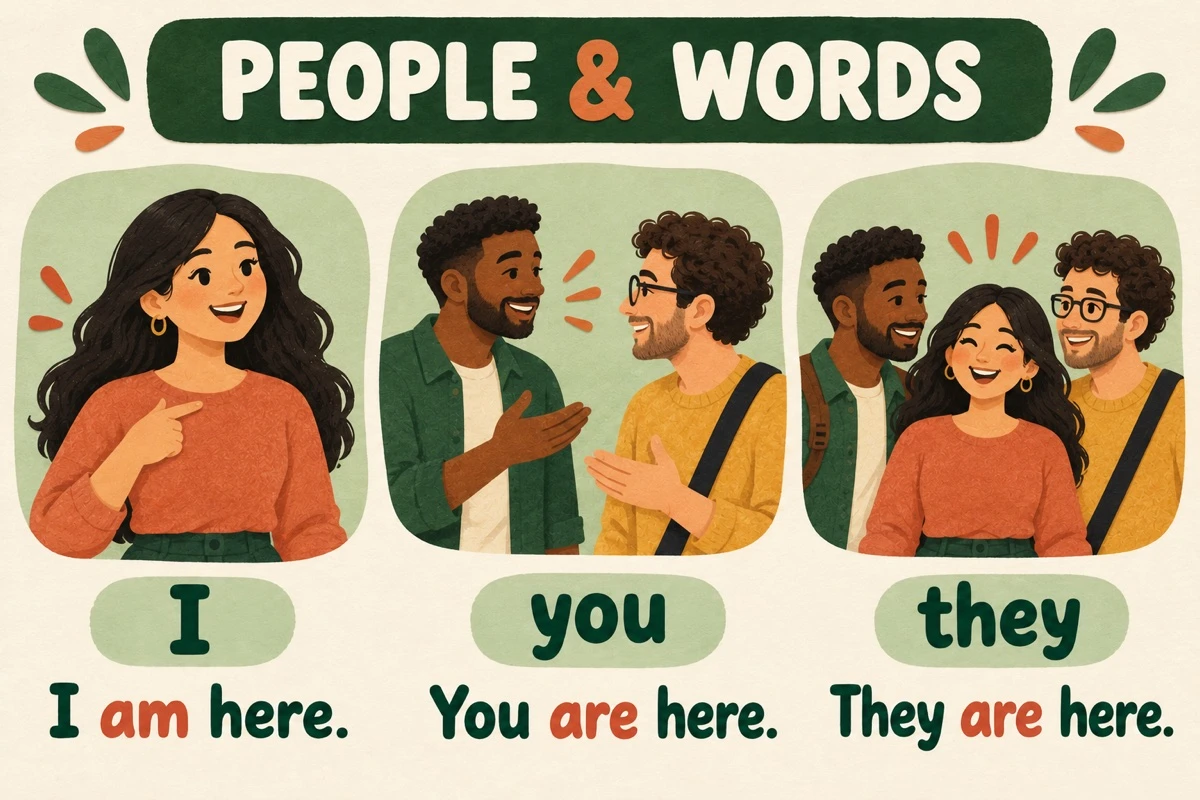
My name is Rosa. ___ work at the museum.
행동을 하는 주어에는 I·you·he·she·it·we·they를 씁니다.
We play tennis.동사의 목적어에는 me·you·him·her·it·us·them을 씁니다.
I know them.to·with·for 같은 전치사 뒤에는 목적격을 씁니다.
Come with us.첫 시도를 남기고 변화의 이유를 이해한 뒤 새로운 상황에서 확인해 보세요.
아직 복습 노트가 없어요. 짧은 워밍업부터 해보세요.
행동을 하는 주어에는 I·you·he·she·it·we·they를 씁니다.
We play tennis.동사의 목적어에는 me·you·him·her·it·us·them을 씁니다.
I know them.to·with·for 같은 전치사 뒤에는 목적격을 씁니다.
Come with us.정답을 열면 해당 문제에 도움 사용이 기록돼요.
My name is Rosa. ___ work at the museum.
“My name is Rosa. ___ work at the museum.”를 보세요. 행동을 하는 주어에는 I·you·he·she·it·we·they를 씁니다. 완성 문장: “My name is Rosa. I work at the museum.”.
Tom is waiting. Please call ___.
“Tom is waiting. Please call ___.”를 보세요. 동사의 목적어에는 me·you·him·her·it·us·them을 씁니다. 완성 문장: “Tom is waiting. Please call him.”.
The tickets are for Anna and me. They are for ___.
“The tickets are for Anna and me. They are for ___.”를 보세요. to·with·for 같은 전치사 뒤에는 목적격을 씁니다. 완성 문장: “The tickets are for Anna and me. They are for us.”.
My brother and I live together. ___ live on King Street.
완성 예문: “My brother and I live together. We live on King Street.”. 행동을 하는 주어에는 I·you·he·she·it·we·they를 씁니다.
These are my keys. Please give ___ back.
“These are my keys. Please give ___ back.”를 보세요. 동사의 목적어에는 me·you·him·her·it·us·them을 씁니다. 완성 문장: “These are my keys. Please give them back.”.
I am going with Sara. I am going with ___.
“I am going with Sara. I am going with ___.”를 보세요. to·with·for 같은 전치사 뒤에는 목적격을 씁니다. 완성 문장: “I am going with Sara. I am going with her.”.
The cat is hungry. ___ wants some food.
한 마리의 고양이를 중립적으로 가리키면 it을 씁니다. 성별을 아는 고양이는 he나 she로도 가리킬 수 있으며 모두 wants와 연결됩니다. 이 문제에서는 다음 표현도 확인된 답으로 인정합니다: He / She. 가능한 모든 영어 표현의 목록은 아닙니다.
My parents are here. ___ are in the kitchen.
“My parents are here. ___ are in the kitchen.”를 보세요. 행동을 하는 주어에는 I·you·he·she·it·we·they를 씁니다. 완성 문장: “My parents are here. They are in the kitchen.”.
I cannot hear the radio. Please turn ___ up.
“I cannot hear the radio. Please turn ___ up.”를 보세요. 동사의 목적어에는 me·you·him·her·it·us·them을 씁니다. 완성 문장: “I cannot hear the radio. Please turn it up.”.
This parcel is for my brother. It is for ___.
완성 예문: “This parcel is for my brother. It is for him.”. to·with·for 같은 전치사 뒤에는 목적격을 씁니다.
We need a photo of our whole group, including me. Can you take a photo of ___?
“We need a photo of our whole group, including me. Can you take a photo of ___?”를 보세요. 동사의 목적어에는 me·you·him·her·it·us·them을 씁니다. 완성 문장: “We need a photo of everyone. Can you take a photo of us?”.
Lena is new here. Please sit next to ___.
완성 예문: “Lena is new here. Please sit next to her.”. to·with·for 같은 전치사 뒤에는 목적격을 씁니다. Lena가 사용하는 대명사는 정해져 있지 않습니다. 단수 they의 목적격 them도 인정합니다. next to 뒤에는 주격이 아니라 목적격을 씁니다.