01習慣と繰り返し
習慣や繰り返しは現在形で表し、he/she/itでは通常-sを付けます。
She walks to class daily.
現在形と現在進行形 · A1. 習慣や繰り返しは現在形で表し、he/she/itでは通常-sを付けます。
短い場面で「現在形と現在進行形」を練習します。手がかりを読み、形を選ぶか入力してから理由を確認しましょう。レベルは編集上の目安です。
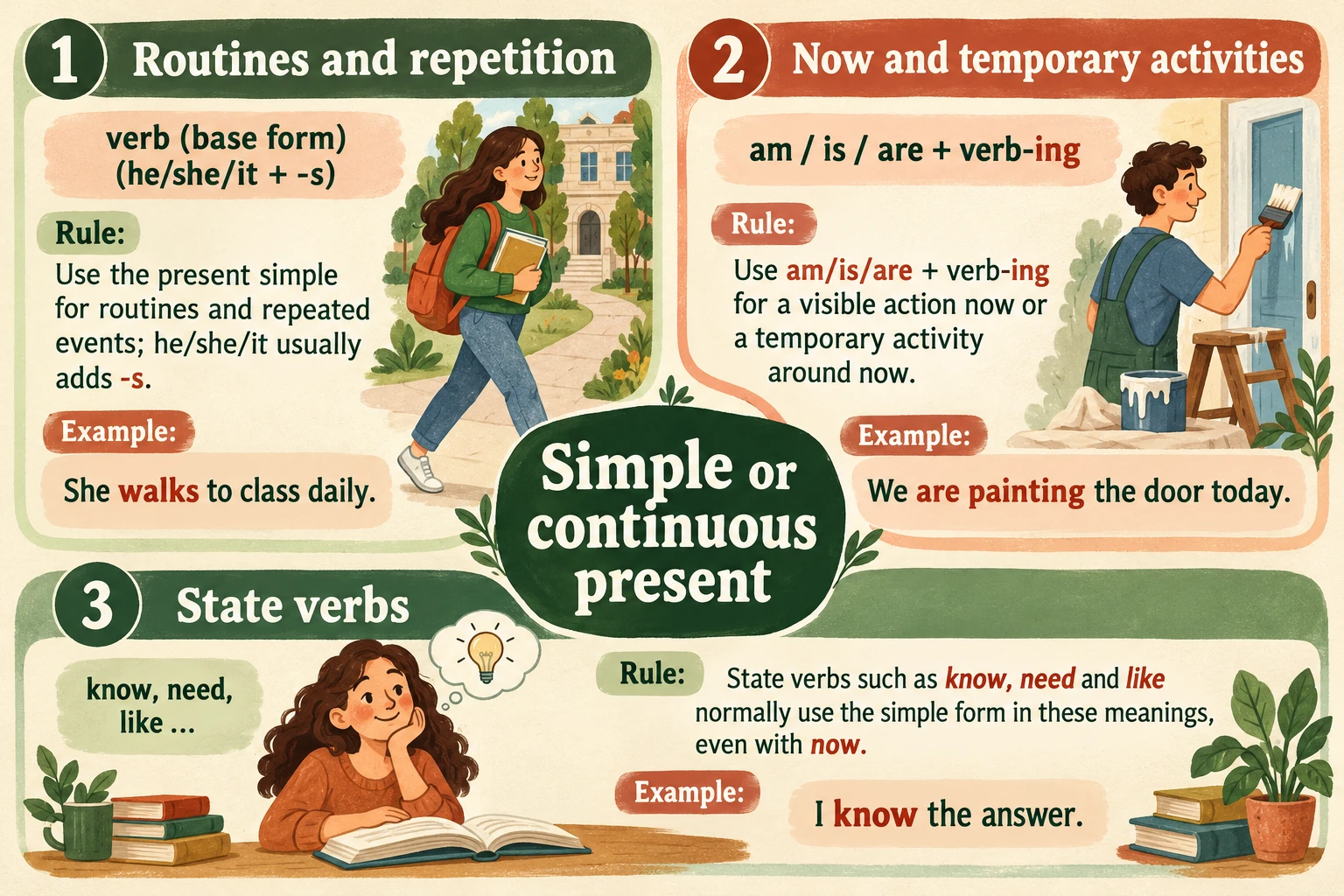
習慣や繰り返しは現在形で表し、he/she/itでは通常-sを付けます。
She walks to class daily.今見える動作や一時的な活動にはam/is/are+-ingを使います。
We are painting the door today.know・need・likeなど状態の意味では、nowがあっても通常は現在形を使います。
I know the answer.
Every Monday, Ben ___ to work. (cycle)
習慣や繰り返しは現在形で表し、he/she/itでは通常-sを付けます。
She walks to class daily.今見える動作や一時的な活動にはam/is/are+-ingを使います。
We are painting the door today.know・need・likeなど状態の意味では、nowがあっても通常は現在形を使います。
I know the answer.初回答を残し、変化の理由を理解して、別の場面で確かめます。
まだ復習ノートはありません。まずは短いウォームアップを。
習慣や繰り返しは現在形で表し、he/she/itでは通常-sを付けます。
She walks to class daily.今見える動作や一時的な活動にはam/is/are+-ingを使います。
We are painting the door today.know・need・likeなど状態の意味では、nowがあっても通常は現在形を使います。
I know the answer.解答を開くと、その問題にヒント利用が記録されます。
Every Monday, Ben ___ to work. (cycle)
「Every Monday, Ben ___ to work. (cycle)」に注目しましょう。習慣や繰り返しは現在形で表し、he/she/itでは通常-sを付けます。 完成文:「Every Monday, Ben cycles to work. (cycle)」。
Be quiet! The baby ___ now. (sleep)
「Be quiet! The baby ___ now. (sleep)」に注目しましょう。今見える動作や一時的な活動にはam/is/are+-ingを使います。 完成文:「Be quiet! The baby is sleeping now. (sleep)」。
I ___ your address now; you told me yesterday. (know)
「I ___ your address now; you told me yesterday. (know)」に注目しましょう。know・need・likeなど状態の意味では、nowがあっても通常は現在形を使います。 完成文:「I know your address now; you told me yesterday. (know)」。
My parents ___ coffee every morning. (drink)
完成例:「My parents drink coffee every morning. (drink)」。習慣や繰り返しは現在形で表し、he/she/itでは通常-sを付けます。
I usually work at home, but this week I ___ in the office. (work)
「I usually work at home, but this week I ___ in the office. (work)」に注目しましょう。今見える動作や一時的な活動にはam/is/are+-ingを使います。 完成文:「I usually work at home, but this week I am working in the office. (work)」。
We ___ a larger table; this one is too small. (need)
「We ___ a larger table; this one is too small. (need)」に注目しましょう。know・need・likeなど状態の意味では、nowがあっても通常は現在形を使います。 完成文:「We need a larger table; this one is too small. (need)」。
This bus ___ here at six every day. (stop)
完成例:「This bus stops here at six every day. (stop)」。習慣や繰り返しは現在形で表し、he/she/itでは通常-sを付けます。
Kai ___ his grandmother every Sunday. (visit)
「Kai ___ his grandmother every Sunday. (visit)」に注目しましょう。習慣や繰り返しは現在形で表し、he/she/itでは通常-sを付けます。 完成文:「Kai visits his grandmother every Sunday. (visit)」。
Look at Mia! She ___ a kite. (fly)
「Look at Mia! She ___ a kite. (fly)」に注目しましょう。今見える動作や一時的な活動にはam/is/are+-ingを使います。 完成文:「Look at Mia! She is flying a kite. (fly)」。
Sara ___ this song. It is her favourite. (like)
完成例:「Sara likes this song. It is her favourite. (like)」。know・need・likeなど状態の意味では、nowがあっても通常は現在形を使います。
The shop is closed for repairs, so we ___ online this month. (sell)
「The shop is closed for repairs, so we ___ online this month. (sell)」に注目しましょう。今見える動作や一時的な活動にはam/is/are+-ingを使います。 完成文:「The shop is closed for repairs, so we are selling online this month. (sell)」。
This soup ___ wonderful. I can smell the garlic. (smell)
完成例:「This soup smells wonderful. I can smell the garlic. (smell)」。know・need・likeなど状態の意味では、nowがあっても通常は現在形を使います。