01주어와의 일치
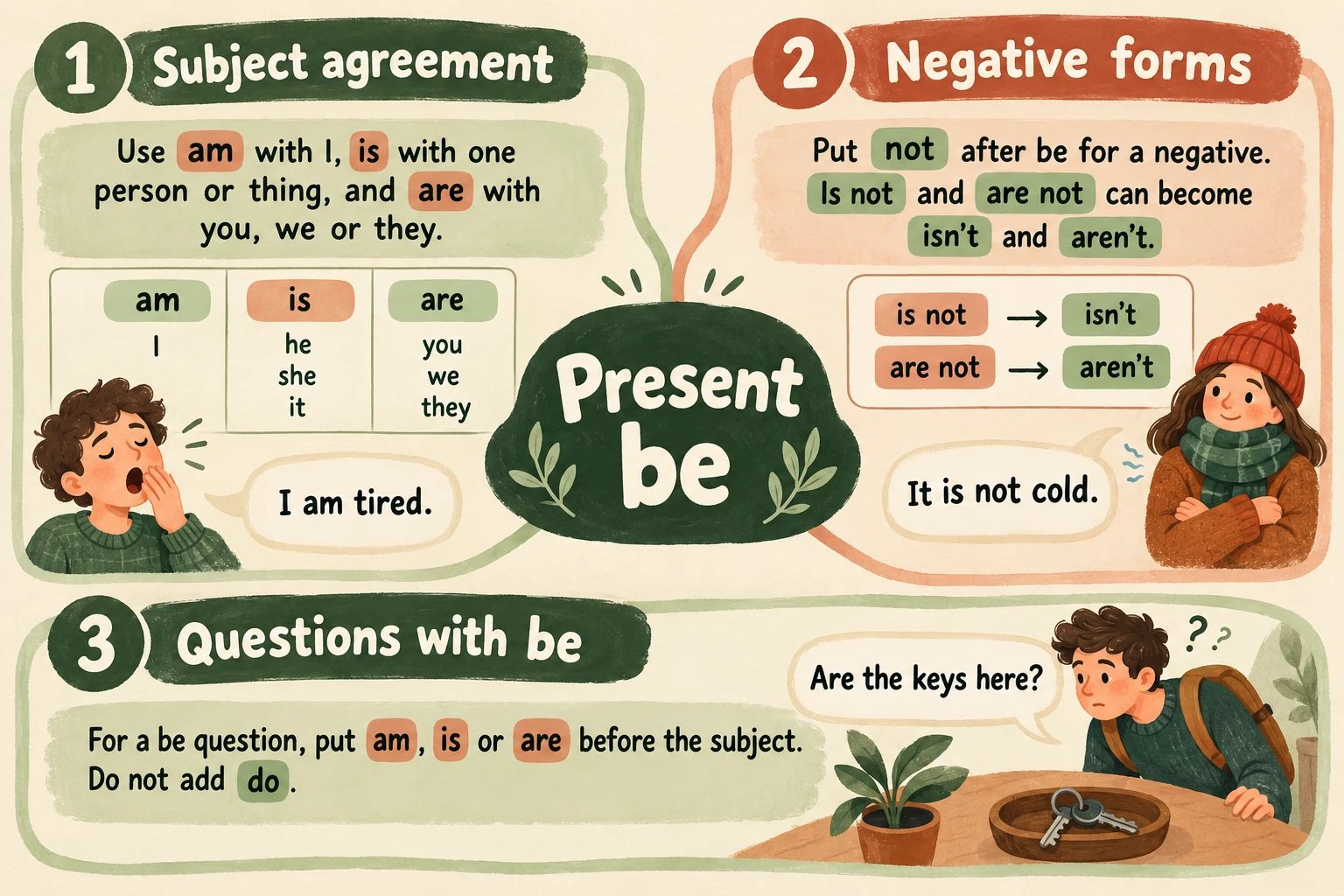
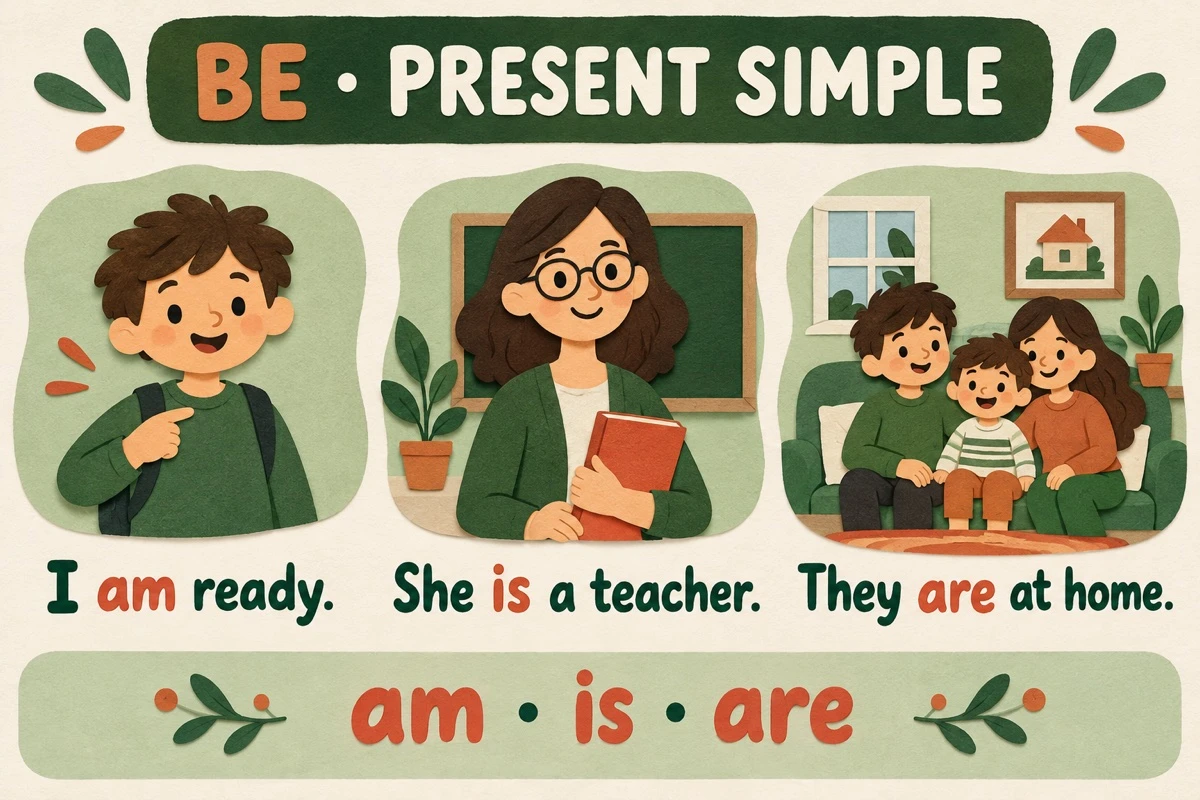
I에는 am, 단수에는 is, you·we·they에는 are를 씁니다.
I am · you/we/they are · he/she/it is
현재형 be동사 · A1. I에는 am, 단수에는 is, you·we·they에는 are를 씁니다.
짧은 상황에서 ‘현재형 be동사’을 연습합니다. 단서를 읽고 형태를 고르거나 쓴 뒤 이유를 확인하세요. 수준은 편집상 안내입니다.
I에는 am, 단수에는 is, you·we·they에는 are를 씁니다.
I am · you/we/they are · he/she/it is부정문은 be 뒤에 not을 둡니다. is not과 are not은 isn’t, aren’t로 줄일 수 있습니다.
am/is/are + notbe 의문문은 am·is·are를 주어 앞에 두며 do를 넣지 않습니다.
Am/Is/Are + subject …?I am ready.She is ready.They are ready.
I am not ready.She is not ready.They are not ready.
Am I ready?Is she ready?Are they ready?
Yes, I am.Yes, she is.No, they aren’t.
I ___ the new student in room 4.
I에는 am, 단수에는 is, you·we·they에는 are를 씁니다.
I am tired.부정문은 be 뒤에 not을 둡니다. is not과 are not은 isn’t, aren’t로 줄일 수 있습니다.
It is not cold.be 의문문은 am·is·are를 주어 앞에 두며 do를 넣지 않습니다.
Are the keys here?첫 시도를 남기고 변화의 이유를 이해한 뒤 새로운 상황에서 확인해 보세요.
아직 복습 노트가 없어요. 짧은 워밍업부터 해보세요.
I에는 am, 단수에는 is, you·we·they에는 are를 씁니다.
I am tired.부정문은 be 뒤에 not을 둡니다. is not과 are not은 isn’t, aren’t로 줄일 수 있습니다.
It is not cold.be 의문문은 am·is·are를 주어 앞에 두며 do를 넣지 않습니다.
Are the keys here?정답을 열면 해당 문제에 도움 사용이 기록돼요.
I ___ the new student in room 4.
“I ___ the new student in room 4.”를 보세요. I에는 am, he/she/it와 단수 명사에는 is, you/we/they와 복수에는 are를 씁니다. 상태 부정은 be 뒤에 not을 놓습니다. 완성 문장: “I am the new student in room 4.”.
The library is closed, so it ___ open today.
“The library is closed, so it ___ open today.”를 보세요. I에는 am, he/she/it와 단수 명사에는 is, you/we/they와 복수에는 are를 씁니다. 상태 부정은 be 뒤에 not을 놓습니다. 완성 문장: “The library is closed, so it is not open today.”.
___ your parents at home now?
“___ your parents at home now?”를 보세요. I에는 am, he/she/it와 단수 명사에는 is, you/we/they와 복수에는 are를 씁니다. 상태 부정은 be 뒤에 not을 놓습니다. 완성 문장: “Are your parents at home now?”.
My sister ___ a bus driver.
완성 예문: “My sister is a bus driver.”. I에는 am, 단수에는 is, you·we·they에는 are를 씁니다. 이 문제에서는 다음 표현도 확인된 답으로 인정합니다: 's. 가능한 모든 영어 표현의 목록은 아닙니다.
We are on holiday; we ___ at work today.
“We are on holiday; we ___ at work today.”를 보세요. I에는 am, he/she/it와 단수 명사에는 is, you/we/they와 복수에는 are를 씁니다. 상태 부정은 be 뒤에 not을 놓습니다. 완성 문장: “We are on holiday; we are not at work today.”.
___ I in the right queue for tickets?
“___ I in the right queue for tickets?”를 보세요. I에는 am, he/she/it와 단수 명사에는 is, you/we/they와 복수에는 are를 씁니다. 상태 부정은 be 뒤에 not을 놓습니다. 완성 문장: “Am I in the right queue for tickets?”.
These seats ___ free; nobody is sitting here.
완성 예문: “These seats are free; nobody is sitting here.”. I에는 am, 단수에는 is, you·we·they에는 are를 씁니다.
The two boxes ___ heavy.
“The two boxes ___ heavy.”를 보세요. I에는 am, he/she/it와 단수 명사에는 is, you/we/they와 복수에는 are를 씁니다. 상태 부정은 be 뒤에 not을 놓습니다. 완성 문장: “The two boxes are heavy.”.
Ben and I are students; we ___ teachers.
“Ben and I are students; we ___ teachers.”를 보세요. I에는 am, he/she/it와 단수 명사에는 is, you/we/they와 복수에는 are를 씁니다. 상태 부정은 be 뒤에 not을 놓습니다. 완성 문장: “Ben and I are students; we are not teachers.”.
___ the station near this hotel?
완성 예문: “Is the station near this hotel?”. be 의문문은 am·is·are를 주어 앞에 두며 do를 넣지 않습니다.
The lights are off. The shop ___ open.
“The lights are off. The shop ___ open.”를 보세요. I에는 am, he/she/it와 단수 명사에는 is, you/we/they와 복수에는 are를 씁니다. 상태 부정은 be 뒤에 not을 놓습니다. 완성 문장: “The lights are off. The shop is not open.”.
___ you ready to order, madam?
완성 예문: “Are you ready to order, madam?”. be 의문문은 am·is·are를 주어 앞에 두며 do를 넣지 않습니다.