01한 소유자의 ’s
소유자가 한 명이면 ’s를 붙입니다. the teacher’s desk에서 뒤의 명사는 소유물입니다.
This is Amir’s desk.
소유격 ’s와 whose · A1. 소유자가 한 명이면 ’s를 붙입니다. the teacher’s desk에서 뒤의 명사는 소유물입니다.
짧은 상황에서 ‘소유격 ’s와 whose’을 연습합니다. 단서를 읽고 형태를 고르거나 쓴 뒤 이유를 확인하세요. 수준은 편집상 안내입니다.
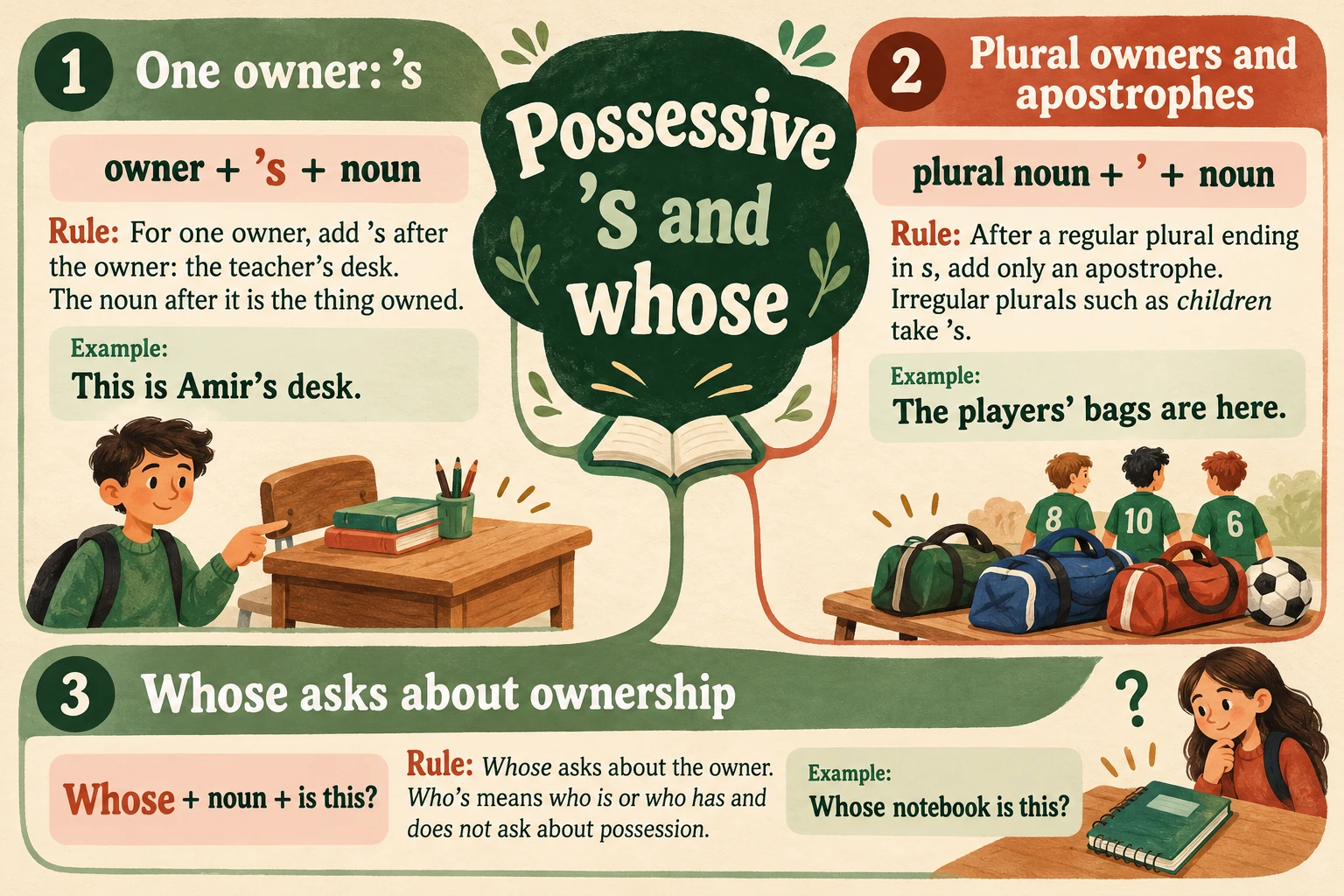
소유자가 한 명이면 ’s를 붙입니다. the teacher’s desk에서 뒤의 명사는 소유물입니다.
This is Amir’s desk.-s로 끝나는 규칙 복수에는 ’만, children 같은 불규칙 복수에는 ’s를 붙입니다.
The players’ bags are here.whose는 소유자를 묻습니다. who’s는 who is 또는 who has의 줄임말로 소유를 나타내지 않습니다.
Whose notebook is this?
This bag belongs to one girl, Eva. It is ___ bag.
소유자가 한 명이면 ’s를 붙입니다. the teacher’s desk에서 뒤의 명사는 소유물입니다.
This is Amir’s desk.-s로 끝나는 규칙 복수에는 ’만, children 같은 불규칙 복수에는 ’s를 붙입니다.
The players’ bags are here.whose는 소유자를 묻습니다. who’s는 who is 또는 who has의 줄임말로 소유를 나타내지 않습니다.
Whose notebook is this?첫 시도를 남기고 변화의 이유를 이해한 뒤 새로운 상황에서 확인해 보세요.
아직 복습 노트가 없어요. 짧은 워밍업부터 해보세요.
소유자가 한 명이면 ’s를 붙입니다. the teacher’s desk에서 뒤의 명사는 소유물입니다.
This is Amir’s desk.-s로 끝나는 규칙 복수에는 ’만, children 같은 불규칙 복수에는 ’s를 붙입니다.
The players’ bags are here.whose는 소유자를 묻습니다. who’s는 who is 또는 who has의 줄임말로 소유를 나타내지 않습니다.
Whose notebook is this?정답을 열면 해당 문제에 도움 사용이 기록돼요.
This bag belongs to one girl, Eva. It is ___ bag.
“This bag belongs to one girl, Eva. It is ___ bag.”를 보세요. 소유자가 한 명이면 ’s를 붙입니다. the teacher’s desk에서 뒤의 명사는 소유물입니다. 완성 문장: “This bag belongs to one girl, Eva. It is Eva’s bag.”.
Two teachers share an office. It is the ___ office.
“Two teachers share an office. It is the ___ office.”를 보세요. -s로 끝나는 규칙 복수에는 ’만, children 같은 불규칙 복수에는 ’s를 붙입니다. 완성 문장: “Two teachers share an office. It is the teachers’ office.”.
___ coat is this? — It belongs to Ali.
“___ coat is this? — It belongs to Ali.”를 보세요. whose는 소유자를 묻습니다. who’s는 who is 또는 who has의 줄임말로 소유를 나타내지 않습니다. 완성 문장: “Whose coat is this? — It belongs to Ali.”.
One doctor uses this room. It is the ___ room.
완성 예문: “One doctor uses this room. It is the doctor’s room.”. 소유자가 한 명이면 ’s를 붙입니다. the teacher’s desk에서 뒤의 명사는 소유물입니다.
The toys belong to the children. They are the ___ toys.
“The toys belong to the children. They are the ___ toys.”를 보세요. -s로 끝나는 규칙 복수에는 ’만, children 같은 불규칙 복수에는 ’s를 붙입니다. 완성 문장: “The toys belong to the children. They are the children’s toys.”.
___ keys are on the desk? — Mina’s keys.
“___ keys are on the desk? — Mina’s keys.”를 보세요. whose는 소유자를 묻습니다. who’s는 who is 또는 who has의 줄임말로 소유를 나타내지 않습니다. 완성 문장: “Whose keys are on the desk? — Mina’s keys.”.
My sister owns this car. It is my ___ car.
완성 예문: “My sister owns this car. It is my sister’s car.”. 소유자가 한 명이면 ’s를 붙입니다. the teacher’s desk에서 뒤의 명사는 소유물입니다.
One neighbour lent me his ladder. It is my ___ ladder.
“One neighbour lent me his ladder. It is my ___ ladder.”를 보세요. 소유자가 한 명이면 ’s를 붙입니다. the teacher’s desk에서 뒤의 명사는 소유물입니다. 완성 문장: “One neighbour lent me his ladder. It is my neighbour’s ladder.”.
The rooms belong to three students. They are the ___ rooms.
“The rooms belong to three students. They are the ___ rooms.”를 보세요. -s로 끝나는 규칙 복수에는 ’만, children 같은 불규칙 복수에는 ’s를 붙입니다. 완성 문장: “The rooms belong to three students. They are the students’ rooms.”.
___ lunch is in the green box? — Omar’s.
완성 예문: “Whose lunch is in the green box? — Omar’s.”. whose는 소유자를 묻습니다. who’s는 who is 또는 who has의 줄임말로 소유를 나타내지 않습니다.
The coats belong to the women in that room. They are the ___ coats.
“The coats belong to the women in that room. They are the ___ coats.”를 보세요. -s로 끝나는 규칙 복수에는 ’만, children 같은 불규칙 복수에는 ’s를 붙입니다. 완성 문장: “The coats belong to the women in that room. They are the women’s coats.”.
___ phone rang just now? — Carla’s phone.
완성 예문: “Whose phone rang just now? — Carla’s phone.”. whose는 소유자를 묻습니다. who’s는 who is 또는 who has의 줄임말로 소유를 나타내지 않습니다.