01الخطط السابقة مع going to
للخطة المسبقة نستخدم am/is/are going to مع الفعل الأساسي حسب الفاعل.
I am going to learn chess.
المستقبل باستخدام going to · A2. للخطة المسبقة نستخدم am/is/are going to مع الفعل الأساسي حسب الفاعل.
تدرّب على المستقبل باستخدام going to في مواقف قصيرة. اقرأ القرينة واختر الصيغة أو اكتبها، ثم راجع السبب. المستوى دليل تحريري تقريبي.
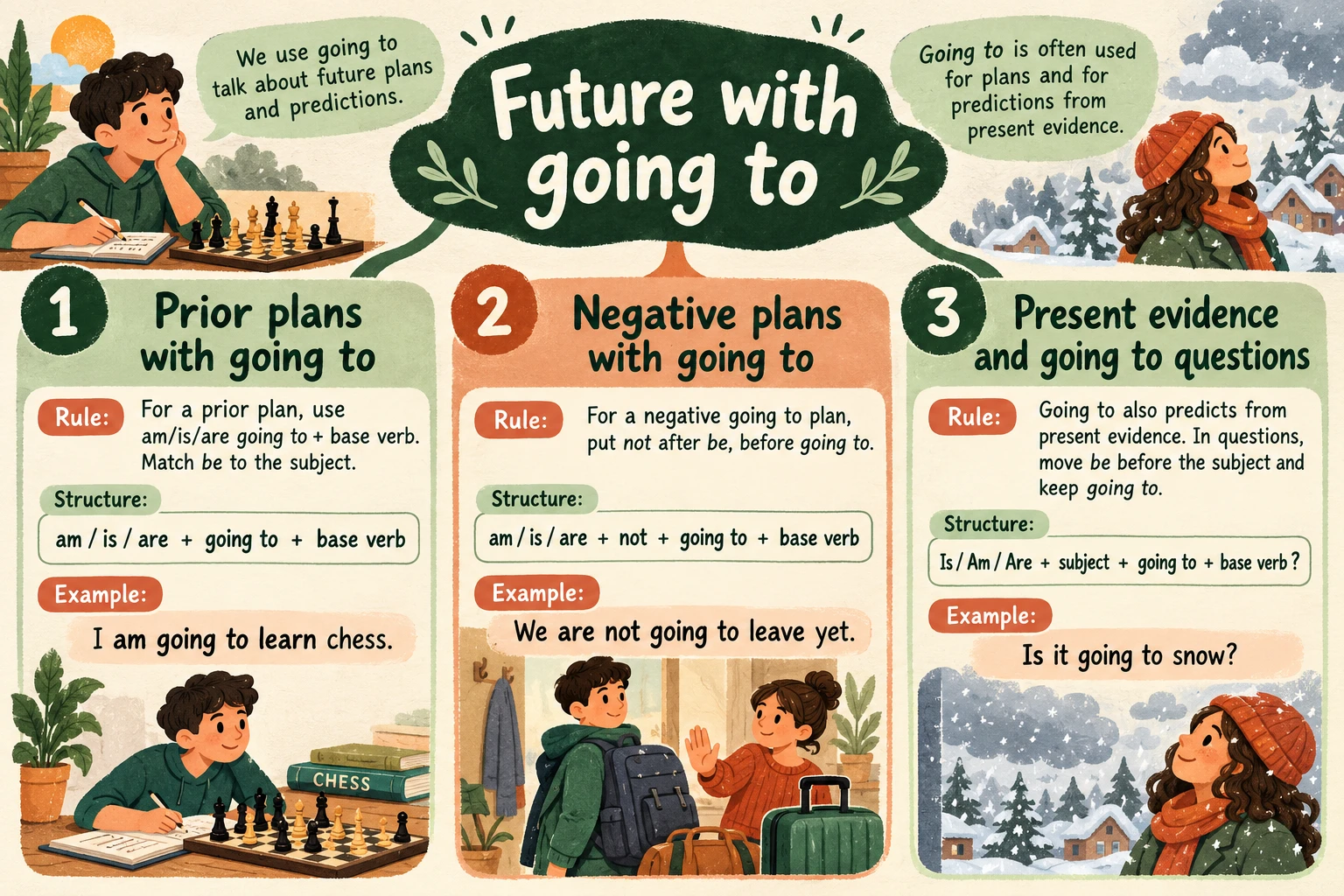
للخطة المسبقة نستخدم am/is/are going to مع الفعل الأساسي حسب الفاعل.
I am going to learn chess.لنفي الخطة نضع not بعد be وقبل going to.
We are not going to leave yet.تستخدم going to للتنبؤ من دليل حاضر أيضًا؛ في السؤال ننقل be قبل الفاعل.
Is it going to snow?
We have decided to move. We ___ going to rent a bigger flat.
للخطة المسبقة نستخدم am/is/are going to مع الفعل الأساسي حسب الفاعل.
I am going to learn chess.لنفي الخطة نضع not بعد be وقبل going to.
We are not going to leave yet.تستخدم going to للتنبؤ من دليل حاضر أيضًا؛ في السؤال ننقل be قبل الفاعل.
Is it going to snow?احتفظ بالمحاولة الأولى، وافهم التغيير، ثم اختبر فهمك في موقف جديد.
لا توجد ملاحظات بعد. جرّب تهيئة قصيرة.
للخطة المسبقة نستخدم am/is/are going to مع الفعل الأساسي حسب الفاعل.
I am going to learn chess.لنفي الخطة نضع not بعد be وقبل going to.
We are not going to leave yet.تستخدم going to للتنبؤ من دليل حاضر أيضًا؛ في السؤال ننقل be قبل الفاعل.
Is it going to snow?فتح إجابة يسجّل استخدام المساعدة لذلك السؤال.
We have decided to move. We ___ going to rent a bigger flat.
انظر إلى «We have decided to move. We ___ going to rent a bigger flat.». للخطة المسبقة نستخدم am/is/are going to مع الفعل الأساسي حسب الفاعل. الجملة المكتملة: «We have decided to move. We are going to rent a bigger flat.».
He has cancelled the trip. He ___ going to travel tomorrow.
انظر إلى «He has cancelled the trip. He ___ going to travel tomorrow.». لنفي الخطة نضع not بعد be وقبل going to. الجملة المكتملة: «He has cancelled the trip. He is not going to travel tomorrow.».
Look at that loose glass! It is going to ___. (fall)
انظر إلى «Look at that loose glass! It is going to ___. (fall)». تستخدم going to للتنبؤ من دليل حاضر أيضًا؛ في السؤال ننقل be قبل الفاعل. الجملة المكتملة: «Look at that loose glass! It is going to fall. (fall)».
I have saved for a course. I ___ going to study design.
إكمال مرجعي: «I have saved for a course. I am going to study design.». للخطة المسبقة نستخدم am/is/are going to مع الفعل الأساسي حسب الفاعل. تُقبل أيضاً هذه البدائل المراجَعة في هذه المهمة: 'm. ليست القائمة حصرية لكل صياغة إنجليزية ممكنة.
We have other plans. We ___ going to join the tour.
انظر إلى «We have other plans. We ___ going to join the tour.». لنفي الخطة نضع not بعد be وقبل going to. الجملة المكتملة: «We have other plans. We are not going to join the tour.».
___ Nina going to take the early train?
انظر إلى «___ Nina going to take the early train?». تستخدم going to للتنبؤ من دليل حاضر أيضًا؛ في السؤال ننقل be قبل الفاعل. الجملة المكتملة: «Is Nina going to take the early train?».
My brother has chosen a recipe. He ___ going to bake a cake.
إكمال مرجعي: «My brother has chosen a recipe. He is going to bake a cake.». للخطة المسبقة نستخدم am/is/are going to مع الفعل الأساسي حسب الفاعل. تُقبل أيضاً هذه البدائل المراجَعة في هذه المهمة: 's. ليست القائمة حصرية لكل صياغة إنجليزية ممكنة.
The neighbours have bought paint. They ___ going to paint the fence.
انظر إلى «The neighbours have bought paint. They ___ going to paint the fence.». للخطة المسبقة نستخدم am/is/are going to مع الفعل الأساسي حسب الفاعل. الجملة المكتملة: «The neighbours have bought paint. They are going to paint the fence.».
I have decided to keep my car. I ___ going to sell it.
انظر إلى «I have decided to keep my car. I ___ going to sell it.». لنفي الخطة نضع not بعد be وقبل going to. الجملة المكتملة: «I have decided to keep my car. I am not going to sell it.».
___ your friends going to stay at a hotel?
إكمال مرجعي: «Are your friends going to stay at a hotel?». تستخدم going to للتنبؤ من دليل حاضر أيضًا؛ في السؤال ننقل be قبل الفاعل.
The tickets cost too much. She ___ going to buy them.
انظر إلى «The tickets cost too much. She ___ going to buy them.». لنفي الخطة نضع not بعد be وقبل going to. الجملة المكتملة: «The tickets cost too much. She is not going to buy them.».
Watch out! Those boxes are going to ___. (fall)
إكمال مرجعي: «Watch out! Those boxes are going to fall. (fall)». تستخدم going to للتنبؤ من دليل حاضر أيضًا؛ في السؤال ننقل be قبل الفاعل.