01going toの事前計画
事前に決めた計画はam/is/are going to+原形で表し、beを主語に合わせます。
I am going to learn chess.
going toの未来表現 · A2. 事前に決めた計画はam/is/are going to+原形で表し、beを主語に合わせます。
短い場面で「going toの未来表現」を練習します。手がかりを読み、形を選ぶか入力してから理由を確認しましょう。レベルは編集上の目安です。
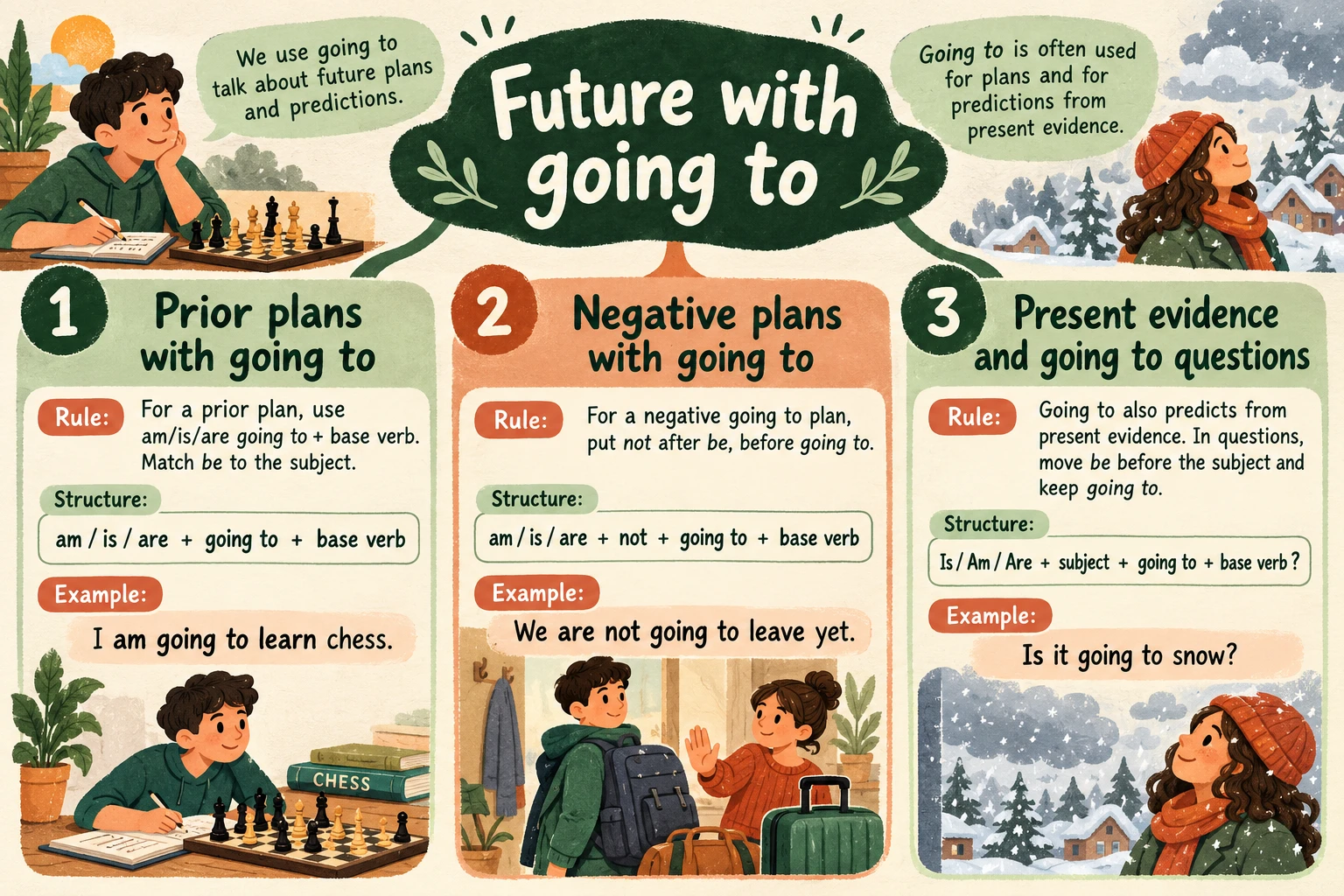
事前に決めた計画はam/is/are going to+原形で表し、beを主語に合わせます。
I am going to learn chess.計画の否定ではbeの後、going toの前にnotを置きます。
We are not going to leave yet.going toは今ある根拠からの予測にも使います。疑問文はbeを主語の前に置きます。
Is it going to snow?
We have decided to move. We ___ going to rent a bigger flat.
事前に決めた計画はam/is/are going to+原形で表し、beを主語に合わせます。
I am going to learn chess.計画の否定ではbeの後、going toの前にnotを置きます。
We are not going to leave yet.going toは今ある根拠からの予測にも使います。疑問文はbeを主語の前に置きます。
Is it going to snow?初回答を残し、変化の理由を理解して、別の場面で確かめます。
まだ復習ノートはありません。まずは短いウォームアップを。
事前に決めた計画はam/is/are going to+原形で表し、beを主語に合わせます。
I am going to learn chess.計画の否定ではbeの後、going toの前にnotを置きます。
We are not going to leave yet.going toは今ある根拠からの予測にも使います。疑問文はbeを主語の前に置きます。
Is it going to snow?解答を開くと、その問題にヒント利用が記録されます。
We have decided to move. We ___ going to rent a bigger flat.
「We have decided to move. We ___ going to rent a bigger flat.」に注目しましょう。事前に決めた計画はam/is/are going to+原形で表し、beを主語に合わせます。 完成文:「We have decided to move. We are going to rent a bigger flat.」。
He has cancelled the trip. He ___ going to travel tomorrow.
「He has cancelled the trip. He ___ going to travel tomorrow.」に注目しましょう。計画の否定ではbeの後、going toの前にnotを置きます。 完成文:「He has cancelled the trip. He is not going to travel tomorrow.」。
Look at that loose glass! It is going to ___. (fall)
「Look at that loose glass! It is going to ___. (fall)」に注目しましょう。going toは今ある根拠からの予測にも使います。疑問文はbeを主語の前に置きます。 完成文:「Look at that loose glass! It is going to fall. (fall)」。
I have saved for a course. I ___ going to study design.
完成例:「I have saved for a course. I am going to study design.」。事前に決めた計画はam/is/are going to+原形で表し、beを主語に合わせます。 この問題では次の別表現も確認済みです:'m。可能な英語表現をすべて列挙したものではありません。
We have other plans. We ___ going to join the tour.
「We have other plans. We ___ going to join the tour.」に注目しましょう。計画の否定ではbeの後、going toの前にnotを置きます。 完成文:「We have other plans. We are not going to join the tour.」。
___ Nina going to take the early train?
「___ Nina going to take the early train?」に注目しましょう。going toは今ある根拠からの予測にも使います。疑問文はbeを主語の前に置きます。 完成文:「Is Nina going to take the early train?」。
My brother has chosen a recipe. He ___ going to bake a cake.
完成例:「My brother has chosen a recipe. He is going to bake a cake.」。事前に決めた計画はam/is/are going to+原形で表し、beを主語に合わせます。 この問題では次の別表現も確認済みです:'s。可能な英語表現をすべて列挙したものではありません。
The neighbours have bought paint. They ___ going to paint the fence.
「The neighbours have bought paint. They ___ going to paint the fence.」に注目しましょう。事前に決めた計画はam/is/are going to+原形で表し、beを主語に合わせます。 完成文:「The neighbours have bought paint. They are going to paint the fence.」。
I have decided to keep my car. I ___ going to sell it.
「I have decided to keep my car. I ___ going to sell it.」に注目しましょう。計画の否定ではbeの後、going toの前にnotを置きます。 完成文:「I have decided to keep my car. I am not going to sell it.」。
___ your friends going to stay at a hotel?
完成例:「Are your friends going to stay at a hotel?」。going toは今ある根拠からの予測にも使います。疑問文はbeを主語の前に置きます。
The tickets cost too much. She ___ going to buy them.
「The tickets cost too much. She ___ going to buy them.」に注目しましょう。計画の否定ではbeの後、going toの前にnotを置きます。 完成文:「The tickets cost too much. She is not going to buy them.」。
Watch out! Those boxes are going to ___. (fall)
完成例:「Watch out! Those boxes are going to fall. (fall)」。going toは今ある根拠からの予測にも使います。疑問文はbeを主語の前に置きます。