01짧은 형용사의 비교
짧은 형용사의 비교는 -er와 than을 쓰며 자음+y는 -ier로 바꿉니다.
The hill is steeper than it looks.
비교급과 최상급 · A2. 짧은 형용사의 비교는 -er와 than을 쓰며 자음+y는 -ier로 바꿉니다.
짧은 상황에서 ‘비교급과 최상급’을 연습합니다. 단서를 읽고 형태를 고르거나 쓴 뒤 이유를 확인하세요. 수준은 편집상 안내입니다.
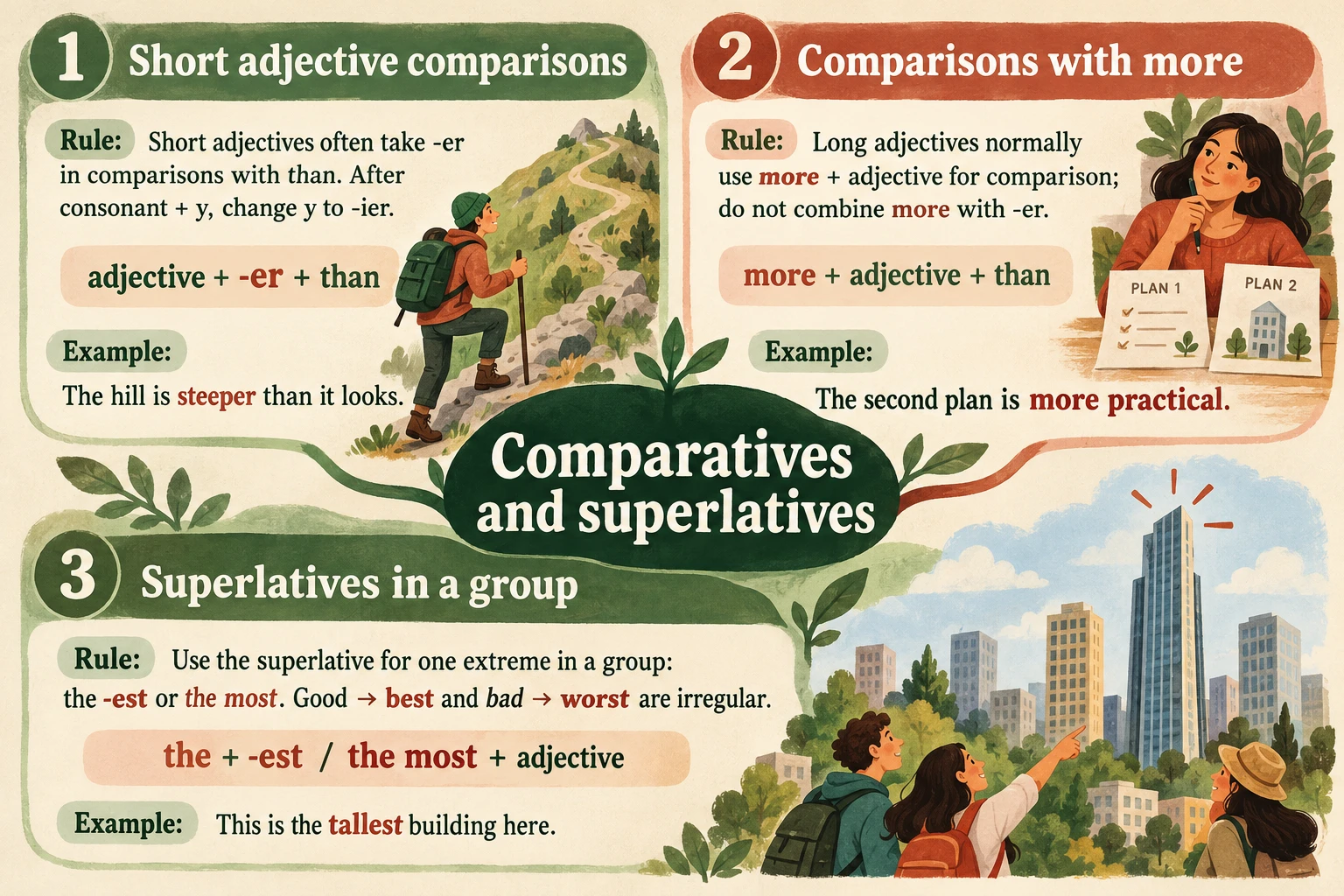
짧은 형용사의 비교는 -er와 than을 쓰며 자음+y는 -ier로 바꿉니다.
The hill is steeper than it looks.긴 형용사의 비교는 보통 more+형용사이며 more와 -er를 함께 쓰지 않습니다.
The second plan is more practical.집단에서 가장 높은 정도는 the+-est 또는 the most이며 good→best, bad→worst는 불규칙입니다.
This is the tallest building here.
This road is ___ than the old one. (wide)
짧은 형용사의 비교는 -er와 than을 쓰며 자음+y는 -ier로 바꿉니다.
The hill is steeper than it looks.긴 형용사의 비교는 보통 more+형용사이며 more와 -er를 함께 쓰지 않습니다.
The second plan is more practical.집단에서 가장 높은 정도는 the+-est 또는 the most이며 good→best, bad→worst는 불규칙입니다.
This is the tallest building here.첫 시도를 남기고 변화의 이유를 이해한 뒤 새로운 상황에서 확인해 보세요.
아직 복습 노트가 없어요. 짧은 워밍업부터 해보세요.
짧은 형용사의 비교는 -er와 than을 쓰며 자음+y는 -ier로 바꿉니다.
The hill is steeper than it looks.긴 형용사의 비교는 보통 more+형용사이며 more와 -er를 함께 쓰지 않습니다.
The second plan is more practical.집단에서 가장 높은 정도는 the+-est 또는 the most이며 good→best, bad→worst는 불규칙입니다.
This is the tallest building here.정답을 열면 해당 문제에 도움 사용이 기록돼요.
This road is ___ than the old one. (wide)
“This road is ___ than the old one. (wide)”를 보세요. 짧은 형용사의 비교는 -er와 than을 쓰며 자음+y는 -ier로 바꿉니다. 완성 문장: “This road is wider than the old one. (wide)”.
The train is ___ than the bus. (expensive)
“The train is ___ than the bus. (expensive)”를 보세요. 긴 형용사의 비교는 보통 more+형용사이며 more와 -er를 함께 쓰지 않습니다. 완성 문장: “The train is more expensive than the bus. (expensive)”.
Of all five runners, Lia is the ___. (fast)
“Of all five runners, Lia is the ___. (fast)”를 보세요. 집단에서 가장 높은 정도는 the+-est 또는 the most이며 good→best, bad→worst는 불규칙입니다. 완성 문장: “Of all five runners, Lia is the fastest. (fast)”.
My bag is ___ than yours. (heavy)
완성 예문: “My bag is heavier than yours. (heavy)”. 짧은 형용사의 비교는 -er와 than을 쓰며 자음+y는 -ier로 바꿉니다.
This chair is ___ than that stool. (comfortable)
“This chair is ___ than that stool. (comfortable)”를 보세요. 긴 형용사의 비교는 보통 more+형용사이며 more와 -er를 함께 쓰지 않습니다. 완성 문장: “This chair is more comfortable than that stool. (comfortable)”.
It was the ___ meal of our whole trip. (good)
“It was the ___ meal of our whole trip. (good)”를 보세요. 집단에서 가장 높은 정도는 the+-est 또는 the most이며 good→best, bad→worst는 불규칙입니다. 완성 문장: “It was the best meal of our whole trip. (good)”.
Today is ___ than yesterday. (hot)
완성 예문: “Today is hotter than yesterday. (hot)”. 짧은 형용사의 비교는 -er와 than을 쓰며 자음+y는 -ier로 바꿉니다.
The river is ___ here than near the bridge. (deep)
“The river is ___ here than near the bridge. (deep)”를 보세요. 짧은 형용사의 비교는 -er와 than을 쓰며 자음+y는 -ier로 바꿉니다. 완성 문장: “The river is deeper here than near the bridge. (deep)”.
The book is ___ than the leaflet. (interesting)
“The book is ___ than the leaflet. (interesting)”를 보세요. 긴 형용사의 비교는 보통 more+형용사이며 more와 -er를 함께 쓰지 않습니다. 완성 문장: “The book is more interesting than the leaflet. (interesting)”.
Of these six rooms, this is the ___. (small)
완성 예문: “Of these six rooms, this is the smallest. (small)”. 집단에서 가장 높은 정도는 the+-est 또는 the most이며 good→best, bad→worst는 불규칙입니다.
This puzzle is ___ than the first one. (difficult)
“This puzzle is ___ than the first one. (difficult)”를 보세요. 긴 형용사의 비교는 보통 more+형용사이며 more와 -er를 함께 쓰지 않습니다. 완성 문장: “This puzzle is more difficult than the first one. (difficult)”.
That was the ___ storm in the town’s history. (bad)
완성 예문: “That was the worst storm in the town’s history. (bad)”. 집단에서 가장 높은 정도는 the+-est 또는 the most이며 good→best, bad→worst는 불규칙입니다.