01المقارنة بالصفات القصيرة
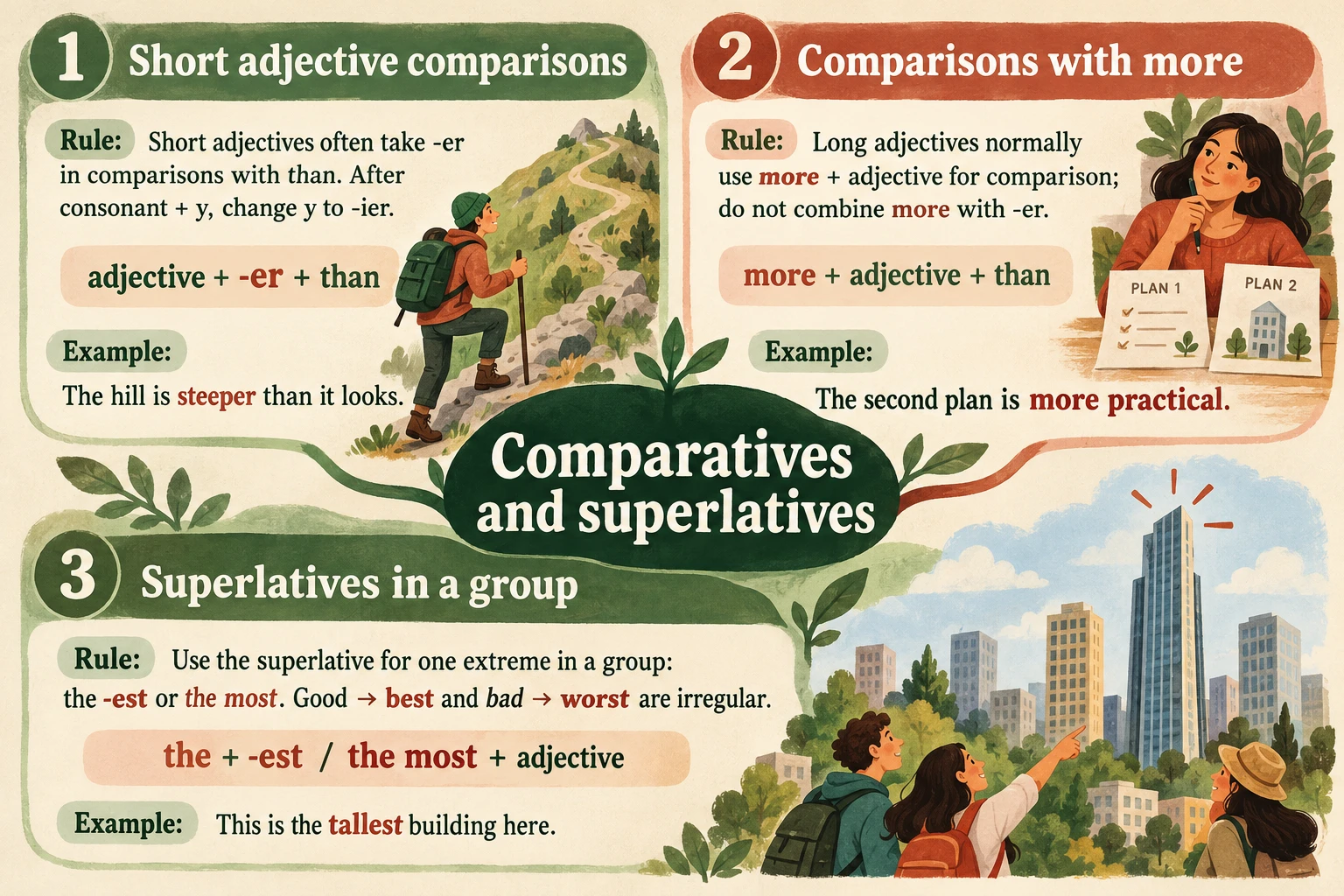
تأخذ الصفات القصيرة غالبًا er مع than، وتتحول y بعد ساكن إلى ier.
The hill is steeper than it looks.
المقارنة والتفضيل · A2. تأخذ الصفات القصيرة غالبًا er مع than، وتتحول y بعد ساكن إلى ier.
تدرّب على المقارنة والتفضيل في مواقف قصيرة. اقرأ القرينة واختر الصيغة أو اكتبها، ثم راجع السبب. المستوى دليل تحريري تقريبي.
تأخذ الصفات القصيرة غالبًا er مع than، وتتحول y بعد ساكن إلى ier.
The hill is steeper than it looks.تستخدم الصفات الطويلة عادة more ثم الصفة، ولا نجمع more مع er.
The second plan is more practical.لأقصى صفة في مجموعة نستخدم the مع est أوmost، وgood→best وbad→worst شاذتان.
This is the tallest building here.
This road is ___ than the old one. (wide)
تأخذ الصفات القصيرة غالبًا er مع than، وتتحول y بعد ساكن إلى ier.
The hill is steeper than it looks.تستخدم الصفات الطويلة عادة more ثم الصفة، ولا نجمع more مع er.
The second plan is more practical.لأقصى صفة في مجموعة نستخدم the مع est أوmost، وgood→best وbad→worst شاذتان.
This is the tallest building here.احتفظ بالمحاولة الأولى، وافهم التغيير، ثم اختبر فهمك في موقف جديد.
لا توجد ملاحظات بعد. جرّب تهيئة قصيرة.
تأخذ الصفات القصيرة غالبًا er مع than، وتتحول y بعد ساكن إلى ier.
The hill is steeper than it looks.تستخدم الصفات الطويلة عادة more ثم الصفة، ولا نجمع more مع er.
The second plan is more practical.لأقصى صفة في مجموعة نستخدم the مع est أوmost، وgood→best وbad→worst شاذتان.
This is the tallest building here.فتح إجابة يسجّل استخدام المساعدة لذلك السؤال.
This road is ___ than the old one. (wide)
انظر إلى «This road is ___ than the old one. (wide)». تأخذ الصفات القصيرة غالبًا er مع than، وتتحول y بعد ساكن إلى ier. الجملة المكتملة: «This road is wider than the old one. (wide)».
The train is ___ than the bus. (expensive)
انظر إلى «The train is ___ than the bus. (expensive)». تستخدم الصفات الطويلة عادة more ثم الصفة، ولا نجمع more مع er. الجملة المكتملة: «The train is more expensive than the bus. (expensive)».
Of all five runners, Lia is the ___. (fast)
انظر إلى «Of all five runners, Lia is the ___. (fast)». لأقصى صفة في مجموعة نستخدم the مع est أوmost، وgood→best وbad→worst شاذتان. الجملة المكتملة: «Of all five runners, Lia is the fastest. (fast)».
My bag is ___ than yours. (heavy)
إكمال مرجعي: «My bag is heavier than yours. (heavy)». تأخذ الصفات القصيرة غالبًا er مع than، وتتحول y بعد ساكن إلى ier.
This chair is ___ than that stool. (comfortable)
انظر إلى «This chair is ___ than that stool. (comfortable)». تستخدم الصفات الطويلة عادة more ثم الصفة، ولا نجمع more مع er. الجملة المكتملة: «This chair is more comfortable than that stool. (comfortable)».
It was the ___ meal of our whole trip. (good)
انظر إلى «It was the ___ meal of our whole trip. (good)». لأقصى صفة في مجموعة نستخدم the مع est أوmost، وgood→best وbad→worst شاذتان. الجملة المكتملة: «It was the best meal of our whole trip. (good)».
Today is ___ than yesterday. (hot)
إكمال مرجعي: «Today is hotter than yesterday. (hot)». تأخذ الصفات القصيرة غالبًا er مع than، وتتحول y بعد ساكن إلى ier.
The river is ___ here than near the bridge. (deep)
انظر إلى «The river is ___ here than near the bridge. (deep)». تأخذ الصفات القصيرة غالبًا er مع than، وتتحول y بعد ساكن إلى ier. الجملة المكتملة: «The river is deeper here than near the bridge. (deep)».
The book is ___ than the leaflet. (interesting)
انظر إلى «The book is ___ than the leaflet. (interesting)». تستخدم الصفات الطويلة عادة more ثم الصفة، ولا نجمع more مع er. الجملة المكتملة: «The book is more interesting than the leaflet. (interesting)».
Of these six rooms, this is the ___. (small)
إكمال مرجعي: «Of these six rooms, this is the smallest. (small)». لأقصى صفة في مجموعة نستخدم the مع est أوmost، وgood→best وbad→worst شاذتان.
This puzzle is ___ than the first one. (difficult)
انظر إلى «This puzzle is ___ than the first one. (difficult)». تستخدم الصفات الطويلة عادة more ثم الصفة، ولا نجمع more مع er. الجملة المكتملة: «This puzzle is more difficult than the first one. (difficult)».
That was the ___ storm in the town’s history. (bad)
إكمال مرجعي: «That was the worst storm in the town’s history. (bad)». لأقصى صفة في مجموعة نستخدم the مع est أوmost، وgood→best وbad→worst شاذتان.