01過去の基準時より前に完了した出来事
had + past participle を用います。表す内容:過去の基準時より前に完了した出来事。
The staff had left before the alarm rang.
過去完了 · B1. had + past participle を用います。表す内容:過去の基準時より前に完了した出来事。
12問のオリジナル問題です。状況から意味を読み取り、形を練習して、新しい場面で応用します。
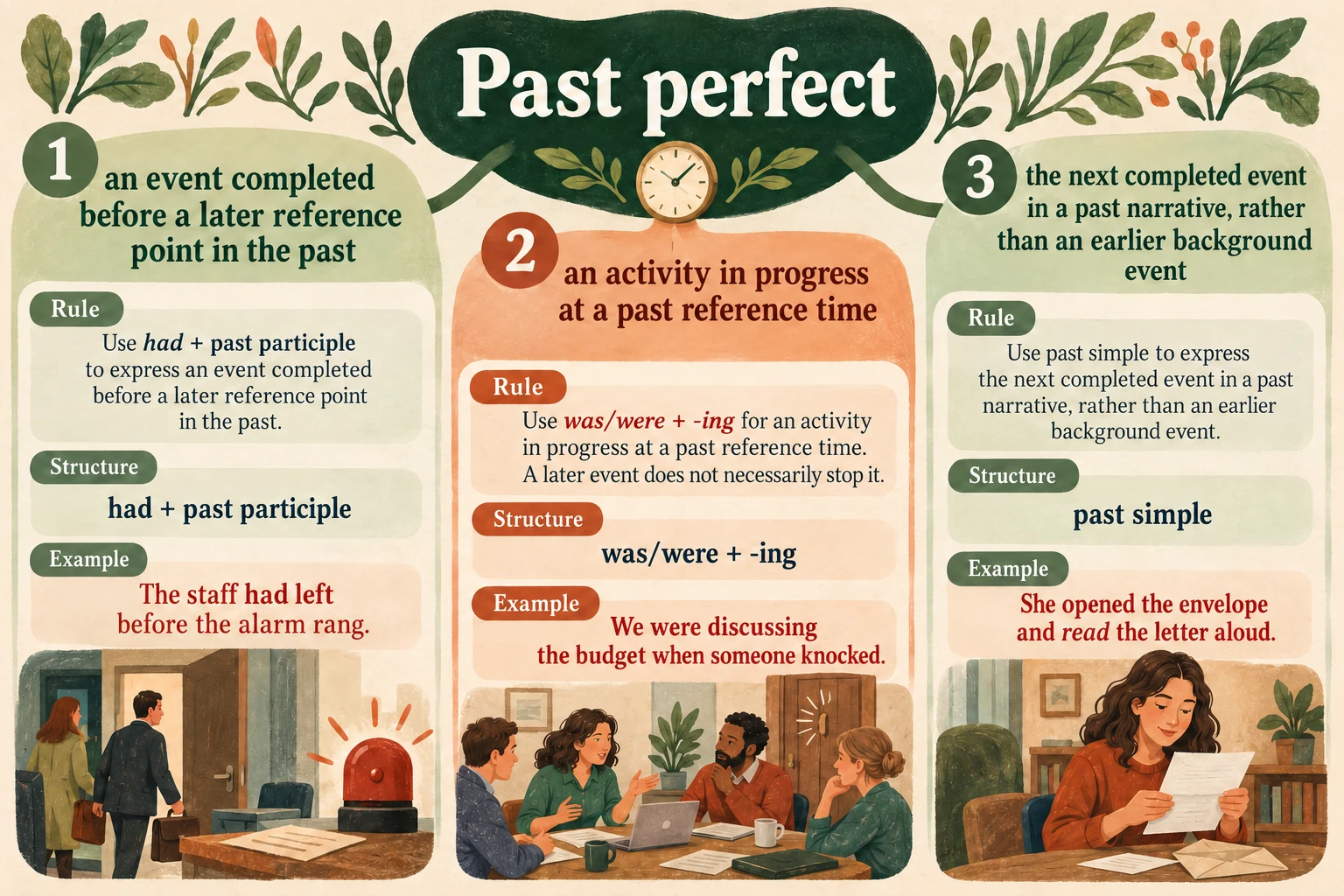
had + past participle を用います。表す内容:過去の基準時より前に完了した出来事。
The staff had left before the alarm rang.過去の基準時に進行中だった背景の動作にはwas/were+-ingを使います。別の出来事がその時点を示しても、元の動作が必ず止まるわけではありません。
We were discussing the budget when someone knocked.past simple を用います。表す内容:さらに前の背景ではなく、物語を進める次の出来事。
She opened the envelope and read the letter aloud.
The fire alarm rang at 10; the staff left at 9:55.
had + past participle を用います。表す内容:過去の基準時より前に完了した出来事。
The staff had left before the alarm rang.過去の基準時に進行中だった背景の動作にはwas/were+-ingを使います。別の出来事がその時点を示しても、元の動作が必ず止まるわけではありません。
We were discussing the budget when someone knocked.past simple を用います。表す内容:さらに前の背景ではなく、物語を進める次の出来事。
She opened the envelope and read the letter aloud.初回答を残し、変化の理由を理解して、別の場面で確かめます。
まだ復習ノートはありません。まずは短いウォームアップを。
had + past participle を用います。表す内容:過去の基準時より前に完了した出来事。
The staff had left before the alarm rang.過去の基準時に進行中だった背景の動作にはwas/were+-ingを使います。別の出来事がその時点を示しても、元の動作が必ず止まるわけではありません。
We were discussing the budget when someone knocked.past simple を用います。表す内容:さらに前の背景ではなく、物語を進める次の出来事。
She opened the envelope and read the letter aloud.解答を開くと、その問題にヒント利用が記録されます。
The fire alarm rang at 10; the staff left at 9:55.
「The staff ___ before the alarm rang.」に注目しましょう。had + past participle を用います。表す内容:過去の基準時より前に完了した出来事。 完成文:「The staff had left before the alarm rang.」。
An unfinished conversation was interrupted by a knock.
「We ___ the budget when someone knocked.」に注目しましょう。過去の基準時に進行中だった背景の動作にはwas/were+-ingを使います。別の出来事がその時点を示しても、元の動作が必ず止まるわけではありません。 完成文:「We were discussing the budget when someone knocked.」。
This is the next action after opening the envelope.
「She opened the envelope and ___ the letter aloud.」に注目しましょう。past simple を用います。表す内容:さらに前の背景ではなく、物語を進める次の出来事。 完成文:「She opened the envelope and read the letter aloud.」。
The tickets were sold before we reached the booth.
「By the time we arrived, the last ticket ___.」に注目しましょう。had + past participle を用います。表す内容:過去の基準時より前に完了した出来事。 完成文:「By the time we arrived, the last ticket had gone.」。
Use the past continuous of carry for the background activity in progress when the lights went out.
“I was carrying a tray when the lights went out.” 過去の基準時にすでに進行中だった動作はwas/were+-ingで表します。別の出来事が基準時になっても、その動作が止まったとは限りません。
The events are given in their actual order.
「The guard checked my pass, then ___ the gate.」に注目しましょう。past simple を用います。表す内容:さらに前の背景ではなく、物語を進める次の出来事。 完成文:「The guard checked my pass, then opened the gate.」。
Use the past perfect of see and include never for an experience before the museum visit.
完成文:「Before that visit, I had never seen a meteorite.」 had + past participle を用います。表す内容:過去の基準時より前に完了した出来事。 問題の主語・時間・意味に合わせた形です。確認済みの解答だけを自動照合します。別の表現を自動的に誤りとはしません。
The forgotten password explains the later login failure.
「I could not sign in because I ___ my password.」に注目しましょう。had + past participle を用います。表す内容:過去の基準時より前に完了した出来事。 完成文:「I could not sign in because I had forgotten my password.」。
Use the past continuous of work for the activity in progress.
“At the moment the siren sounded, the engineers were working underground.” 過去の基準時にすでに進行中だった動作はwas/were+-ingで表します。別の出来事が基準時になっても、その動作が止まったとは限りません。
The runner crossed the line; the next event followed.
「She crossed the line and ___ onto the grass.」に注目しましょう。past simple を用います。表す内容:さらに前の背景ではなく、物語を進める次の出来事。 完成文:「She crossed the line and collapsed onto the grass.」。
Background activity at the moment a past event happened.
「The lecturer ___ when the projector failed.」に注目しましょう。過去の基準時に進行中だった背景の動作にはwas/were+-ingを使います。別の出来事がその時点を示しても、元の動作が必ず止まるわけではありません。 完成文:「The lecturer was speaking when the projector failed.」。
Use the past simple of lock for the next action in this sequence.
完成文:「He put the files away, locked the cupboard and left.」 past simple を用います。表す内容:さらに前の背景ではなく、物語を進める次の出来事。 問題の主語・時間・意味に合わせた形です。確認済みの解答だけを自動照合します。別の表現を自動的に誤りとはしません。