01과거의 기준 시점보다 먼저 완료된 사건
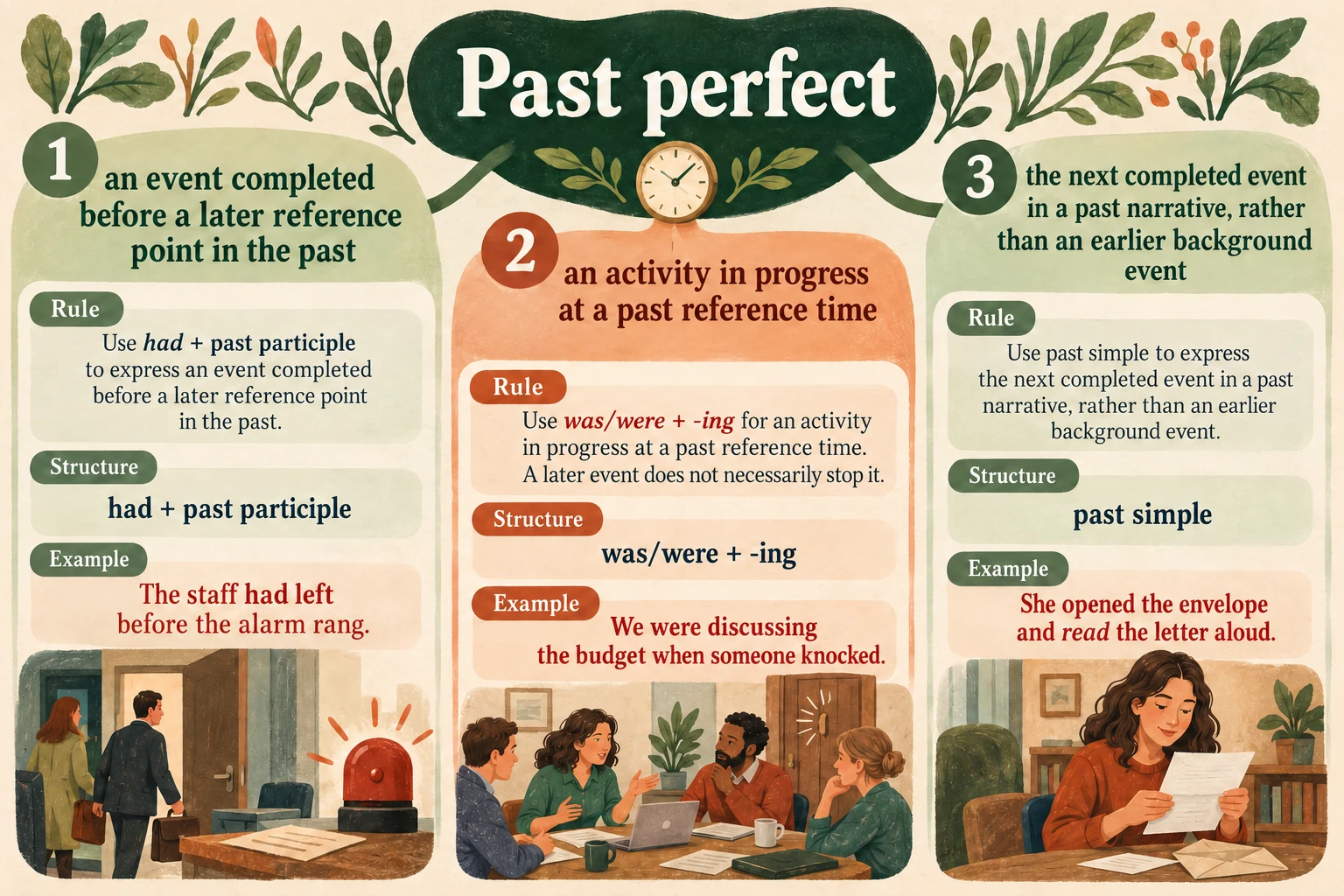
had + past participle 구조를 사용합니다. 의미: 과거의 기준 시점보다 먼저 완료된 사건.
The staff had left before the alarm rang.
과거완료 · B1. had + past participle 구조를 사용합니다. 의미: 과거의 기준 시점보다 먼저 완료된 사건.
새로 만든 12문제입니다. 상황에서 의도를 파악하고 형태를 연습한 뒤 새로운 맥락에 적용하세요.
had + past participle 구조를 사용합니다. 의미: 과거의 기준 시점보다 먼저 완료된 사건.
The staff had left before the alarm rang.과거 기준 시점에 진행 중인 배경 활동에는 was/were+-ing를 씁니다. 다른 사건이 그 시점을 정하더라도 원래 활동이 반드시 멈추는 것은 아닙니다.
We were discussing the budget when someone knocked.past simple 구조를 사용합니다. 의미: 더 이전의 배경이 아닌 이야기를 진행시키는 다음 사건.
She opened the envelope and read the letter aloud.
The fire alarm rang at 10; the staff left at 9:55.
had + past participle 구조를 사용합니다. 의미: 과거의 기준 시점보다 먼저 완료된 사건.
The staff had left before the alarm rang.과거 기준 시점에 진행 중인 배경 활동에는 was/were+-ing를 씁니다. 다른 사건이 그 시점을 정하더라도 원래 활동이 반드시 멈추는 것은 아닙니다.
We were discussing the budget when someone knocked.past simple 구조를 사용합니다. 의미: 더 이전의 배경이 아닌 이야기를 진행시키는 다음 사건.
She opened the envelope and read the letter aloud.첫 시도를 남기고 변화의 이유를 이해한 뒤 새로운 상황에서 확인해 보세요.
아직 복습 노트가 없어요. 짧은 워밍업부터 해보세요.
had + past participle 구조를 사용합니다. 의미: 과거의 기준 시점보다 먼저 완료된 사건.
The staff had left before the alarm rang.과거 기준 시점에 진행 중인 배경 활동에는 was/were+-ing를 씁니다. 다른 사건이 그 시점을 정하더라도 원래 활동이 반드시 멈추는 것은 아닙니다.
We were discussing the budget when someone knocked.past simple 구조를 사용합니다. 의미: 더 이전의 배경이 아닌 이야기를 진행시키는 다음 사건.
She opened the envelope and read the letter aloud.정답을 열면 해당 문제에 도움 사용이 기록돼요.
The fire alarm rang at 10; the staff left at 9:55.
“The staff ___ before the alarm rang.”를 보세요. had + past participle 구조를 사용합니다. 의미: 과거의 기준 시점보다 먼저 완료된 사건. 완성 문장: “The staff had left before the alarm rang.”.
An unfinished conversation was interrupted by a knock.
“We ___ the budget when someone knocked.”를 보세요. 과거 기준 시점에 진행 중인 배경 활동에는 was/were+-ing를 씁니다. 다른 사건이 그 시점을 정하더라도 원래 활동이 반드시 멈추는 것은 아닙니다. 완성 문장: “We were discussing the budget when someone knocked.”.
This is the next action after opening the envelope.
“She opened the envelope and ___ the letter aloud.”를 보세요. past simple 구조를 사용합니다. 의미: 더 이전의 배경이 아닌 이야기를 진행시키는 다음 사건. 완성 문장: “She opened the envelope and read the letter aloud.”.
The tickets were sold before we reached the booth.
“By the time we arrived, the last ticket ___.”를 보세요. had + past participle 구조를 사용합니다. 의미: 과거의 기준 시점보다 먼저 완료된 사건. 완성 문장: “By the time we arrived, the last ticket had gone.”.
Use the past continuous of carry for the background activity in progress when the lights went out.
“I was carrying a tray when the lights went out.” 과거 기준 시점에 이미 진행 중인 활동은 was/were+-ing로 나타냅니다. 다른 사건이 기준 시점이 되더라도 활동이 멈췄다는 뜻은 아닙니다.
The events are given in their actual order.
“The guard checked my pass, then ___ the gate.”를 보세요. past simple 구조를 사용합니다. 의미: 더 이전의 배경이 아닌 이야기를 진행시키는 다음 사건. 완성 문장: “The guard checked my pass, then opened the gate.”.
Use the past perfect of see and include never for an experience before the museum visit.
완성 문장: “Before that visit, I had never seen a meteorite.” had + past participle 구조를 사용합니다. 의미: 과거의 기준 시점보다 먼저 완료된 사건. 과제의 주어·시간·의미에 맞춘 형태입니다. 검토한 답만 자동으로 확인하며, 다른 표현을 자동으로 틀렸다고 하지 않습니다.
The forgotten password explains the later login failure.
“I could not sign in because I ___ my password.”를 보세요. had + past participle 구조를 사용합니다. 의미: 과거의 기준 시점보다 먼저 완료된 사건. 완성 문장: “I could not sign in because I had forgotten my password.”.
Use the past continuous of work for the activity in progress.
“At the moment the siren sounded, the engineers were working underground.” 과거 기준 시점에 이미 진행 중인 활동은 was/were+-ing로 나타냅니다. 다른 사건이 기준 시점이 되더라도 활동이 멈췄다는 뜻은 아닙니다.
The runner crossed the line; the next event followed.
“She crossed the line and ___ onto the grass.”를 보세요. past simple 구조를 사용합니다. 의미: 더 이전의 배경이 아닌 이야기를 진행시키는 다음 사건. 완성 문장: “She crossed the line and collapsed onto the grass.”.
Background activity at the moment a past event happened.
“The lecturer ___ when the projector failed.”를 보세요. 과거 기준 시점에 진행 중인 배경 활동에는 was/were+-ing를 씁니다. 다른 사건이 그 시점을 정하더라도 원래 활동이 반드시 멈추는 것은 아닙니다. 완성 문장: “The lecturer was speaking when the projector failed.”.
Use the past simple of lock for the next action in this sequence.
완성 문장: “He put the files away, locked the cupboard and left.” past simple 구조를 사용합니다. 의미: 더 이전의 배경이 아닌 이야기를 진행시키는 다음 사건. 과제의 주어·시간·의미에 맞춘 형태입니다. 검토한 답만 자동으로 확인하며, 다른 표현을 자동으로 틀렸다고 하지 않습니다.