01過去の基準時に進行中だった背景の動作
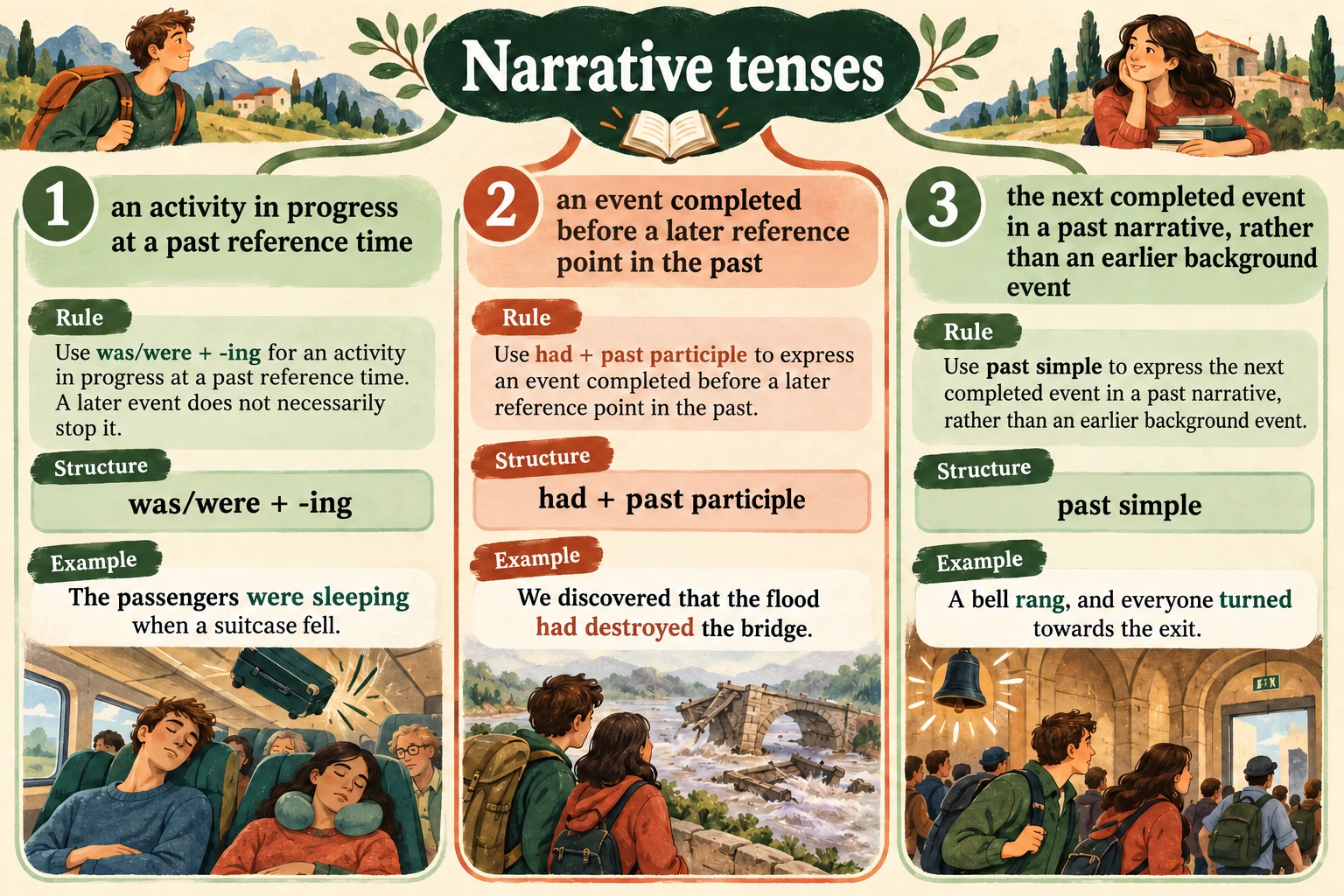
過去の基準時に進行中だった背景の動作にはwas/were+-ingを使います。別の出来事がその時点を示しても、元の動作が必ず止まるわけではありません。
The passengers were sleeping when a suitcase fell.
物語の時制 · B1. 過去の基準時に進行中だった背景の動作にはwas/were+-ingを使います。別の出来事がその時点を示しても、元の動作が必ず止まるわけではありません。
12問のオリジナル問題です。状況から意味を読み取り、形を練習して、新しい場面で応用します。
過去の基準時に進行中だった背景の動作にはwas/were+-ingを使います。別の出来事がその時点を示しても、元の動作が必ず止まるわけではありません。
The passengers were sleeping when a suitcase fell.had + past participle を用います。表す内容:過去の基準時より前に完了した出来事。
We discovered that the flood had destroyed the bridge.past simple を用います。表す内容:さらに前の背景ではなく、物語を進める次の出来事。
A bell rang, and everyone turned towards the exit.
The quiet activity was interrupted by the crash.
過去の基準時に進行中だった背景の動作にはwas/were+-ingを使います。別の出来事がその時点を示しても、元の動作が必ず止まるわけではありません。
The passengers were sleeping when a suitcase fell.had + past participle を用います。表す内容:過去の基準時より前に完了した出来事。
We discovered that the flood had destroyed the bridge.past simple を用います。表す内容:さらに前の背景ではなく、物語を進める次の出来事。
A bell rang, and everyone turned towards the exit.初回答を残し、変化の理由を理解して、別の場面で確かめます。
まだ復習ノートはありません。まずは短いウォームアップを。
過去の基準時に進行中だった背景の動作にはwas/were+-ingを使います。別の出来事がその時点を示しても、元の動作が必ず止まるわけではありません。
The passengers were sleeping when a suitcase fell.had + past participle を用います。表す内容:過去の基準時より前に完了した出来事。
We discovered that the flood had destroyed the bridge.past simple を用います。表す内容:さらに前の背景ではなく、物語を進める次の出来事。
A bell rang, and everyone turned towards the exit.解答を開くと、その問題にヒント利用が記録されます。
The quiet activity was interrupted by the crash.
「The passengers ___ when a suitcase fell.」に注目しましょう。過去の基準時に進行中だった背景の動作にはwas/were+-ingを使います。別の出来事がその時点を示しても、元の動作が必ず止まるわけではありません。 完成文:「The passengers were sleeping when a suitcase fell.」。
The bridge was destroyed a day before our arrival.
「We discovered that the flood ___ the bridge.」に注目しましょう。had + past participle を用います。表す内容:過去の基準時より前に完了した出来事。 完成文:「We discovered that the flood had destroyed the bridge.」。
The next event moves the story forward.
「A bell rang, and everyone ___ towards the exit.」に注目しましょう。past simple を用います。表す内容:さらに前の背景ではなく、物語を進める次の出来事。 完成文:「A bell rang, and everyone turned towards the exit.」。
A continuous background action at the stated past moment.
「As I entered, the chef ___ vegetables.」に注目しましょう。過去の基準時に進行中だった背景の動作にはwas/were+-ingを使います。別の出来事がその時点を示しても、元の動作が必ず止まるわけではありません。 完成文:「As I entered, the chef was chopping vegetables.」。
Use the past perfect of leave; departure preceded our reaching the stop.
完成文:「When we reached the stop, the bus had left.」 had + past participle を用います。表す内容:過去の基準時より前に完了した出来事。 問題の主語・時間・意味に合わせた形です。確認済みの解答だけを自動照合します。別の表現を自動的に誤りとはしません。
The narrative advances through completed steps.
「Mina found the key, unlocked the box and ___ the map.」に注目しましょう。past simple を用います。表す内容:さらに前の背景ではなく、物語を進める次の出来事。 完成文:「Mina found the key, unlocked the box and removed the map.」。
Use the past continuous of snow for the background at dawn yesterday.
“At dawn yesterday, it was snowing heavily.” 過去の基準時にすでに進行中だった動作はwas/were+-ingで表します。別の出来事が基準時になっても、その動作が止まったとは限りません。
The rain was underway when the phone rang.
「I ___ home through the rain when my phone rang.」に注目しましょう。過去の基準時に進行中だった背景の動作にはwas/were+-ingを使います。別の出来事がその時点を示しても、元の動作が必ず止まるわけではありません。 完成文:「I was walking home through the rain when my phone rang.」。
Use the past perfect of eat; the meal happened before the invitation. The word already is supplied after the gap.
完成文:「They declined dinner because they had eaten already.」 had + past participle を用います。表す内容:過去の基準時より前に完了した出来事。 問題の主語・時間・意味に合わせた形です。確認済みの解答だけを自動照合します。別の表現を自動的に誤りとはしません。
A new completed event follows the door opening.
「The door opened and a stranger ___ inside.」に注目しましょう。past simple を用います。表す内容:さらに前の背景ではなく、物語を進める次の出来事。 完成文:「The door opened and a stranger stepped inside.」。
The later discovery refers back to an earlier mistake.
「We realised we ___ the wrong train an hour earlier.」に注目しましょう。had + past participle を用います。表す内容:過去の基準時より前に完了した出来事。 完成文:「We realised we had boarded the wrong train an hour earlier.」。
Use the past simple of ring for the event that interrupted the silence.
完成文:「Everyone was listening quietly when a phone suddenly rang.」 past simple を用います。表す内容:さらに前の背景ではなく、物語を進める次の出来事。 問題の主語・時間・意味に合わせた形です。確認済みの解答だけを自動照合します。別の表現を自動的に誤りとはしません。