01حدث اكتمل قبل نقطة مرجعية لاحقة في الماضي
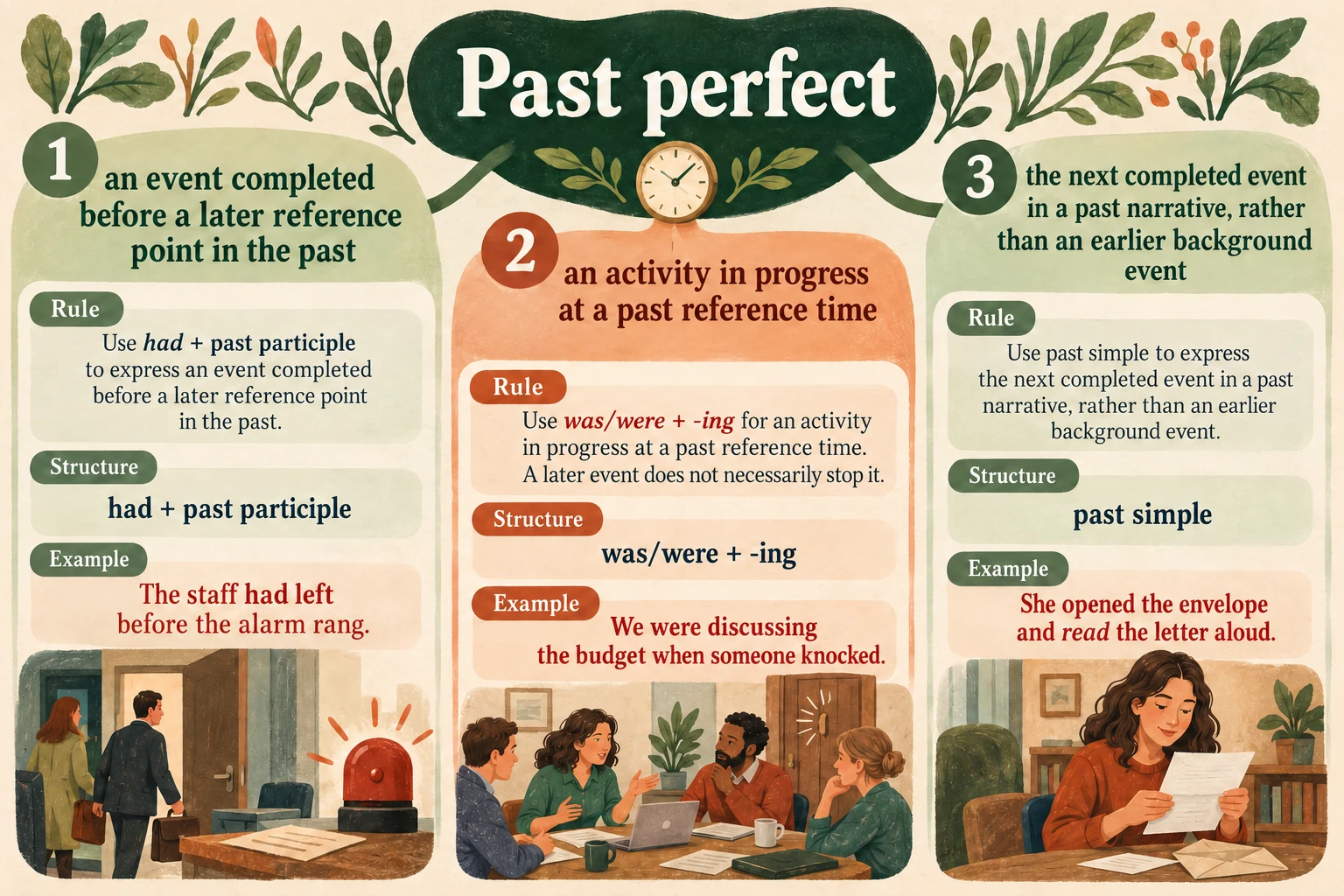
استخدم had + past participle للتعبير عن حدث اكتمل قبل نقطة مرجعية لاحقة في الماضي.
The staff had left before the alarm rang.
الماضي التام · B1. استخدم had + past participle للتعبير عن حدث اكتمل قبل نقطة مرجعية لاحقة في الماضي.
أكمل 12 مهمة أصلية. استنتج المعنى المقصود من السياق، وتدرّب على الصيغة ثم طبّقها في موقف جديد.
استخدم had + past participle للتعبير عن حدث اكتمل قبل نقطة مرجعية لاحقة في الماضي.
The staff had left before the alarm rang.نستخدم was/were مع ing لنشاط خلفي كان جارياً عند نقطة مرجعية ماضية. وقد يحدد حدث آخر هذه النقطة دون أن يوقف النشاط بالضرورة.
We were discussing the budget when someone knocked.استخدم past simple للتعبير عن الحدث المكتمل التالي في السرد بدلا من حدث أسبق.
She opened the envelope and read the letter aloud.
The fire alarm rang at 10; the staff left at 9:55.
استخدم had + past participle للتعبير عن حدث اكتمل قبل نقطة مرجعية لاحقة في الماضي.
The staff had left before the alarm rang.نستخدم was/were مع ing لنشاط خلفي كان جارياً عند نقطة مرجعية ماضية. وقد يحدد حدث آخر هذه النقطة دون أن يوقف النشاط بالضرورة.
We were discussing the budget when someone knocked.استخدم past simple للتعبير عن الحدث المكتمل التالي في السرد بدلا من حدث أسبق.
She opened the envelope and read the letter aloud.احتفظ بالمحاولة الأولى، وافهم التغيير، ثم اختبر فهمك في موقف جديد.
لا توجد ملاحظات بعد. جرّب تهيئة قصيرة.
استخدم had + past participle للتعبير عن حدث اكتمل قبل نقطة مرجعية لاحقة في الماضي.
The staff had left before the alarm rang.نستخدم was/were مع ing لنشاط خلفي كان جارياً عند نقطة مرجعية ماضية. وقد يحدد حدث آخر هذه النقطة دون أن يوقف النشاط بالضرورة.
We were discussing the budget when someone knocked.استخدم past simple للتعبير عن الحدث المكتمل التالي في السرد بدلا من حدث أسبق.
She opened the envelope and read the letter aloud.فتح إجابة يسجّل استخدام المساعدة لذلك السؤال.
The fire alarm rang at 10; the staff left at 9:55.
انظر إلى «The staff ___ before the alarm rang.». استخدم had + past participle للتعبير عن حدث اكتمل قبل نقطة مرجعية لاحقة في الماضي. الجملة المكتملة: «The staff had left before the alarm rang.».
An unfinished conversation was interrupted by a knock.
انظر إلى «We ___ the budget when someone knocked.». نستخدم was/were مع ing لنشاط خلفي كان جارياً عند نقطة مرجعية ماضية. وقد يحدد حدث آخر هذه النقطة دون أن يوقف النشاط بالضرورة. الجملة المكتملة: «We were discussing the budget when someone knocked.».
This is the next action after opening the envelope.
انظر إلى «She opened the envelope and ___ the letter aloud.». استخدم past simple للتعبير عن الحدث المكتمل التالي في السرد بدلا من حدث أسبق. الجملة المكتملة: «She opened the envelope and read the letter aloud.».
The tickets were sold before we reached the booth.
انظر إلى «By the time we arrived, the last ticket ___.». استخدم had + past participle للتعبير عن حدث اكتمل قبل نقطة مرجعية لاحقة في الماضي. الجملة المكتملة: «By the time we arrived, the last ticket had gone.».
Use the past continuous of carry for the background activity in progress when the lights went out.
“I was carrying a tray when the lights went out.” نستخدم was أو were مع ing لنشاط كان جارياً عند نقطة مرجعية ماضية. وقد يحدد حدث آخر هذه النقطة دون أن يثبت أن النشاط توقف.
The events are given in their actual order.
انظر إلى «The guard checked my pass, then ___ the gate.». استخدم past simple للتعبير عن الحدث المكتمل التالي في السرد بدلا من حدث أسبق. الجملة المكتملة: «The guard checked my pass, then opened the gate.».
Use the past perfect of see and include never for an experience before the museum visit.
الجملة المكتملة: «Before that visit, I had never seen a meteorite.» استخدم had + past participle للتعبير عن حدث اكتمل قبل نقطة مرجعية لاحقة في الماضي. يحدد الفاعل والزمن والمعنى في المهمة هذه الصيغة. تُطابق الإجابات المراجعة فقط تلقائياً؛ ولا تُعد الصياغات الأخرى خطأ تلقائياً.
The forgotten password explains the later login failure.
انظر إلى «I could not sign in because I ___ my password.». استخدم had + past participle للتعبير عن حدث اكتمل قبل نقطة مرجعية لاحقة في الماضي. الجملة المكتملة: «I could not sign in because I had forgotten my password.».
Use the past continuous of work for the activity in progress.
“At the moment the siren sounded, the engineers were working underground.” نستخدم was أو were مع ing لنشاط كان جارياً عند نقطة مرجعية ماضية. وقد يحدد حدث آخر هذه النقطة دون أن يثبت أن النشاط توقف.
The runner crossed the line; the next event followed.
انظر إلى «She crossed the line and ___ onto the grass.». استخدم past simple للتعبير عن الحدث المكتمل التالي في السرد بدلا من حدث أسبق. الجملة المكتملة: «She crossed the line and collapsed onto the grass.».
Background activity at the moment a past event happened.
انظر إلى «The lecturer ___ when the projector failed.». نستخدم was/were مع ing لنشاط خلفي كان جارياً عند نقطة مرجعية ماضية. وقد يحدد حدث آخر هذه النقطة دون أن يوقف النشاط بالضرورة. الجملة المكتملة: «The lecturer was speaking when the projector failed.».
Use the past simple of lock for the next action in this sequence.
الجملة المكتملة: «He put the files away, locked the cupboard and left.» استخدم past simple للتعبير عن الحدث المكتمل التالي في السرد بدلا من حدث أسبق. يحدد الفاعل والزمن والمعنى في المهمة هذه الصيغة. تُطابق الإجابات المراجعة فقط تلقائياً؛ ولا تُعد الصياغات الأخرى خطأ تلقائياً.