01話し手が現実に起こりうると考える未来の条件
if + present simple; will + base verb を用います。表す内容:話し手が現実に起こりうると考える未来の条件。
If it snows, the match will be cancelled.
第一・第二条件文の使い分け · B1. if + present simple; will + base verb を用います。表す内容:話し手が現実に起こりうると考える未来の条件。
12問のオリジナル問題です。状況から意味を読み取り、形を練習して、新しい場面で応用します。
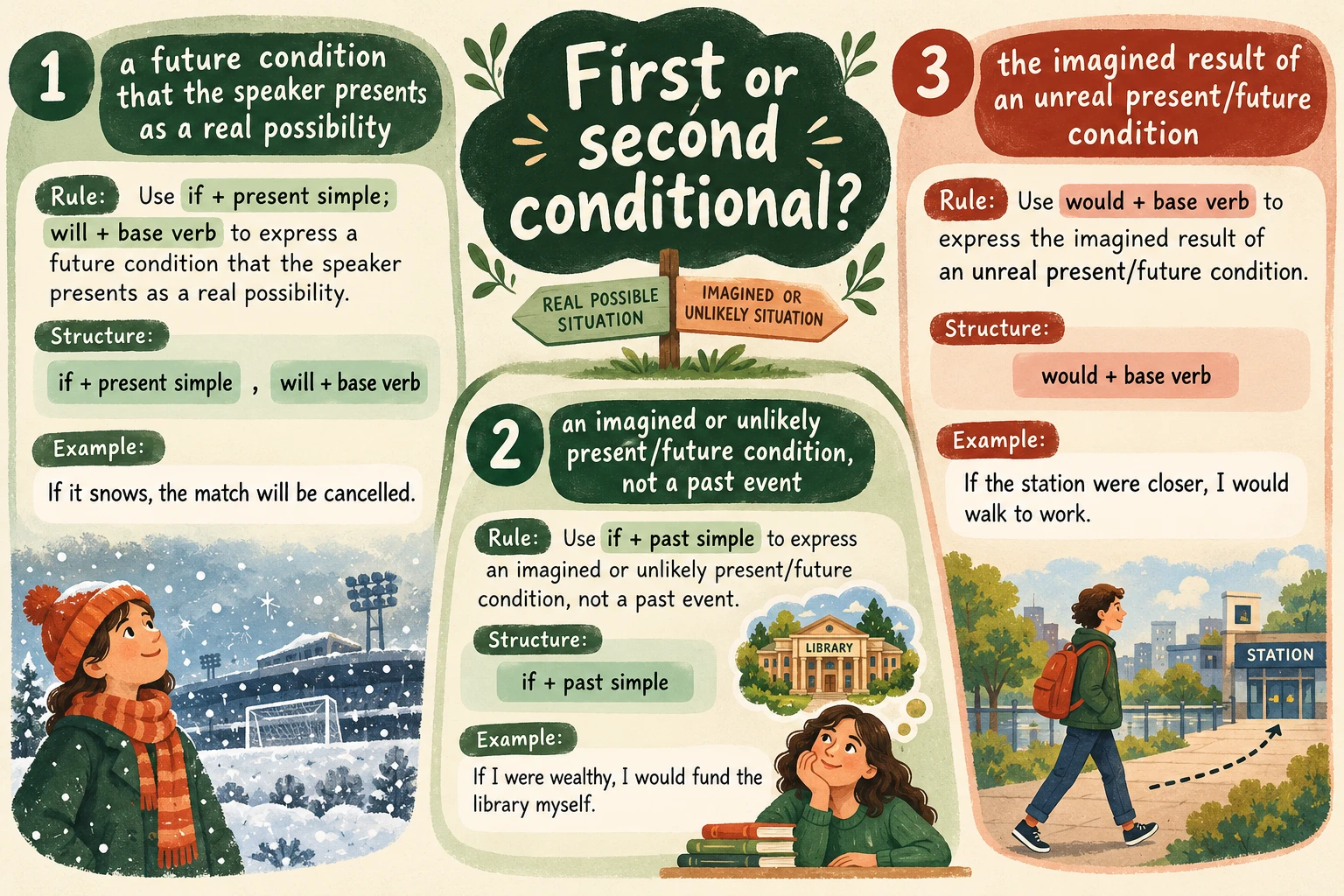
if + present simple; will + base verb を用います。表す内容:話し手が現実に起こりうると考える未来の条件。
If it snows, the match will be cancelled.if + past simple を用います。表す内容:過去の出来事ではなく、現在・未来の仮定や可能性の低い条件。
If I were wealthy, I would fund the library myself.would + base verb を用います。表す内容:現在・未来の非現実的な条件から想定される結果。
If the station were closer, I would walk to work.
The forecast gives a realistic chance of snow tomorrow.
if + present simple; will + base verb を用います。表す内容:話し手が現実に起こりうると考える未来の条件。
If it snows, the match will be cancelled.if + past simple を用います。表す内容:過去の出来事ではなく、現在・未来の仮定や可能性の低い条件。
If I were wealthy, I would fund the library myself.would + base verb を用います。表す内容:現在・未来の非現実的な条件から想定される結果。
If the station were closer, I would walk to work.初回答を残し、変化の理由を理解して、別の場面で確かめます。
まだ復習ノートはありません。まずは短いウォームアップを。
if + present simple; will + base verb を用います。表す内容:話し手が現実に起こりうると考える未来の条件。
If it snows, the match will be cancelled.if + past simple を用います。表す内容:過去の出来事ではなく、現在・未来の仮定や可能性の低い条件。
If I were wealthy, I would fund the library myself.would + base verb を用います。表す内容:現在・未来の非現実的な条件から想定される結果。
If the station were closer, I would walk to work.解答を開くと、その問題にヒント利用が記録されます。
The forecast gives a realistic chance of snow tomorrow.
「The forecast gives a realistic chance of snow tomorrow.」に注目しましょう。if + present simple; will + base verb を用います。表す内容:話し手が現実に起こりうると考える未来の条件。 完成文:「If it snows, the match will be cancelled.」。
I am not wealthy; imagine a different present. Use the ordinary hypothetical-present/future second-conditional pattern.
「I am not wealthy; imagine a different present. Use the ordinary hypothetical-present/future second-conditional pattern.」に注目しましょう。if + past simple を用います。表す内容:過去の出来事ではなく、現在・未来の仮定や可能性の低い条件。 完成文:「If I were wealthy, I would fund the library myself.」。
The station cannot move in reality. Use the ordinary hypothetical-present/future second-conditional pattern.
「The station cannot move in reality. Use the ordinary hypothetical-present/future second-conditional pattern.」に注目しましょう。would + base verb を用います。表す内容:現在・未来の非現実的な条件から想定される結果。 完成文:「If the station were closer, I would walk to work.」。
The supplier may realistically confirm the order today.
「The supplier may realistically confirm the order today.」に注目しましょう。if + present simple; will + base verb を用います。表す内容:話し手が現実に起こりうると考える未来の条件。 完成文:「If they confirm today, we will dispatch tomorrow.」。
Use the past simple of own; the speaker does not own the building.
完成文:「If I owned this building, I would repair the lift.」 if + past simple を用います。表す内容:過去の出来事ではなく、現在・未来の仮定や可能性の低い条件。 問題の主語・時間・意味に合わせた形です。確認済みの解答だけを自動照合します。別の表現を自動的に誤りとはしません。
I do not have a spare room at present. Use the ordinary hypothetical-present/future second-conditional pattern.
「I do not have a spare room at present. Use the ordinary hypothetical-present/future second-conditional pattern.」に注目しましょう。would + base verb を用います。表す内容:現在・未来の非現実的な条件から想定される結果。 完成文:「If I had a spare room, I would invite you to stay.」。
Use the present simple of pass for a realistic future condition.
完成文:「If Nora passes the driving test next week, she will apply for the job.」 if + present simple; will + base verb を用います。表す内容:話し手が現実に起こりうると考える未来の条件。 問題の主語・時間・意味に合わせた形です。確認済みの解答だけを自動照合します。別の表現を自動的に誤りとはしません。
A genuine possibility: the ticket office may still have seats.
「A genuine possibility: the ticket office may still have seats.」に注目しましょう。if + present simple; will + base verb を用います。表す内容:話し手が現実に起こりうると考える未来の条件。 完成文:「If there are seats left, we will buy two.」。
Use the past simple of live; we actually live on the mainland.
完成文:「If we lived on an island, we would depend on ferries.」 if + past simple を用います。表す内容:過去の出来事ではなく、現在・未来の仮定や可能性の低い条件。 問題の主語・時間・意味に合わせた形です。確認済みの解答だけを自動照合します。別の表現を自動的に誤りとはしません。
The speaker is not a pilot. Use the ordinary hypothetical-present/future second-conditional pattern.
「The speaker is not a pilot. Use the ordinary hypothetical-present/future second-conditional pattern.」に注目しましょう。would + base verb を用います。表す内容:現在・未来の非現実的な条件から想定される結果。 完成文:「If I were a pilot, I would study the weather charts daily.」。
The speaker has no influence over the timetable; this is hypothetical. Use the ordinary hypothetical-present/future second-conditional pattern.
「The speaker has no influence over the timetable; this is hypothetical. Use the ordinary hypothetical-present/future second-conditional pattern.」に注目しましょう。if + past simple を用います。表す内容:過去の出来事ではなく、現在・未来の仮定や可能性の低い条件。 完成文:「If I controlled the timetable, I would add a later service.」。
Use a would-result with spend for the imagined consequence; I am not on holiday.
完成文:「If I were on holiday now, I would spend the morning by the lake.」 would + base verb を用います。表す内容:現在・未来の非現実的な条件から想定される結果。 問題の主語・時間・意味に合わせた形です。確認済みの解答だけを自動照合します。別の表現を自動的に誤りとはしません。