01شرط مستقبلي يقدمه المتكلم كاحتمال واقعي
استخدم if + present simple; will + base verb للتعبير عن شرط مستقبلي يقدمه المتكلم كاحتمال واقعي.
If it snows, the match will be cancelled.
الشرط الأول أم الثاني؟ · B1. استخدم if + present simple; will + base verb للتعبير عن شرط مستقبلي يقدمه المتكلم كاحتمال واقعي.
أكمل 12 مهمة أصلية. استنتج المعنى المقصود من السياق، وتدرّب على الصيغة ثم طبّقها في موقف جديد.
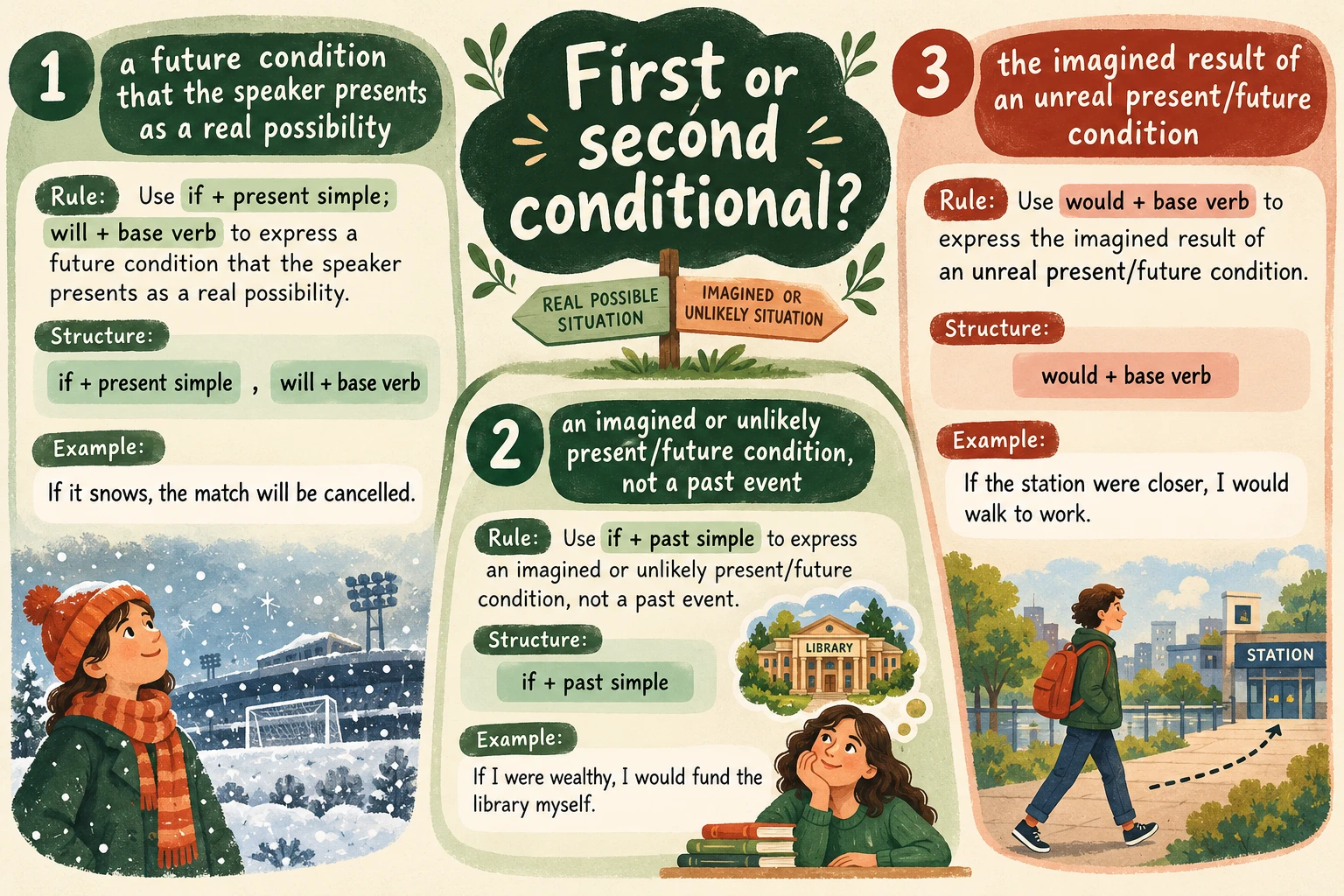
استخدم if + present simple; will + base verb للتعبير عن شرط مستقبلي يقدمه المتكلم كاحتمال واقعي.
If it snows, the match will be cancelled.استخدم if + past simple للتعبير عن شرط متخيل أو غير محتمل في الحاضر أو المستقبل لا حدث ماض.
If I were wealthy, I would fund the library myself.استخدم would + base verb للتعبير عن النتيجة المتخيلة لشرط غير حقيقي في الحاضر أو المستقبل.
If the station were closer, I would walk to work.
The forecast gives a realistic chance of snow tomorrow.
استخدم if + present simple; will + base verb للتعبير عن شرط مستقبلي يقدمه المتكلم كاحتمال واقعي.
If it snows, the match will be cancelled.استخدم if + past simple للتعبير عن شرط متخيل أو غير محتمل في الحاضر أو المستقبل لا حدث ماض.
If I were wealthy, I would fund the library myself.استخدم would + base verb للتعبير عن النتيجة المتخيلة لشرط غير حقيقي في الحاضر أو المستقبل.
If the station were closer, I would walk to work.احتفظ بالمحاولة الأولى، وافهم التغيير، ثم اختبر فهمك في موقف جديد.
لا توجد ملاحظات بعد. جرّب تهيئة قصيرة.
استخدم if + present simple; will + base verb للتعبير عن شرط مستقبلي يقدمه المتكلم كاحتمال واقعي.
If it snows, the match will be cancelled.استخدم if + past simple للتعبير عن شرط متخيل أو غير محتمل في الحاضر أو المستقبل لا حدث ماض.
If I were wealthy, I would fund the library myself.استخدم would + base verb للتعبير عن النتيجة المتخيلة لشرط غير حقيقي في الحاضر أو المستقبل.
If the station were closer, I would walk to work.فتح إجابة يسجّل استخدام المساعدة لذلك السؤال.
The forecast gives a realistic chance of snow tomorrow.
انظر إلى «The forecast gives a realistic chance of snow tomorrow.». استخدم if + present simple; will + base verb للتعبير عن شرط مستقبلي يقدمه المتكلم كاحتمال واقعي. الجملة المكتملة: «If it snows, the match will be cancelled.».
I am not wealthy; imagine a different present. Use the ordinary hypothetical-present/future second-conditional pattern.
انظر إلى «I am not wealthy; imagine a different present. Use the ordinary hypothetical-present/future second-conditional pattern.». استخدم if + past simple للتعبير عن شرط متخيل أو غير محتمل في الحاضر أو المستقبل لا حدث ماض. الجملة المكتملة: «If I were wealthy, I would fund the library myself.».
The station cannot move in reality. Use the ordinary hypothetical-present/future second-conditional pattern.
انظر إلى «The station cannot move in reality. Use the ordinary hypothetical-present/future second-conditional pattern.». استخدم would + base verb للتعبير عن النتيجة المتخيلة لشرط غير حقيقي في الحاضر أو المستقبل. الجملة المكتملة: «If the station were closer, I would walk to work.».
The supplier may realistically confirm the order today.
انظر إلى «The supplier may realistically confirm the order today.». استخدم if + present simple; will + base verb للتعبير عن شرط مستقبلي يقدمه المتكلم كاحتمال واقعي. الجملة المكتملة: «If they confirm today, we will dispatch tomorrow.».
Use the past simple of own; the speaker does not own the building.
الجملة المكتملة: «If I owned this building, I would repair the lift.» استخدم if + past simple للتعبير عن شرط متخيل أو غير محتمل في الحاضر أو المستقبل لا حدث ماض. يحدد الفاعل والزمن والمعنى في المهمة هذه الصيغة. تُطابق الإجابات المراجعة فقط تلقائياً؛ ولا تُعد الصياغات الأخرى خطأ تلقائياً.
I do not have a spare room at present. Use the ordinary hypothetical-present/future second-conditional pattern.
انظر إلى «I do not have a spare room at present. Use the ordinary hypothetical-present/future second-conditional pattern.». استخدم would + base verb للتعبير عن النتيجة المتخيلة لشرط غير حقيقي في الحاضر أو المستقبل. الجملة المكتملة: «If I had a spare room, I would invite you to stay.».
Use the present simple of pass for a realistic future condition.
الجملة المكتملة: «If Nora passes the driving test next week, she will apply for the job.» استخدم if + present simple; will + base verb للتعبير عن شرط مستقبلي يقدمه المتكلم كاحتمال واقعي. يحدد الفاعل والزمن والمعنى في المهمة هذه الصيغة. تُطابق الإجابات المراجعة فقط تلقائياً؛ ولا تُعد الصياغات الأخرى خطأ تلقائياً.
A genuine possibility: the ticket office may still have seats.
انظر إلى «A genuine possibility: the ticket office may still have seats.». استخدم if + present simple; will + base verb للتعبير عن شرط مستقبلي يقدمه المتكلم كاحتمال واقعي. الجملة المكتملة: «If there are seats left, we will buy two.».
Use the past simple of live; we actually live on the mainland.
الجملة المكتملة: «If we lived on an island, we would depend on ferries.» استخدم if + past simple للتعبير عن شرط متخيل أو غير محتمل في الحاضر أو المستقبل لا حدث ماض. يحدد الفاعل والزمن والمعنى في المهمة هذه الصيغة. تُطابق الإجابات المراجعة فقط تلقائياً؛ ولا تُعد الصياغات الأخرى خطأ تلقائياً.
The speaker is not a pilot. Use the ordinary hypothetical-present/future second-conditional pattern.
انظر إلى «The speaker is not a pilot. Use the ordinary hypothetical-present/future second-conditional pattern.». استخدم would + base verb للتعبير عن النتيجة المتخيلة لشرط غير حقيقي في الحاضر أو المستقبل. الجملة المكتملة: «If I were a pilot, I would study the weather charts daily.».
The speaker has no influence over the timetable; this is hypothetical. Use the ordinary hypothetical-present/future second-conditional pattern.
انظر إلى «The speaker has no influence over the timetable; this is hypothetical. Use the ordinary hypothetical-present/future second-conditional pattern.». استخدم if + past simple للتعبير عن شرط متخيل أو غير محتمل في الحاضر أو المستقبل لا حدث ماض. الجملة المكتملة: «If I controlled the timetable, I would add a later service.».
Use a would-result with spend for the imagined consequence; I am not on holiday.
الجملة المكتملة: «If I were on holiday now, I would spend the morning by the lake.» استخدم would + base verb للتعبير عن النتيجة المتخيلة لشرط غير حقيقي في الحاضر أو المستقبل. يحدد الفاعل والزمن والمعنى في المهمة هذه الصيغة. تُطابق الإجابات المراجعة فقط تلقائياً؛ ولا تُعد الصياغات الأخرى خطأ تلقائياً.