01화자가 실제 가능성으로 제시하는 미래 조건
if + present simple; will + base verb 구조를 사용합니다. 의미: 화자가 실제 가능성으로 제시하는 미래 조건.
If it snows, the match will be cancelled.
제1·제2조건문 비교 · B1. if + present simple; will + base verb 구조를 사용합니다. 의미: 화자가 실제 가능성으로 제시하는 미래 조건.
새로 만든 12문제입니다. 상황에서 의도를 파악하고 형태를 연습한 뒤 새로운 맥락에 적용하세요.
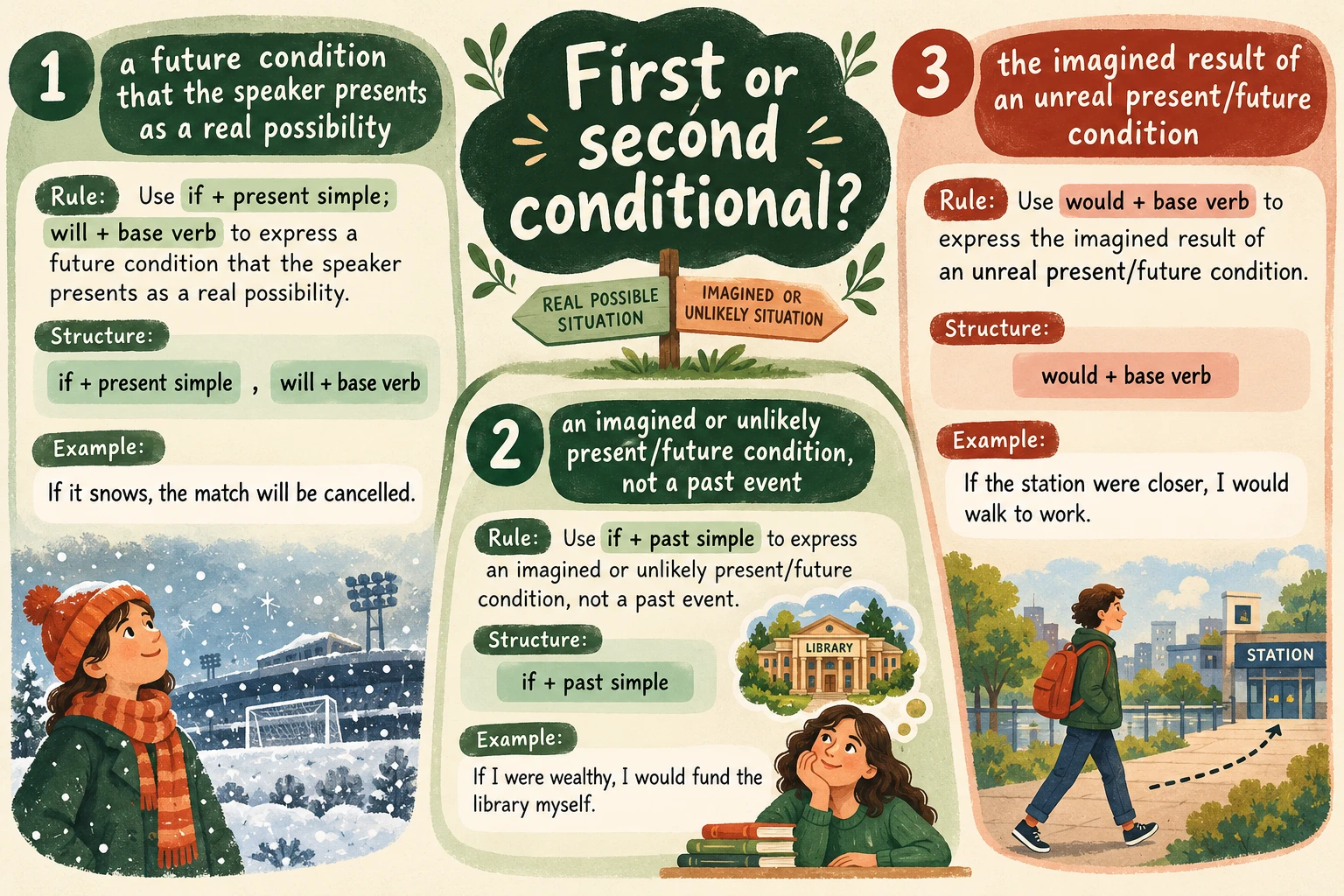
if + present simple; will + base verb 구조를 사용합니다. 의미: 화자가 실제 가능성으로 제시하는 미래 조건.
If it snows, the match will be cancelled.if + past simple 구조를 사용합니다. 의미: 과거 사건이 아닌 현재·미래의 가상적이거나 가능성 낮은 조건.
If I were wealthy, I would fund the library myself.would + base verb 구조를 사용합니다. 의미: 현재·미래의 비현실적 조건에 따른 가상의 결과.
If the station were closer, I would walk to work.
The forecast gives a realistic chance of snow tomorrow.
if + present simple; will + base verb 구조를 사용합니다. 의미: 화자가 실제 가능성으로 제시하는 미래 조건.
If it snows, the match will be cancelled.if + past simple 구조를 사용합니다. 의미: 과거 사건이 아닌 현재·미래의 가상적이거나 가능성 낮은 조건.
If I were wealthy, I would fund the library myself.would + base verb 구조를 사용합니다. 의미: 현재·미래의 비현실적 조건에 따른 가상의 결과.
If the station were closer, I would walk to work.첫 시도를 남기고 변화의 이유를 이해한 뒤 새로운 상황에서 확인해 보세요.
아직 복습 노트가 없어요. 짧은 워밍업부터 해보세요.
if + present simple; will + base verb 구조를 사용합니다. 의미: 화자가 실제 가능성으로 제시하는 미래 조건.
If it snows, the match will be cancelled.if + past simple 구조를 사용합니다. 의미: 과거 사건이 아닌 현재·미래의 가상적이거나 가능성 낮은 조건.
If I were wealthy, I would fund the library myself.would + base verb 구조를 사용합니다. 의미: 현재·미래의 비현실적 조건에 따른 가상의 결과.
If the station were closer, I would walk to work.정답을 열면 해당 문제에 도움 사용이 기록돼요.
The forecast gives a realistic chance of snow tomorrow.
“The forecast gives a realistic chance of snow tomorrow.”를 보세요. if + present simple; will + base verb 구조를 사용합니다. 의미: 화자가 실제 가능성으로 제시하는 미래 조건. 완성 문장: “If it snows, the match will be cancelled.”.
I am not wealthy; imagine a different present. Use the ordinary hypothetical-present/future second-conditional pattern.
“I am not wealthy; imagine a different present. Use the ordinary hypothetical-present/future second-conditional pattern.”를 보세요. if + past simple 구조를 사용합니다. 의미: 과거 사건이 아닌 현재·미래의 가상적이거나 가능성 낮은 조건. 완성 문장: “If I were wealthy, I would fund the library myself.”.
The station cannot move in reality. Use the ordinary hypothetical-present/future second-conditional pattern.
“The station cannot move in reality. Use the ordinary hypothetical-present/future second-conditional pattern.”를 보세요. would + base verb 구조를 사용합니다. 의미: 현재·미래의 비현실적 조건에 따른 가상의 결과. 완성 문장: “If the station were closer, I would walk to work.”.
The supplier may realistically confirm the order today.
“The supplier may realistically confirm the order today.”를 보세요. if + present simple; will + base verb 구조를 사용합니다. 의미: 화자가 실제 가능성으로 제시하는 미래 조건. 완성 문장: “If they confirm today, we will dispatch tomorrow.”.
Use the past simple of own; the speaker does not own the building.
완성 문장: “If I owned this building, I would repair the lift.” if + past simple 구조를 사용합니다. 의미: 과거 사건이 아닌 현재·미래의 가상적이거나 가능성 낮은 조건. 과제의 주어·시간·의미에 맞춘 형태입니다. 검토한 답만 자동으로 확인하며, 다른 표현을 자동으로 틀렸다고 하지 않습니다.
I do not have a spare room at present. Use the ordinary hypothetical-present/future second-conditional pattern.
“I do not have a spare room at present. Use the ordinary hypothetical-present/future second-conditional pattern.”를 보세요. would + base verb 구조를 사용합니다. 의미: 현재·미래의 비현실적 조건에 따른 가상의 결과. 완성 문장: “If I had a spare room, I would invite you to stay.”.
Use the present simple of pass for a realistic future condition.
완성 문장: “If Nora passes the driving test next week, she will apply for the job.” if + present simple; will + base verb 구조를 사용합니다. 의미: 화자가 실제 가능성으로 제시하는 미래 조건. 과제의 주어·시간·의미에 맞춘 형태입니다. 검토한 답만 자동으로 확인하며, 다른 표현을 자동으로 틀렸다고 하지 않습니다.
A genuine possibility: the ticket office may still have seats.
“A genuine possibility: the ticket office may still have seats.”를 보세요. if + present simple; will + base verb 구조를 사용합니다. 의미: 화자가 실제 가능성으로 제시하는 미래 조건. 완성 문장: “If there are seats left, we will buy two.”.
Use the past simple of live; we actually live on the mainland.
완성 문장: “If we lived on an island, we would depend on ferries.” if + past simple 구조를 사용합니다. 의미: 과거 사건이 아닌 현재·미래의 가상적이거나 가능성 낮은 조건. 과제의 주어·시간·의미에 맞춘 형태입니다. 검토한 답만 자동으로 확인하며, 다른 표현을 자동으로 틀렸다고 하지 않습니다.
The speaker is not a pilot. Use the ordinary hypothetical-present/future second-conditional pattern.
“The speaker is not a pilot. Use the ordinary hypothetical-present/future second-conditional pattern.”를 보세요. would + base verb 구조를 사용합니다. 의미: 현재·미래의 비현실적 조건에 따른 가상의 결과. 완성 문장: “If I were a pilot, I would study the weather charts daily.”.
The speaker has no influence over the timetable; this is hypothetical. Use the ordinary hypothetical-present/future second-conditional pattern.
“The speaker has no influence over the timetable; this is hypothetical. Use the ordinary hypothetical-present/future second-conditional pattern.”를 보세요. if + past simple 구조를 사용합니다. 의미: 과거 사건이 아닌 현재·미래의 가상적이거나 가능성 낮은 조건. 완성 문장: “If I controlled the timetable, I would add a later service.”.
Use a would-result with spend for the imagined consequence; I am not on holiday.
완성 문장: “If I were on holiday now, I would spend the morning by the lake.” would + base verb 구조를 사용합니다. 의미: 현재·미래의 비현실적 조건에 따른 가상의 결과. 과제의 주어·시간·의미에 맞춘 형태입니다. 검토한 답만 자동으로 확인하며, 다른 표현을 자동으로 틀렸다고 하지 않습니다.