01肯定文の過去形
終わった過去の時点の出来事には過去形を使います。規則動詞には通常 -ed を付けますが、carry → carried、stop → stopped のようなつづりの変化があります。go → went、find → found などの不規則変化は覚えましょう。これらの一般動詞の過去形は主語によって変わりません。
walk → walked · go → went
過去形 · A2. 終わった過去の時点の出来事には過去形を使います。規則動詞には通常 -ed を付けますが、carry → carried、stop → stopped のようなつづりの変化があります。go → went、find → found などの不規則変化は覚えましょう。これらの一般動詞の過去形は主語によって変わりません。
過去の出来事を、規則・不規則動詞、didの疑問文、was/wereで表す練習です。
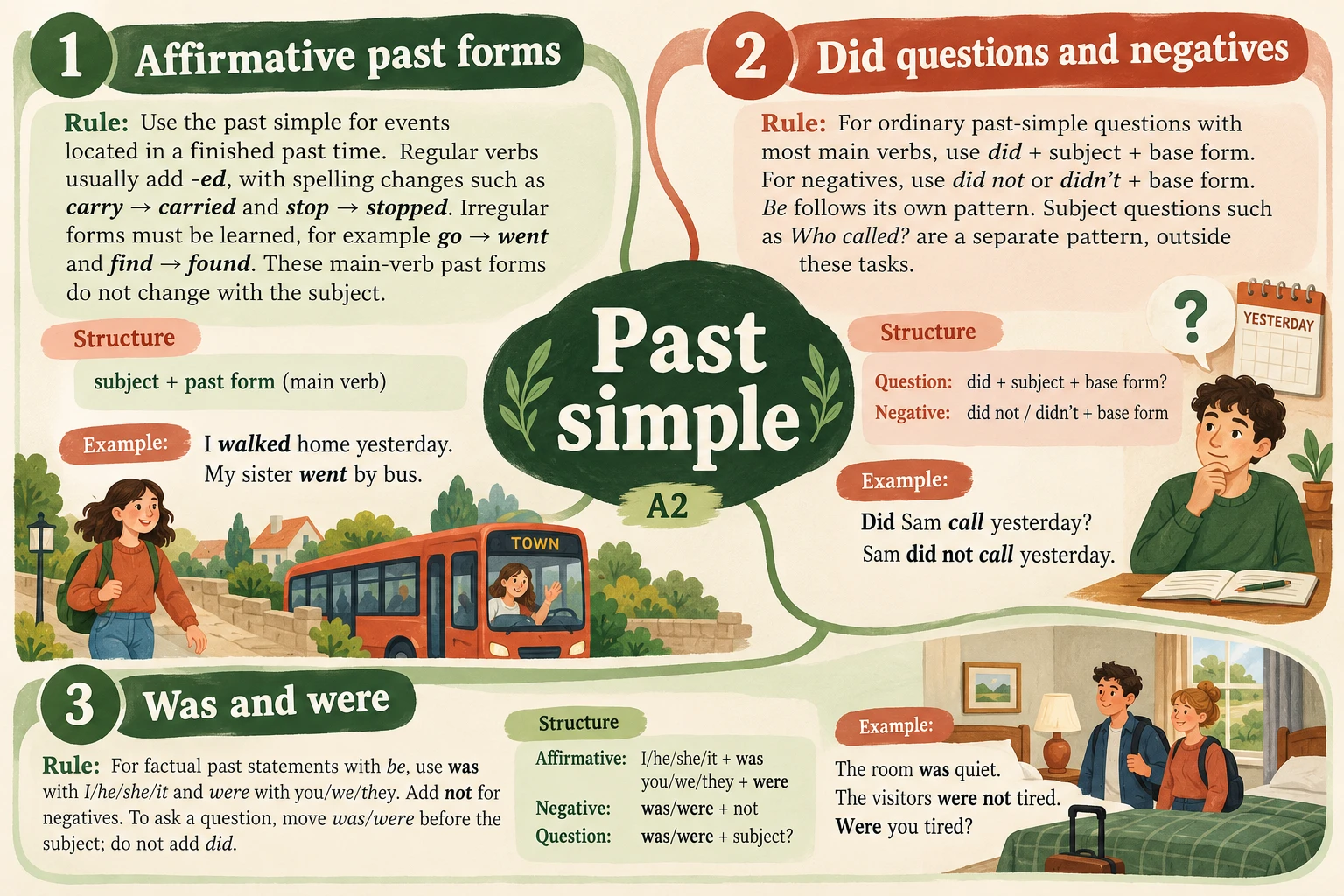
終わった過去の時点の出来事には過去形を使います。規則動詞には通常 -ed を付けますが、carry → carried、stop → stopped のようなつづりの変化があります。go → went、find → found などの不規則変化は覚えましょう。これらの一般動詞の過去形は主語によって変わりません。
walk → walked · go → went多くの一般動詞の通常の疑問文は did+主語+動詞の原形、否定文は did not または didn’t+原形にします。be 動詞の形は別に学びます。Who called? のように主語を尋ねる疑問文は別の形で、この単元の問題には含みません。
did / didn’t + base verb実際の過去の状態を be 動詞で表すとき、I/he/she/it には was、you/we/they には were を使います。否定文は not を加えます。疑問文は was/were を主語の前に置き、did は使いません。
I/he/she/it was · you/we/they wereI worked yesterday.She went home.
I didn’t work yesterday.She didn’t go home.
Did you work yesterday?Did she go home?
Yes, I did.No, she didn’t.
Mia finished cleaning her room yesterday.
終わった過去の時点の出来事には過去形を使います。規則動詞には通常 -ed を付けますが、carry → carried、stop → stopped のようなつづりの変化があります。go → went、find → found などの不規則変化は覚えましょう。これらの一般動詞の過去形は主語によって変わりません。
I walked home yesterday. My sister went by bus.実際の過去の状態を be 動詞で表すとき、I/he/she/it には was、you/we/they には were を使います。否定文は not を加えます。疑問文は was/were を主語の前に置き、did は使いません。
The room was quiet. The visitors were not tired. Were you tired?多くの一般動詞の通常の疑問文は did+主語+動詞の原形、否定文は did not または didn’t+原形にします。be 動詞の形は別に学びます。Who called? のように主語を尋ねる疑問文は別の形で、この単元の問題には含みません。
Did Sam call yesterday? Sam did not call yesterday.初回答を残し、変化の理由を理解して、別の場面で確かめます。
まだ復習ノートはありません。まずは短いウォームアップを。
終わった過去の時点の出来事には過去形を使います。規則動詞には通常 -ed を付けますが、carry → carried、stop → stopped のようなつづりの変化があります。go → went、find → found などの不規則変化は覚えましょう。これらの一般動詞の過去形は主語によって変わりません。
I walked home yesterday. My sister went by bus.多くの一般動詞の通常の疑問文は did+主語+動詞の原形、否定文は did not または didn’t+原形にします。be 動詞の形は別に学びます。Who called? のように主語を尋ねる疑問文は別の形で、この単元の問題には含みません。
Did Sam call yesterday? Sam did not call yesterday.実際の過去の状態を be 動詞で表すとき、I/he/she/it には was、you/we/they には were を使います。否定文は not を加えます。疑問文は was/were を主語の前に置き、did は使いません。
The room was quiet. The visitors were not tired. Were you tired?解答を開くと、その問題にヒント利用が記録されます。
Mia finished cleaning her room yesterday.
「Mia finished cleaning her room yesterday.」に注目しましょう。終わった過去の時点の出来事には過去形を使います。規則動詞には通常 -ed を付けますが、carry → carried、stop → stopped のようなつづりの変化があります。go → went、find → found などの不規則変化は覚えましょう。これらの一般動詞の過去形は主語によって変わりません。 完成文:「Mia cleaned her room yesterday.」。
You want to know whether Omar bought a notebook yesterday.
「You want to know whether Omar bought a notebook yesterday.」に注目しましょう。多くの一般動詞の通常の疑問文は did+主語+動詞の原形、否定文は did not または didn’t+原形にします。be 動詞の形は別に学びます。Who called? のように主語を尋ねる疑問文は別の形で、この単元の問題には含みません。 完成文:「Did Omar buy a notebook yesterday?」。
You want to know if someone left the windows open last night.
「You want to know if someone left the windows open last night.」に注目しましょう。実際の過去の状態を be 動詞で表すとき、I/he/she/it には was、you/we/they には were を使います。否定文は not を加えます。疑問文は was/were を主語の前に置き、did は使いません。 完成文:「Were the windows open last night?」。
The boxes are upstairs now. The work finished yesterday.
昨日終わった動作です。carry は子音字+y で終わるため、y を i に変えて -ed を付け、carried にします。
Nina stayed at home last Friday because of a fever.
「Nina stayed at home last Friday because of a fever.」に注目しましょう。実際の過去の状態を be 動詞で表すとき、I/he/she/it には was、you/we/they には were を使います。否定文は not を加えます。疑問文は was/were を主語の前に置き、did は使いません。 完成文:「Nina was ill last Friday.」。
They planned to play chess last night, but the game did not happen.
「They planned to play chess last night, but the game did not happen.」に注目しましょう。多くの一般動詞の通常の疑問文は did+主語+動詞の原形、否定文は did not または didn’t+原形にします。be 動詞の形は別に学びます。Who called? のように主語を尋ねる疑問文は別の形で、この単元の問題には含みません。 完成文:「They did not play chess last night.」。
The cafe was closed yesterday. Correct this claim by making it negative: The cafe was open yesterday.
be 動詞の過去の否定文は was の後に not を置きます。was not と wasn’t のどちらも使えます。ほかの部分は変えません。
This sentence has one spelling error: Ava stoped near the bridge yesterday.
短い動詞 stop は最後の p を重ねて -ed を付け、stopped にします。この文は昨日立ち止まった出来事を表します。
Yesterday you left your bag somewhere. Your friend asks about the place.
「Yesterday you left your bag somewhere. Your friend asks about the place.」に注目しましょう。多くの一般動詞の通常の疑問文は did+主語+動詞の原形、否定文は did not または didn’t+原形にします。be 動詞の形は別に学びます。Who called? のように主語を尋ねる疑問文は別の形で、この単元の問題には含みません。 完成文:「Where did you leave your bag yesterday?」。
We arrived before the lesson started yesterday. Describe our arrival using a negative with late.
「We arrived before the lesson started yesterday. Describe our arrival using a negative with late.」に注目しましょう。実際の過去の状態を be 動詞で表すとき、I/he/she/it には was、you/we/they には were を使います。否定文は not を加えます。疑問文は was/were を主語の前に置き、did は使いません。 完成文:「We were not late yesterday.」。
My wallet was missing. The search ended yesterday evening: it was under a chair.
「My wallet was missing. The search ended yesterday evening: it was under a chair.」に注目しましょう。終わった過去の時点の出来事には過去形を使います。規則動詞には通常 -ed を付けますが、carry → carried、stop → stopped のようなつづりの変化があります。go → went、find → found などの不規則変化は覚えましょう。これらの一般動詞の過去形は主語によって変わりません。 完成文:「I found my wallet under a chair yesterday evening.」。
You do not know whether your friend sent the email yesterday.
昨日のことを尋ねる Yes/No 疑問文は Did+you+send にします。did の後は原形の send を使います。