Genannte Einzelheiten · Gründe
Ordne die gefragte Person, Zeit, den Ort oder Betrag dem richtigen Ereignis zu. Nutze den tatsächlich genannten Grund; ein nur plausibler Grund von außen reicht nicht.
The doors open at eight. The class starts at nine.

Eine verlorene Tasche · A1. Ordne die gefragte Person, Zeit, den Ort oder Betrag dem richtigen Ereignis zu.
Höre die englische Originalaufnahme, beantworte die Fragen und prüfe die Belege anschließend im Transkript. Die zusammengehörigen Fragen verwenden dieselbe Aufnahme; die Stufe ist eine redaktionelle Orientierung, kein zertifiziertes Ergebnis.
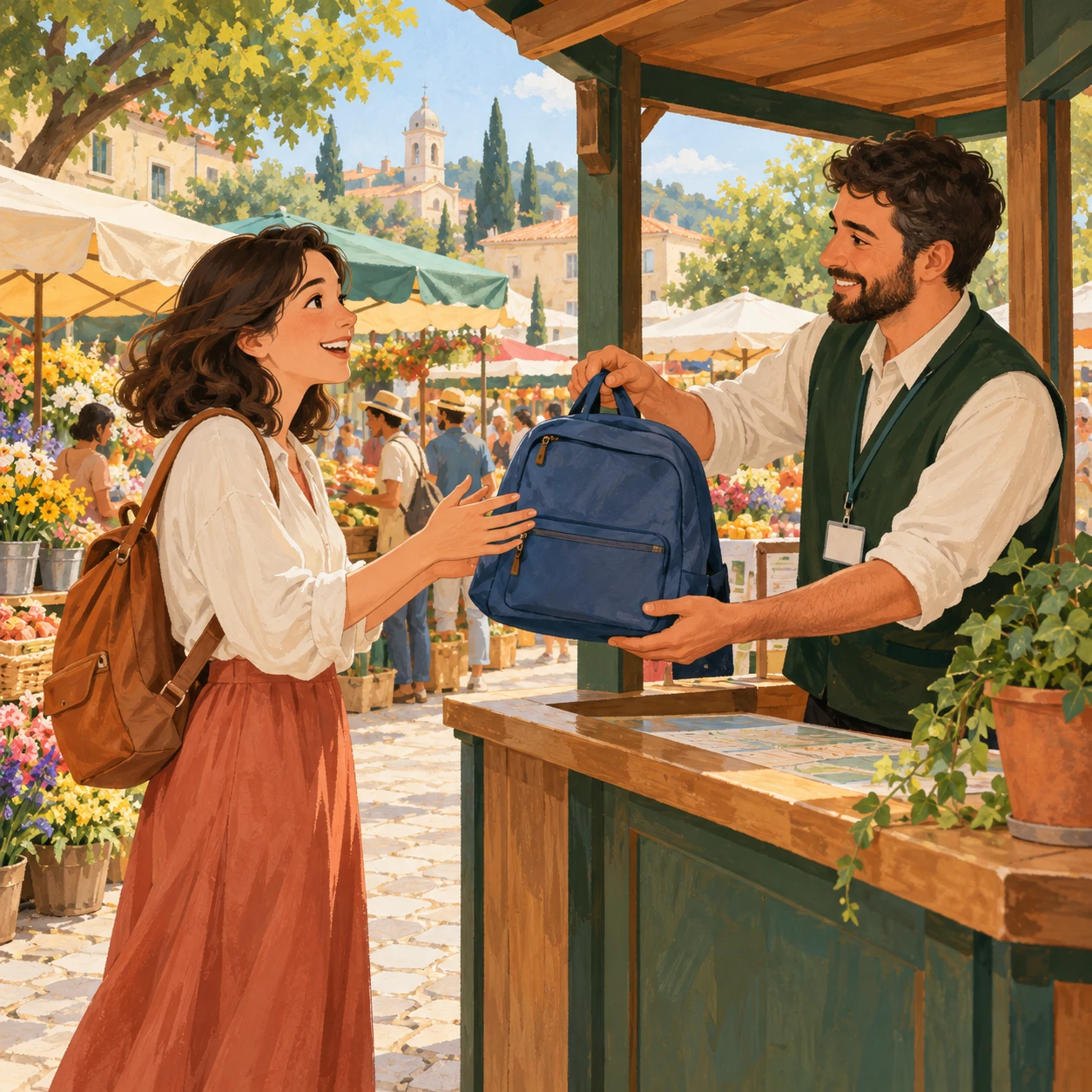
Höre die englische Originalaufnahme, beantworte die Fragen und prüfe die Belege anschließend im Transkript. Die zusammengehörigen Fragen verwenden dieselbe Aufnahme; die Stufe ist eine redaktionelle Orientierung, kein zertifiziertes Ergebnis.
Ordne die gefragte Person, Zeit, den Ort oder Betrag dem richtigen Ereignis zu. Nutze den tatsächlich genannten Grund; ein nur plausibler Grund von außen reicht nicht.
The doors open at eight. The class starts at nine.
Behalte die genannte Bedingung oder Erlaubnis bei; eine Regel beweist nicht, dass etwas geschehen ist. Nutze den ganzen Text: Ein richtiges Detail ist nicht automatisch die Kernaussage.
If the front door is locked, use the side entrance.
Höre die englische Originalaufnahme, beantworte die Fragen und prüfe die Belege anschließend im Transkript. Die zusammengehörigen Fragen verwenden dieselbe Aufnahme; die Stufe ist eine redaktionelle Orientierung, kein zertifiziertes Ergebnis.
A message from the market
Ordne die gefragte Person, Zeit, den Ort oder Betrag dem richtigen Ereignis zu.
The doors open at eight. The class starts at nine.Ordne die gefragte Person, Zeit, den Ort oder Betrag dem richtigen Ereignis zu. Nutze den tatsächlich genannten Grund; ein nur plausibler Grund von außen reicht nicht.
The doors open at eight. The class starts at nine.Behalte die genannte Bedingung oder Erlaubnis bei; eine Regel beweist nicht, dass etwas geschehen ist. Nutze den ganzen Text: Ein richtiges Detail ist nicht automatisch die Kernaussage.
If the front door is locked, use the side entrance.Behalte den Erstversuch, prüfe den Beleg und versuche eine weitere Frage. Eine Folgefrage zum selben Material belegt keinen Transfer auf einen neuen Text.
Noch keine Lernnotizen. Starte mit einem kurzen Einstieg.
Ordne die gefragte Person, Zeit, den Ort oder Betrag dem richtigen Ereignis zu. Nutze den tatsächlich genannten Grund; ein nur plausibler Grund von außen reicht nicht.
The doors open at eight. The class starts at nine.Behalte die genannte Bedingung oder Erlaubnis bei; eine Regel beweist nicht, dass etwas geschehen ist. Nutze den ganzen Text: Ein richtiges Detail ist nicht automatisch die Kernaussage.
If the front door is locked, use the side entrance.Das Öffnen einer Antwort wird für diese Aufgabe als Hilfe erfasst.
A message from the market
Antwort: „This morning.“. Beleg: „We found a blue bag this morning.“. Prüfe „Tomorrow afternoon.“: Dies ist nicht der für dieses Ereignis genannte Tag.
A message from the market
Antwort: „At ten.“. Beleg: „Tomorrow the market opens at nine, but the information desk does not open until ten.“. Prüfe „At nine.“: Dies verwechselt die Zeit dieses Ereignisses mit einer anderen Zeit.
A message from the market
Antwort: „No, they cannot.“. Beleg: „We cannot send bags by post.“. Prüfe „Yes, for a small charge.“: Dies sagt das Gegenteil der betreffenden Angabe.
A message from the market
Antwort: „A white dog.“. Beleg: „The bag has a small picture of a white dog on the front.“. Prüfe „A white dog on the back.“: Dies nennt eine andere Einzelheit als die erfragte.
A message from the market
Antwort: „An umbrella and a book.“. Beleg: „Inside, there is a red umbrella and a book. There is no phone in it.“. Prüfe „A book and some flowers.“: Dies ist nicht der für diese Handlung genannte Gegenstand. Beleg: „our information desk beside the flower shop.“.
A message from the market
Antwort: „How the owner can get a lost bag back.“. Beleg: „You can collect the bag from our information desk beside the flower shop.“. Prüfe „How the owner can buy a replacement bag.“: Dies ist nicht der Hauptzweck der Nachricht oder des Textes.
A message from the market
Antwort: „The fruit seller.“. Beleg: „the fruit seller brought it to our desk.“. Prüfe „The flower seller.“: Dies ordnet die Handlung oder Rolle der falschen Person oder Gruppe zu.
A message from the market
Antwort: „Beside the flower shop.“. Beleg: „our information desk beside the flower shop.“. Prüfe „At the bus station.“: Dies ist nicht der für diese Handlung genannte Ort.
A message from the market
Antwort: „To help staff give it to the right person.“. Beleg: „This helps us give it to the right person.“. Prüfe „To find out whether the umbrella is new.“: Der Text nennt diese Einzelheit nicht. Ergänze sie nicht.
A message from the market
Antwort: „One week.“. Beleg: „We will keep it here for one week.“. Prüfe „One day.“: Dies ist die falsche Zahl für das Erfragte.