01den Abschluss vor einem zukünftigen Termin, oft mit by
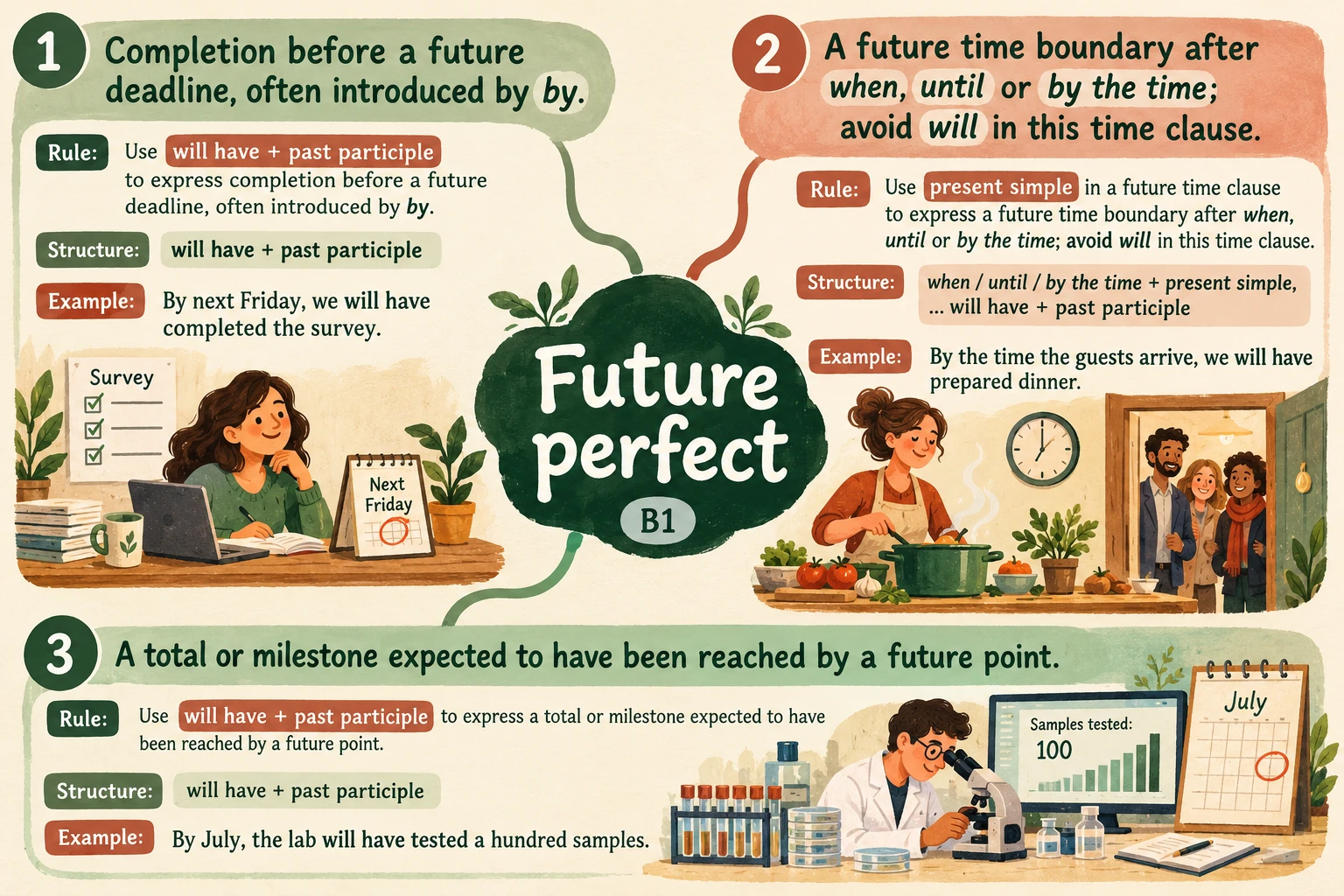
Verwende will have + past participle für den Abschluss vor einem zukünftigen Termin, oft mit by.
By next Friday, we will have completed the survey.
Future Perfect · B1. Verwende will have + past participle für den Abschluss vor einem zukünftigen Termin, oft mit by.
Bearbeite 12 neue Aufgaben. Erschließe die beabsichtigte Bedeutung aus der Situation, übe die Form und wende sie in einem neuen Kontext an.
Verwende will have + past participle für den Abschluss vor einem zukünftigen Termin, oft mit by.
By next Friday, we will have completed the survey.Verwende present simple in a future time clause für eine zukünftige Zeitgrenze nach when, until oder by the time; dort kein will.
By the time the guests arrive, we will have prepared dinner.Verwende will have + past participle für eine Gesamtmenge oder einen bis zu einem zukünftigen Punkt erreichten Meilenstein.
By July, the lab will have tested a hundred samples.
The deadline is next Friday; the work will be complete earlier.
Verwende will have + past participle für den Abschluss vor einem zukünftigen Termin, oft mit by.
By next Friday, we will have completed the survey.Verwende present simple in a future time clause für eine zukünftige Zeitgrenze nach when, until oder by the time; dort kein will.
By the time the guests arrive, we will have prepared dinner.Verwende will have + past participle für eine Gesamtmenge oder einen bis zu einem zukünftigen Punkt erreichten Meilenstein.
By July, the lab will have tested a hundred samples.Bewahre den ersten Versuch. Verstehe die Änderung. Prüfe sie in einer neuen Situation.
Noch keine Lernnotizen. Starte mit einem kurzen Einstieg.
Verwende will have + past participle für den Abschluss vor einem zukünftigen Termin, oft mit by.
By next Friday, we will have completed the survey.Verwende present simple in a future time clause für eine zukünftige Zeitgrenze nach when, until oder by the time; dort kein will.
By the time the guests arrive, we will have prepared dinner.Verwende will have + past participle für eine Gesamtmenge oder einen bis zu einem zukünftigen Punkt erreichten Meilenstein.
By July, the lab will have tested a hundred samples.Das Öffnen einer Antwort wird für diese Aufgabe als Hilfe erfasst.
The deadline is next Friday; the work will be complete earlier.
Achte auf „By next Friday, we ___ the survey.“. Verwende will have + past participle für den Abschluss vor einem zukünftigen Termin, oft mit by. Vollständiger Satz: „By next Friday, we will have completed the survey.“.
A future time clause starts with by the time.
Achte auf „By the time the guests ___, we will have prepared dinner.“. Verwende present simple in a future time clause für eine zukünftige Zeitgrenze nach when, until oder by the time; dort kein will. Vollständiger Satz: „By the time the guests arrive, we will have prepared dinner.“.
The total is expected to be achieved before July begins.
Achte auf „By July, the lab ___ a hundred samples.“. Verwende will have + past participle für eine Gesamtmenge oder einen bis zu einem zukünftigen Punkt erreichten Meilenstein. Vollständiger Satz: „By July, the lab will have tested a hundred samples.“.
The report will be finished before tomorrow noon.
Achte auf „By noon tomorrow, I ___ the report.“. Verwende will have + past participle für den Abschluss vor einem zukünftigen Termin, oft mit by. Vollständiger Satz: „By noon tomorrow, I will have written the report.“.
Use the present simple of end in the future time clause.
Vollständiger Satz: „We will have packed everything by the time the lease ends.“ Verwende present simple in a future time clause für eine zukünftige Zeitgrenze nach when, until oder by the time; dort kein will. Subjekt, Zeit und Bedeutung der Aufgabe bestimmen diese Form. Nur geprüfte Antworten werden automatisch abgeglichen; andere Formulierungen sind nicht automatisch falsch.
Their ten-year anniversary occurs before the future reference point.
Achte auf „By December, they ___ ten years in this town.“. Verwende will have + past participle für eine Gesamtmenge oder einen bis zu einem zukünftigen Punkt erreichten Meilenstein. Vollständiger Satz: „By December, they will have spent ten years in this town.“.
Use the future perfect of leave; departure will be complete before your arrival tomorrow.
Vollständiger Satz: „By the time you get here tomorrow, I will have left.“ Verwende will have + past participle für den Abschluss vor einem zukünftigen Termin, oft mit by. Subjekt, Zeit und Bedeutung der Aufgabe bestimmen diese Form. Nur geprüfte Antworten werden automatisch abgeglichen; andere Formulierungen sind nicht automatisch falsch.
The last payment occurs before the future deadline.
Achte auf „By the end of May, she ___ the loan.“. Verwende will have + past participle für den Abschluss vor einem zukünftigen Termin, oft mit by. Vollständiger Satz: „By the end of May, she will have repaid the loan.“.
Use the present simple of close in the future time clause.
Vollständiger Satz: „We will have served everyone before the kitchen closes.“ Verwende present simple in a future time clause für eine zukünftige Zeitgrenze nach when, until oder by the time; dort kein will. Subjekt, Zeit und Bedeutung der Aufgabe bestimmen diese Form. Nur geprüfte Antworten werden automatisch abgeglichen; andere Formulierungen sind nicht automatisch falsch.
The future reference point is after the completion of all interviews.
Achte auf „By five tomorrow, the panel ___ all eight applicants.“. Verwende will have + past participle für eine Gesamtmenge oder einen bis zu einem zukünftigen Punkt erreichten Meilenstein. Vollständiger Satz: „By five tomorrow, the panel will have interviewed all eight applicants.“.
Future time boundary after before.
Achte auf „I will have checked the figures before the director ___.“. Verwende present simple in a future time clause für eine zukünftige Zeitgrenze nach when, until oder by the time; dort kein will. Vollständiger Satz: „I will have checked the figures before the director returns.“.
Use the future perfect of save for a target reached before next summer.
Vollständiger Satz: „By next summer, we will have saved enough for the deposit.“ Verwende will have + past participle für eine Gesamtmenge oder einen bis zu einem zukünftigen Punkt erreichten Meilenstein. Subjekt, Zeit und Bedeutung der Aufgabe bestimmen diese Form. Nur geprüfte Antworten werden automatisch abgeglichen; andere Formulierungen sind nicht automatisch falsch.