01un accomplissement avant une échéance future, souvent avec by
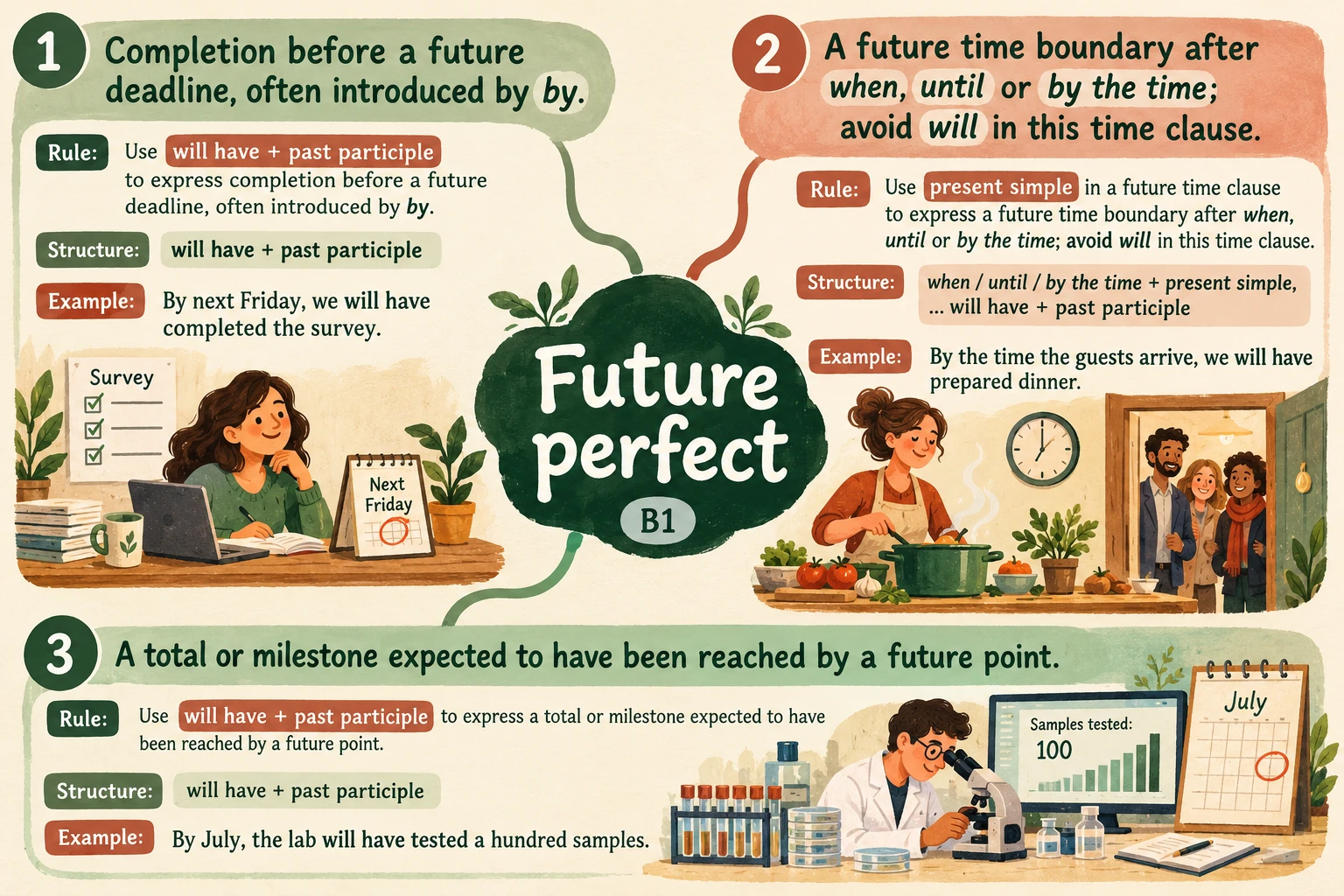
Utilisez will have + past participle pour exprimer un accomplissement avant une échéance future, souvent avec by.
By next Friday, we will have completed the survey.
Futur antérieur anglais · B1. Utilisez will have + past participle pour exprimer un accomplissement avant une échéance future, souvent avec by.
Réalisez 12 exercices originaux. Appuyez-vous sur la situation pour interpréter le sens, pratiquer la forme et la réutiliser dans un nouveau contexte.
Utilisez will have + past participle pour exprimer un accomplissement avant une échéance future, souvent avec by.
By next Friday, we will have completed the survey.Utilisez present simple in a future time clause pour exprimer un repère futur après when, until ou by the time, sans will dans cette subordonnée.
By the time the guests arrive, we will have prepared dinner.Utilisez will have + past participle pour exprimer un total ou jalon qui sera atteint avant un repère futur.
By July, the lab will have tested a hundred samples.
The deadline is next Friday; the work will be complete earlier.
Utilisez will have + past participle pour exprimer un accomplissement avant une échéance future, souvent avec by.
By next Friday, we will have completed the survey.Utilisez present simple in a future time clause pour exprimer un repère futur après when, until ou by the time, sans will dans cette subordonnée.
By the time the guests arrive, we will have prepared dinner.Utilisez will have + past participle pour exprimer un total ou jalon qui sera atteint avant un repère futur.
By July, the lab will have tested a hundred samples.Gardez la première tentative, comprenez le changement et essayez dans une nouvelle situation.
Pas encore de notes. Essayez un court échauffement.
Utilisez will have + past participle pour exprimer un accomplissement avant une échéance future, souvent avec by.
By next Friday, we will have completed the survey.Utilisez present simple in a future time clause pour exprimer un repère futur après when, until ou by the time, sans will dans cette subordonnée.
By the time the guests arrive, we will have prepared dinner.Utilisez will have + past participle pour exprimer un total ou jalon qui sera atteint avant un repère futur.
By July, the lab will have tested a hundred samples.Ouvrir une réponse enregistre une aide pour cette question.
The deadline is next Friday; the work will be complete earlier.
Observe « By next Friday, we ___ the survey. ». Utilisez will have + past participle pour exprimer un accomplissement avant une échéance future, souvent avec by. Phrase complète : « By next Friday, we will have completed the survey. ».
A future time clause starts with by the time.
Observe « By the time the guests ___, we will have prepared dinner. ». Utilisez present simple in a future time clause pour exprimer un repère futur après when, until ou by the time, sans will dans cette subordonnée. Phrase complète : « By the time the guests arrive, we will have prepared dinner. ».
The total is expected to be achieved before July begins.
Observe « By July, the lab ___ a hundred samples. ». Utilisez will have + past participle pour exprimer un total ou jalon qui sera atteint avant un repère futur. Phrase complète : « By July, the lab will have tested a hundred samples. ».
The report will be finished before tomorrow noon.
Observe « By noon tomorrow, I ___ the report. ». Utilisez will have + past participle pour exprimer un accomplissement avant une échéance future, souvent avec by. Phrase complète : « By noon tomorrow, I will have written the report. ».
Use the present simple of end in the future time clause.
Phrase complète : « We will have packed everything by the time the lease ends. » Utilisez present simple in a future time clause pour exprimer un repère futur après when, until ou by the time, sans will dans cette subordonnée. Le sujet, le temps et le sens de la consigne déterminent cette forme. Seules les réponses vérifiées sont comparées automatiquement ; toute autre formulation n’est pas automatiquement fausse.
Their ten-year anniversary occurs before the future reference point.
Observe « By December, they ___ ten years in this town. ». Utilisez will have + past participle pour exprimer un total ou jalon qui sera atteint avant un repère futur. Phrase complète : « By December, they will have spent ten years in this town. ».
Use the future perfect of leave; departure will be complete before your arrival tomorrow.
Phrase complète : « By the time you get here tomorrow, I will have left. » Utilisez will have + past participle pour exprimer un accomplissement avant une échéance future, souvent avec by. Le sujet, le temps et le sens de la consigne déterminent cette forme. Seules les réponses vérifiées sont comparées automatiquement ; toute autre formulation n’est pas automatiquement fausse.
The last payment occurs before the future deadline.
Observe « By the end of May, she ___ the loan. ». Utilisez will have + past participle pour exprimer un accomplissement avant une échéance future, souvent avec by. Phrase complète : « By the end of May, she will have repaid the loan. ».
Use the present simple of close in the future time clause.
Phrase complète : « We will have served everyone before the kitchen closes. » Utilisez present simple in a future time clause pour exprimer un repère futur après when, until ou by the time, sans will dans cette subordonnée. Le sujet, le temps et le sens de la consigne déterminent cette forme. Seules les réponses vérifiées sont comparées automatiquement ; toute autre formulation n’est pas automatiquement fausse.
The future reference point is after the completion of all interviews.
Observe « By five tomorrow, the panel ___ all eight applicants. ». Utilisez will have + past participle pour exprimer un total ou jalon qui sera atteint avant un repère futur. Phrase complète : « By five tomorrow, the panel will have interviewed all eight applicants. ».
Future time boundary after before.
Observe « I will have checked the figures before the director ___. ». Utilisez present simple in a future time clause pour exprimer un repère futur après when, until ou by the time, sans will dans cette subordonnée. Phrase complète : « I will have checked the figures before the director returns. ».
Use the future perfect of save for a target reached before next summer.
Phrase complète : « By next summer, we will have saved enough for the deposit. » Utilisez will have + past participle pour exprimer un total ou jalon qui sera atteint avant un repère futur. Le sujet, le temps et le sens de la consigne déterminent cette forme. Seules les réponses vérifiées sont comparées automatiquement ; toute autre formulation n’est pas automatiquement fausse.