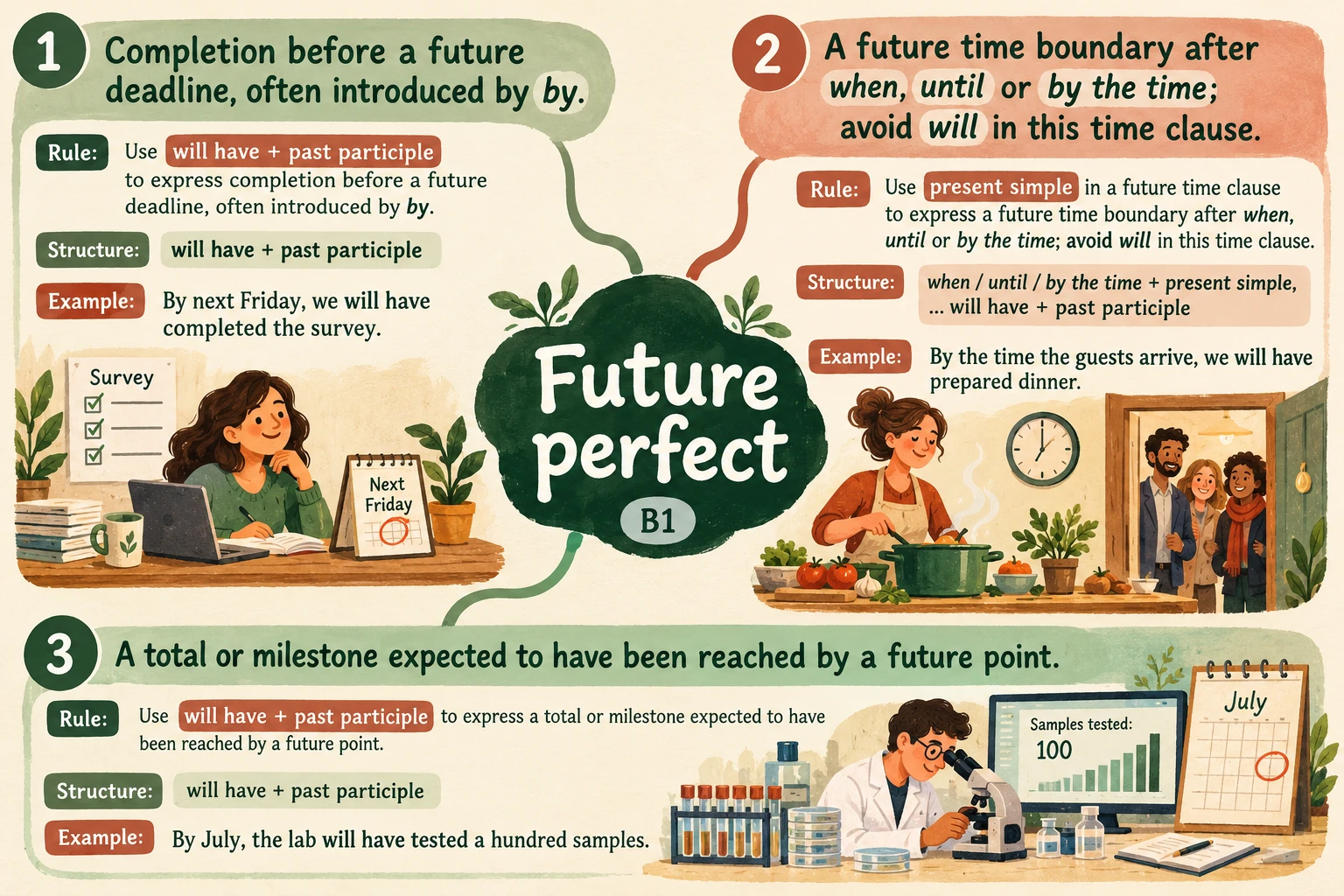
01la finalización antes de un límite futuro, a menudo con by
Usa will have + past participle para expresar la finalización antes de un límite futuro, a menudo con by.
By next Friday, we will have completed the survey.
Futuro perfecto · B1. Usa will have + past participle para expresar la finalización antes de un límite futuro, a menudo con by.
Completa 12 tareas originales. Deduce el sentido por la situación, practica la forma y aplícala en un contexto nuevo.
Usa will have + past participle para expresar la finalización antes de un límite futuro, a menudo con by.
By next Friday, we will have completed the survey.Usa present simple in a future time clause para expresar un límite futuro tras when, until o by the time; no se usa will en esa subordinada.
By the time the guests arrive, we will have prepared dinner.Usa will have + past participle para expresar un total o hito que se espera alcanzar antes de un punto futuro.
By July, the lab will have tested a hundred samples.
The deadline is next Friday; the work will be complete earlier.
Usa will have + past participle para expresar la finalización antes de un límite futuro, a menudo con by.
By next Friday, we will have completed the survey.Usa present simple in a future time clause para expresar un límite futuro tras when, until o by the time; no se usa will en esa subordinada.
By the time the guests arrive, we will have prepared dinner.Usa will have + past participle para expresar un total o hito que se espera alcanzar antes de un punto futuro.
By July, the lab will have tested a hundred samples.Conserva el primer intento, entiende el cambio y compruébalo en otra situación.
Aún no hay repasos. Prueba un calentamiento corto.
Usa will have + past participle para expresar la finalización antes de un límite futuro, a menudo con by.
By next Friday, we will have completed the survey.Usa present simple in a future time clause para expresar un límite futuro tras when, until o by the time; no se usa will en esa subordinada.
By the time the guests arrive, we will have prepared dinner.Usa will have + past participle para expresar un total o hito que se espera alcanzar antes de un punto futuro.
By July, the lab will have tested a hundred samples.Abrir una respuesta registra ayuda para esa pregunta.
The deadline is next Friday; the work will be complete earlier.
Mira «By next Friday, we ___ the survey.». Usa will have + past participle para expresar la finalización antes de un límite futuro, a menudo con by. Oración completa: «By next Friday, we will have completed the survey.».
A future time clause starts with by the time.
Mira «By the time the guests ___, we will have prepared dinner.». Usa present simple in a future time clause para expresar un límite futuro tras when, until o by the time; no se usa will en esa subordinada. Oración completa: «By the time the guests arrive, we will have prepared dinner.».
The total is expected to be achieved before July begins.
Mira «By July, the lab ___ a hundred samples.». Usa will have + past participle para expresar un total o hito que se espera alcanzar antes de un punto futuro. Oración completa: «By July, the lab will have tested a hundred samples.».
The report will be finished before tomorrow noon.
Mira «By noon tomorrow, I ___ the report.». Usa will have + past participle para expresar la finalización antes de un límite futuro, a menudo con by. Oración completa: «By noon tomorrow, I will have written the report.».
Use the present simple of end in the future time clause.
Oración completa: «We will have packed everything by the time the lease ends.» Usa present simple in a future time clause para expresar un límite futuro tras when, until o by the time; no se usa will en esa subordinada. El sujeto, el tiempo y el sentido de la tarea determinan la forma. Solo se cotejan automáticamente las respuestas revisadas; otra redacción no es automáticamente incorrecta.
Their ten-year anniversary occurs before the future reference point.
Mira «By December, they ___ ten years in this town.». Usa will have + past participle para expresar un total o hito que se espera alcanzar antes de un punto futuro. Oración completa: «By December, they will have spent ten years in this town.».
Use the future perfect of leave; departure will be complete before your arrival tomorrow.
Oración completa: «By the time you get here tomorrow, I will have left.» Usa will have + past participle para expresar la finalización antes de un límite futuro, a menudo con by. El sujeto, el tiempo y el sentido de la tarea determinan la forma. Solo se cotejan automáticamente las respuestas revisadas; otra redacción no es automáticamente incorrecta.
The last payment occurs before the future deadline.
Mira «By the end of May, she ___ the loan.». Usa will have + past participle para expresar la finalización antes de un límite futuro, a menudo con by. Oración completa: «By the end of May, she will have repaid the loan.».
Use the present simple of close in the future time clause.
Oración completa: «We will have served everyone before the kitchen closes.» Usa present simple in a future time clause para expresar un límite futuro tras when, until o by the time; no se usa will en esa subordinada. El sujeto, el tiempo y el sentido de la tarea determinan la forma. Solo se cotejan automáticamente las respuestas revisadas; otra redacción no es automáticamente incorrecta.
The future reference point is after the completion of all interviews.
Mira «By five tomorrow, the panel ___ all eight applicants.». Usa will have + past participle para expresar un total o hito que se espera alcanzar antes de un punto futuro. Oración completa: «By five tomorrow, the panel will have interviewed all eight applicants.».
Future time boundary after before.
Mira «I will have checked the figures before the director ___.». Usa present simple in a future time clause para expresar un límite futuro tras when, until o by the time; no se usa will en esa subordinada. Oración completa: «I will have checked the figures before the director returns.».
Use the future perfect of save for a target reached before next summer.
Oración completa: «By next summer, we will have saved enough for the deposit.» Usa will have + past participle para expresar un total o hito que se espera alcanzar antes de un punto futuro. El sujeto, el tiempo y el sentido de la tarea determinan la forma. Solo se cotejan automáticamente las respuestas revisadas; otra redacción no es automáticamente incorrecta.