
A1-A2

تمارين الماضي البسيط

عن هذا الدرس

الماضي البسيط · A2. نستخدم الماضي البسيط لأحداث تقع في وقت ماضٍ منتهٍ. تأخذ الأفعال المنتظمة غالبًا -ed، مع تغييرات إملائية مثل carry → carried وstop → stopped. أما الصيغ غير المنتظمة مثل go → went وfind → found فتُحفظ. لا تتغير هذه الصيغ الماضية للفعل الأساسي بتغيّر الفاعل.

تدرّب على أحداث الماضي والأفعال المنتظمة وغير المنتظمة وأسئلة did وصيغ was/were.

12 سؤالًا
احفظه لتجده لاحقًا في مجموعتي.
خريطة المفاهيم

Past simple

ابدأ التدريب
Past simple — خريطة المفاهيم

01صيغ الماضي المثبتة

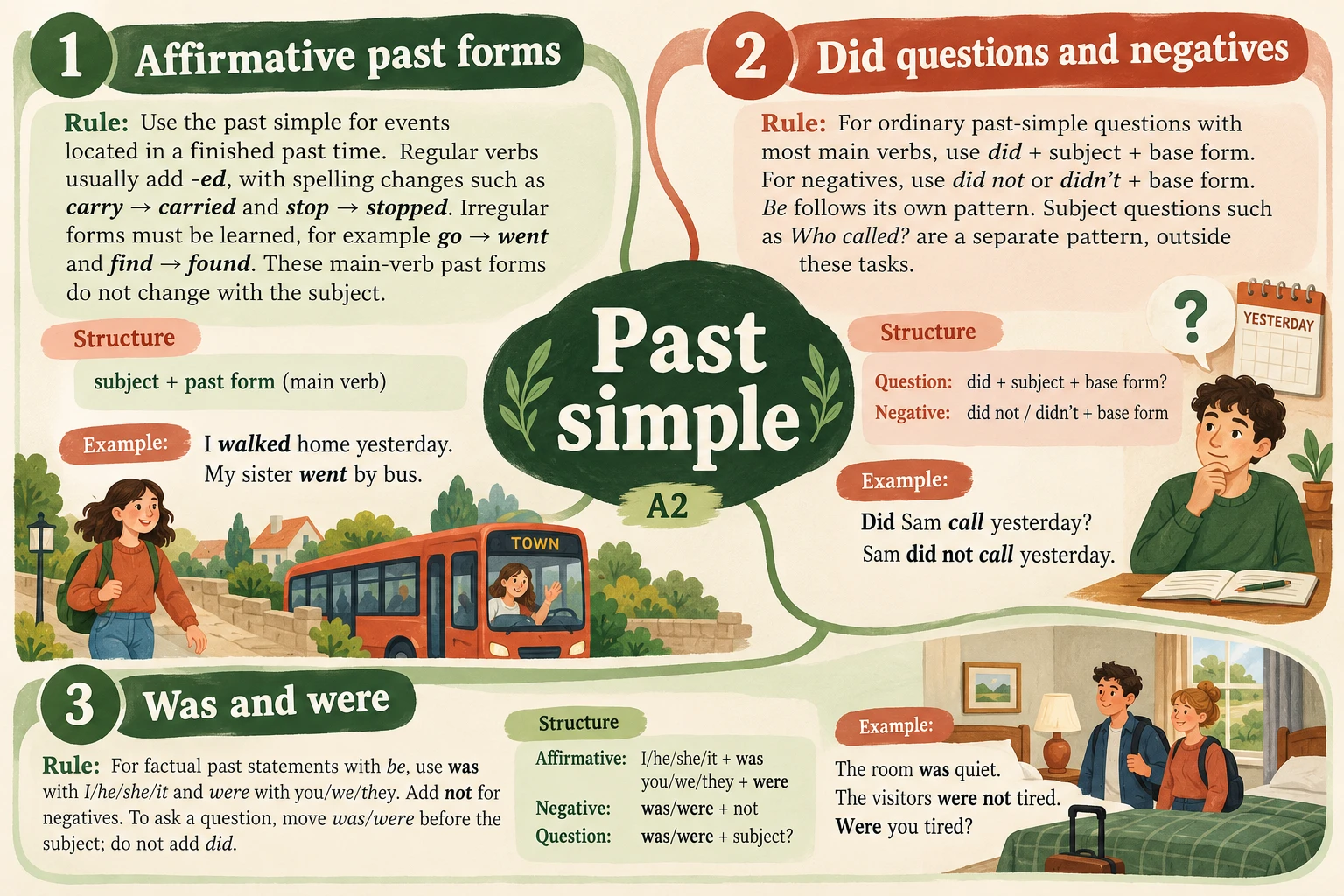
نستخدم الماضي البسيط لأحداث تقع في وقت ماضٍ منتهٍ. تأخذ الأفعال المنتظمة غالبًا -ed، مع تغييرات إملائية مثل carry → carried وstop → stopped. أما الصيغ غير المنتظمة مثل go → went وfind → found فتُحفظ. لا تتغير هذه الصيغ الماضية للفعل الأساسي بتغيّر الفاعل.

walk → walked · go → went
02السؤال والنفي باستخدام did

في أسئلة الماضي العادية مع معظم الأفعال الأساسية نستخدم did + الفاعل + الصيغة الأساسية. وللنفي نستخدم did not أو didn’t + الصيغة الأساسية. يتبع be نمطًا خاصًا. أما السؤال عن الفاعل مثل Who called? فله نمط آخر خارج هذه المهام.

did / didn’t + base verb

03Was وwere

عند وصف حقائق ماضية بفعل be نستخدم was مع I/he/she/it وwere مع you/we/they. أضف not للنفي. وللسؤال، قدّم was/were على الفاعل من دون إضافة did.

I/he/she/it was · you/we/they were

الإثبات

I worked yesterday.She went home.

النفي

I didn’t work yesterday.She didn’t go home.

السؤال

Did you work yesterday?Did she go home?

الإجابة القصيرة

Yes, I did.No, she didn’t.

دليل مصور

0/12
الأسئلة
01 / 12D01احفظه لتجده لاحقًا في مجموعتي.

Mia finished cleaning her room yesterday.

Choose the correct past-simple sentence.

إجابتك
1 / 12

مسار التعلّم

01
خطوة 1 · تهيئة

تهيئة

0/3
02
خطوة 2 · بناء المهارة

صيغ الماضي المثبتة

0/1

نستخدم الماضي البسيط لأحداث تقع في وقت ماضٍ منتهٍ. تأخذ الأفعال المنتظمة غالبًا -ed، مع تغييرات إملائية مثل carry → carried وstop → stopped. أما الصيغ غير المنتظمة مثل go → went وfind → found فتُحفظ. لا تتغير هذه الصيغ الماضية للفعل الأساسي بتغيّر الفاعل.

I walked home yesterday. My sister went by bus.
03
خطوة 3 · بناء المهارة

Was وwere

0/2

عند وصف حقائق ماضية بفعل be نستخدم was مع I/he/she/it وwere مع you/we/they. أضف not للنفي. وللسؤال، قدّم was/were على الفاعل من دون إضافة did.

The room was quiet. The visitors were not tired. Were you tired?
04
خطوة 4 · بناء المهارة

السؤال والنفي باستخدام did

0/1

في أسئلة الماضي العادية مع معظم الأفعال الأساسية نستخدم did + الفاعل + الصيغة الأساسية. وللنفي نستخدم did not أو didn’t + الصيغة الأساسية. يتبع be نمطًا خاصًا. أما السؤال عن الفاعل مثل Who called? فله نمط آخر خارج هذه المهام.

Did Sam call yesterday? Sam did not call yesterday.
05
خطوة 5 · مواقف جديدة

مواقف جديدة

0/3
06
خطوة 6 · تحدٍّ جديد

تحدٍّ جديد

0/2
ملاحظات هذه الوحدة

حوّل الأخطاء إلى تعلّم.

احتفظ بالمحاولة الأولى، وافهم التغيير، ثم اختبر فهمك في موقف جديد.

0

لا توجد ملاحظات بعد. جرّب تهيئة قصيرة.

خريطة الدرس

الماضي البسيط

A2
Past simple

نقاط الدرس

01

صيغ الماضي المثبتة

نستخدم الماضي البسيط لأحداث تقع في وقت ماضٍ منتهٍ. تأخذ الأفعال المنتظمة غالبًا -ed، مع تغييرات إملائية مثل carry → carried وstop → stopped. أما الصيغ غير المنتظمة مثل go → went وfind → found فتُحفظ. لا تتغير هذه الصيغ الماضية للفعل الأساسي بتغيّر الفاعل.

I walked home yesterday. My sister went by bus.
02

السؤال والنفي باستخدام did

في أسئلة الماضي العادية مع معظم الأفعال الأساسية نستخدم did + الفاعل + الصيغة الأساسية. وللنفي نستخدم did not أو didn’t + الصيغة الأساسية. يتبع be نمطًا خاصًا. أما السؤال عن الفاعل مثل Who called? فله نمط آخر خارج هذه المهام.

Did Sam call yesterday? Sam did not call yesterday.
03

Was وwere

عند وصف حقائق ماضية بفعل be نستخدم was مع I/he/she/it وwere مع you/we/they. أضف not للنفي. وللسؤال، قدّم was/were على الفاعل من دون إضافة did.

The room was quiet. The visitors were not tired. Were you tired?

الأسئلة والأجوبة

فتح إجابة يسجّل استخدام المساعدة لذلك السؤال.

D01 · تهيئة

Mia finished cleaning her room yesterday.

Choose the correct past-simple sentence.

  1. Mia cleaned her room yesterday.
  2. Mia cleaning her room yesterday.
  3. Mia cleans her room yesterday.
الإجابة والشرح
Mia cleaned her room yesterday.

انظر إلى «Mia finished cleaning her room yesterday.». نستخدم الماضي البسيط لأحداث تقع في وقت ماضٍ منتهٍ. تأخذ الأفعال المنتظمة غالبًا -ed، مع تغييرات إملائية مثل carry → carried وstop → stopped. أما الصيغ غير المنتظمة مثل go → went وfind → found فتُحفظ. لا تتغير هذه الصيغ الماضية للفعل الأساسي بتغيّر الفاعل. الجملة المكتملة: «Mia cleaned her room yesterday.».

D02 · تهيئة

You want to know whether Omar bought a notebook yesterday.

Choose the correct question.

  1. Did Omar bought a notebook yesterday?
  2. Does Omar buy a notebook yesterday?
  3. Did Omar buy a notebook yesterday?
الإجابة والشرح
Did Omar buy a notebook yesterday?

انظر إلى «You want to know whether Omar bought a notebook yesterday.». في أسئلة الماضي العادية مع معظم الأفعال الأساسية نستخدم did + الفاعل + الصيغة الأساسية. وللنفي نستخدم did not أو didn’t + الصيغة الأساسية. يتبع be نمطًا خاصًا. أما السؤال عن الفاعل مثل Who called? فله نمط آخر خارج هذه المهام. الجملة المكتملة: «Did Omar buy a notebook yesterday?».

D03 · تهيئة

You want to know if someone left the windows open last night.

Choose the correct question.

  1. Were the windows open last night?
  2. Was the windows open last night?
  3. Did the windows be open last night?
الإجابة والشرح
Were the windows open last night?

انظر إلى «You want to know if someone left the windows open last night.». عند وصف حقائق ماضية بفعل be نستخدم was مع I/he/she/it وwere مع you/we/they. أضف not للنفي. وللسؤال، قدّم was/were على الفاعل من دون إضافة did. الجملة المكتملة: «Were the windows open last night?».

P01 · بناء المهارة

The boxes are upstairs now. The work finished yesterday.

Complete the sentence with the past-simple form of carry. Write only the missing verb: We ___ the boxes upstairs yesterday.

الإجابة والشرح
carried

انتهى الفعل أمس. تنتهي carry بحرف ساكن ثم y؛ غيّر y إلى i ثم أضف -ed لتكوين carried.

P02 · بناء المهارة

Nina stayed at home last Friday because of a fever.

Choose the correct sentence about last Friday.

  1. Nina was ill last Friday.
  2. Nina did be ill last Friday.
  3. Nina were ill last Friday.
الإجابة والشرح
Nina was ill last Friday.

انظر إلى «Nina stayed at home last Friday because of a fever.». عند وصف حقائق ماضية بفعل be نستخدم was مع I/he/she/it وwere مع you/we/they. أضف not للنفي. وللسؤال، قدّم was/were على الفاعل من دون إضافة did. الجملة المكتملة: «Nina was ill last Friday.».

P03 · بناء المهارة

They planned to play chess last night, but the game did not happen.

Choose the correct negative sentence.

  1. They did not play chess last night.
  2. They do not play chess last night.
  3. They did not played chess last night.
الإجابة والشرح
They did not play chess last night.

انظر إلى «They planned to play chess last night, but the game did not happen.». في أسئلة الماضي العادية مع معظم الأفعال الأساسية نستخدم did + الفاعل + الصيغة الأساسية. وللنفي نستخدم did not أو didn’t + الصيغة الأساسية. يتبع be نمطًا خاصًا. أما السؤال عن الفاعل مثل Who called? فله نمط آخر خارج هذه المهام. الجملة المكتملة: «They did not play chess last night.».

P04 · بناء المهارة

The cafe was closed yesterday. Correct this claim by making it negative: The cafe was open yesterday.

Write the full negative sentence. Keep all other words in the same order.

الإجابة والشرح
The cafe was not open yesterday.

لنفي be في الماضي نضع not بعد was. تصح was not وwasn’t؛ وأبقِ بقية الجملة كما هي.

صيغ أخرى مقبولة
  • The cafe wasn't open yesterday.
R01 · مواقف جديدة

This sentence has one spelling error: Ava stoped near the bridge yesterday.

Correct only the misspelled past verb and write the full sentence.

الإجابة والشرح
Ava stopped near the bridge yesterday.

في الفعل القصير stop نضاعف p الأخيرة قبل إضافة -ed: stopped. تصف الجملة توقّفًا حدث وانتهى أمس.

R02 · مواقف جديدة

Yesterday you left your bag somewhere. Your friend asks about the place.

Choose the correctly formed question.

  1. Where did you left your bag yesterday?
  2. Where you leave your bag yesterday?
  3. Where did you leave your bag yesterday?
الإجابة والشرح
Where did you leave your bag yesterday?

انظر إلى «Yesterday you left your bag somewhere. Your friend asks about the place.». في أسئلة الماضي العادية مع معظم الأفعال الأساسية نستخدم did + الفاعل + الصيغة الأساسية. وللنفي نستخدم did not أو didn’t + الصيغة الأساسية. يتبع be نمطًا خاصًا. أما السؤال عن الفاعل مثل Who called? فله نمط آخر خارج هذه المهام. الجملة المكتملة: «Where did you leave your bag yesterday?».

R03 · مواقف جديدة

We arrived before the lesson started yesterday. Describe our arrival using a negative with late.

Choose the correct negative sentence.

  1. We was not late yesterday.
  2. We were not late yesterday.
  3. We did not be late yesterday.
الإجابة والشرح
We were not late yesterday.

انظر إلى «We arrived before the lesson started yesterday. Describe our arrival using a negative with late.». عند وصف حقائق ماضية بفعل be نستخدم was مع I/he/she/it وwere مع you/we/they. أضف not للنفي. وللسؤال، قدّم was/were على الفاعل من دون إضافة did. الجملة المكتملة: «We were not late yesterday.».

X01 · تحدٍّ جديد

My wallet was missing. The search ended yesterday evening: it was under a chair.

Choose the correct past-simple sentence.

  1. I found my wallet under a chair yesterday evening.
  2. I find my wallet under a chair yesterday evening.
  3. I finded my wallet under a chair yesterday evening.
الإجابة والشرح
I found my wallet under a chair yesterday evening.

انظر إلى «My wallet was missing. The search ended yesterday evening: it was under a chair.». نستخدم الماضي البسيط لأحداث تقع في وقت ماضٍ منتهٍ. تأخذ الأفعال المنتظمة غالبًا -ed، مع تغييرات إملائية مثل carry → carried وstop → stopped. أما الصيغ غير المنتظمة مثل go → went وfind → found فتُحفظ. لا تتغير هذه الصيغ الماضية للفعل الأساسي بتغيّر الفاعل. الجملة المكتملة: «I found my wallet under a chair yesterday evening.».

X02 · تحدٍّ جديد

You do not know whether your friend sent the email yesterday.

Write one full yes/no question beginning with Did. Use these words in order after Did: you / send / the email / yesterday.

الإجابة والشرح
Did you send the email yesterday?

السؤال الذي إجابته نعم أو لا عن الأمس يُبنى هكذا: Did + you + send. وتبقى send بصيغتها الأساسية بعد did.