01الترتيبات المستقبلية المنظمة
نستخدم be مع ing لترتيب مستقبلي منظم بوقت محدد أومع شخص آخر.
I am meeting Alex at five tomorrow.
الترتيبات المستقبلية · A2. نستخدم be مع ing لترتيب مستقبلي منظم بوقت محدد أومع شخص آخر.
تدرّب على الترتيبات المستقبلية في مواقف قصيرة. اقرأ القرينة واختر الصيغة أو اكتبها، ثم راجع السبب. المستوى دليل تحريري تقريبي.
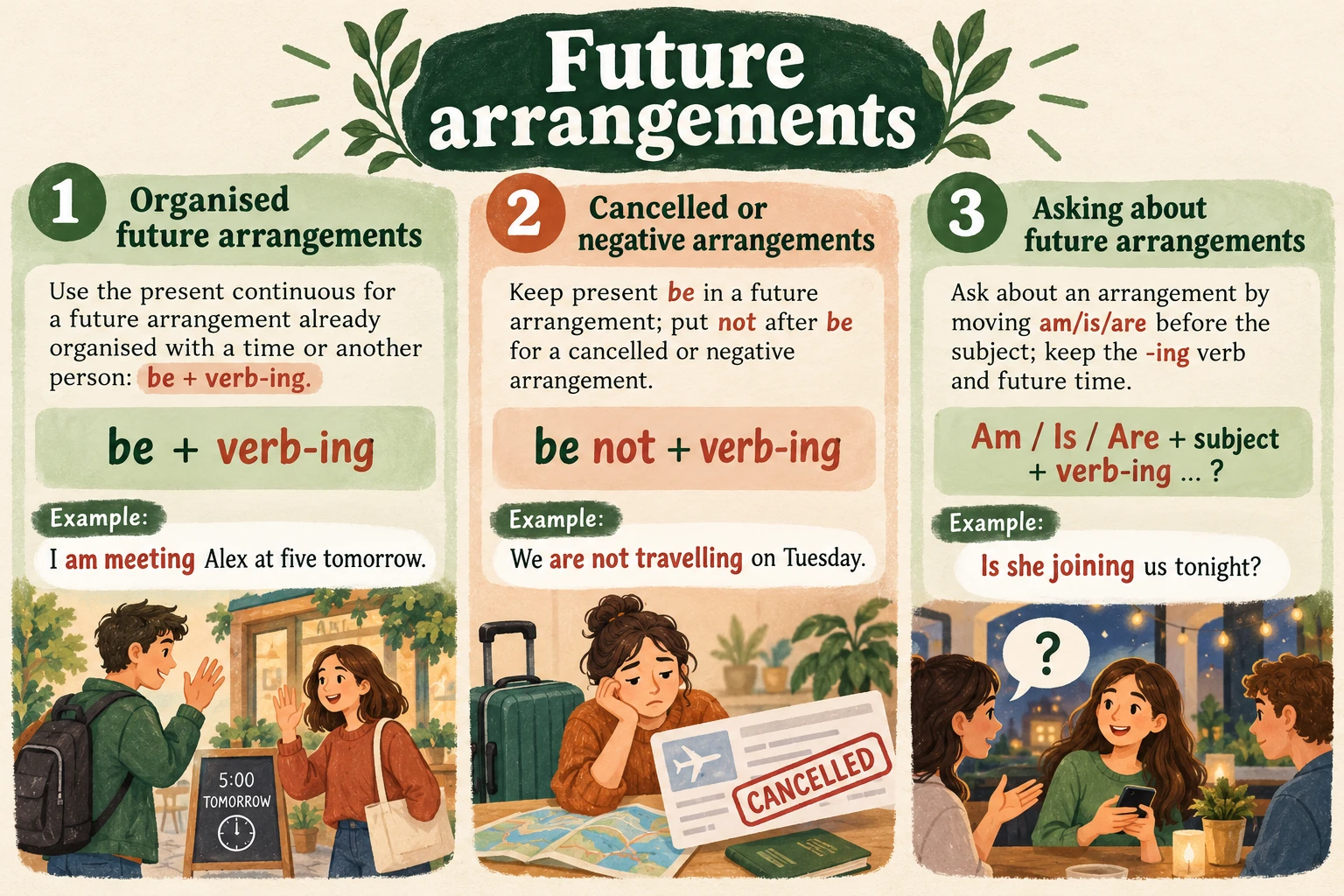
نستخدم be مع ing لترتيب مستقبلي منظم بوقت محدد أومع شخص آخر.
I am meeting Alex at five tomorrow.نحتفظ بـbe في المضارع للترتيب المستقبلي، ونضع not بعده للنفي.
We are not travelling on Tuesday.للسؤال عن الترتيب نضع am/is/are قبل الفاعل مع بقاء ing والوقت المستقبلي.
Is she joining us tonight?
We have tickets for tomorrow. We ___ to Rome in the morning. (fly; present continuous)
نستخدم be مع ing لترتيب مستقبلي منظم بوقت محدد أومع شخص آخر.
I am meeting Alex at five tomorrow.نحتفظ بـbe في المضارع للترتيب المستقبلي، ونضع not بعده للنفي.
We are not travelling on Tuesday.للسؤال عن الترتيب نضع am/is/are قبل الفاعل مع بقاء ing والوقت المستقبلي.
Is she joining us tonight?احتفظ بالمحاولة الأولى، وافهم التغيير، ثم اختبر فهمك في موقف جديد.
لا توجد ملاحظات بعد. جرّب تهيئة قصيرة.
نستخدم be مع ing لترتيب مستقبلي منظم بوقت محدد أومع شخص آخر.
I am meeting Alex at five tomorrow.نحتفظ بـbe في المضارع للترتيب المستقبلي، ونضع not بعده للنفي.
We are not travelling on Tuesday.للسؤال عن الترتيب نضع am/is/are قبل الفاعل مع بقاء ing والوقت المستقبلي.
Is she joining us tonight?فتح إجابة يسجّل استخدام المساعدة لذلك السؤال.
We have tickets for tomorrow. We ___ to Rome in the morning. (fly; present continuous)
انظر إلى «We have tickets for tomorrow. We ___ to Rome in the morning. (fly; present continuous)». نستخدم be مع ing لترتيب مستقبلي منظم بوقت محدد أومع شخص آخر. الجملة المكتملة: «We have tickets for tomorrow. We are flying to Rome in the morning. (fly; present continuous)».
The meeting is cancelled. She ___ us on Friday. (not meet; present continuous)
انظر إلى «The meeting is cancelled. She ___ us on Friday. (not meet; present continuous)». نحتفظ بـbe في المضارع للترتيب المستقبلي، ونضع not بعده للنفي. الجملة المكتملة: «The meeting is cancelled. She is not meeting us on Friday. (not meet; present continuous)».
___ you having dinner with Jo tomorrow?
انظر إلى «___ you having dinner with Jo tomorrow?». للسؤال عن الترتيب نضع am/is/are قبل الفاعل مع بقاء ing والوقت المستقبلي. الجملة المكتملة: «Are you having dinner with Jo tomorrow?».
My appointment is booked. I ___ the dentist at two tomorrow. (see; present continuous)
إكمال مرجعي: «My appointment is booked. I am seeing the dentist at two tomorrow. (see; present continuous)». نستخدم be مع ing لترتيب مستقبلي منظم بوقت محدد أومع شخص آخر. تُقبل أيضاً هذه البدائل المراجَعة في هذه المهمة: 'm seeing. ليست القائمة حصرية لكل صياغة إنجليزية ممكنة.
Our booking has changed. We ___ on Monday. (not leave; present continuous)
انظر إلى «Our booking has changed. We ___ on Monday. (not leave; present continuous)». نحتفظ بـbe في المضارع للترتيب المستقبلي، ونضع not بعده للنفي. الجملة المكتملة: «Our booking has changed. We are not leaving on Monday. (not leave; present continuous)».
What time ___ Leo catching the train tomorrow?
انظر إلى «What time ___ Leo catching the train tomorrow?». للسؤال عن الترتيب نضع am/is/are قبل الفاعل مع بقاء ing والوقت المستقبلي. الجملة المكتملة: «What time is Leo catching the train tomorrow?».
The venue is reserved. Nina ___ a party on Saturday. (have; present continuous)
إكمال مرجعي: «The venue is reserved. Nina is having a party on Saturday. (have; present continuous)». نستخدم be مع ing لترتيب مستقبلي منظم بوقت محدد أومع شخص آخر. تُقبل أيضاً هذه البدائل المراجَعة في هذه المهمة: 's having. ليست القائمة حصرية لكل صياغة إنجليزية ممكنة.
The restaurant has our booking. We ___ there at eight tonight. (eat; present continuous)
انظر إلى «The restaurant has our booking. We ___ there at eight tonight. (eat; present continuous)». نستخدم be مع ing لترتيب مستقبلي منظم بوقت محدد أومع شخص آخر. الجملة المكتملة: «The restaurant has our booking. We are eating there at eight tonight. (eat; present continuous)».
His flight was changed. He ___ tonight. (not arrive; present continuous)
انظر إلى «His flight was changed. He ___ tonight. (not arrive; present continuous)». نحتفظ بـbe في المضارع للترتيب المستقبلي، ونضع not بعده للنفي. الجملة المكتملة: «His flight was changed. He is not arriving tonight. (not arrive; present continuous)».
Who ___ you meeting after class tomorrow?
إكمال مرجعي: «Who are you meeting after class tomorrow?». للسؤال عن الترتيب نضع am/is/are قبل الفاعل مع بقاء ing والوقت المستقبلي.
I cancelled my ticket. I ___ the concert on Sunday. (not attend; present continuous)
انظر إلى «I cancelled my ticket. I ___ the concert on Sunday. (not attend; present continuous)». نحتفظ بـbe في المضارع للترتيب المستقبلي، ونضع not بعده للنفي. الجملة المكتملة: «I cancelled my ticket. I am not attending the concert on Sunday. (not attend; present continuous)».
Where ___ your parents staying next weekend?
إكمال مرجعي: «Where are your parents staying next weekend?». للسؤال عن الترتيب نضع am/is/are قبل الفاعل مع بقاء ing والوقت المستقبلي.