01과거 기준 시점에 진행 중인 배경 활동
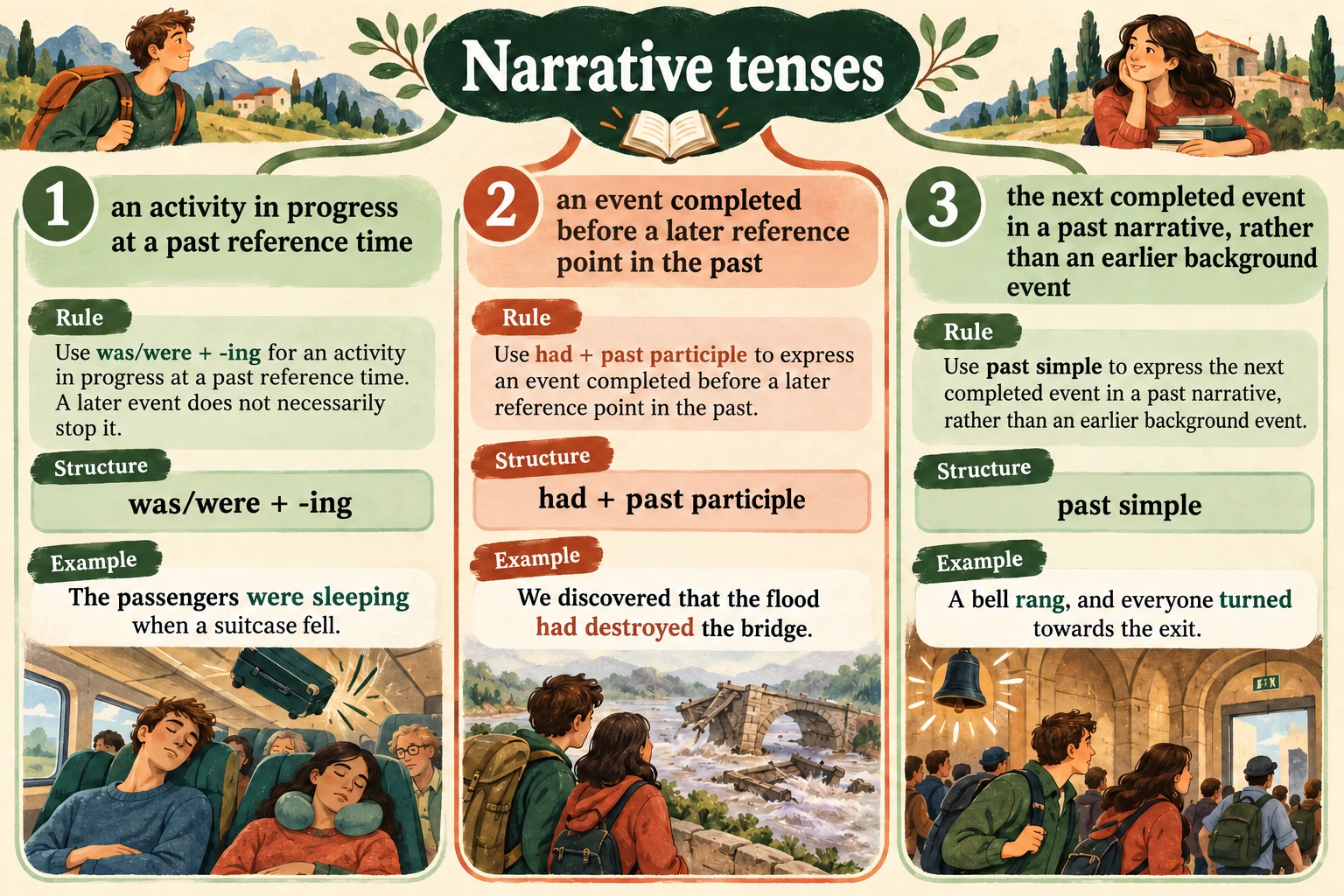
과거 기준 시점에 진행 중인 배경 활동에는 was/were+-ing를 씁니다. 다른 사건이 그 시점을 정하더라도 원래 활동이 반드시 멈추는 것은 아닙니다.
The passengers were sleeping when a suitcase fell.
서술 시제 · B1. 과거 기준 시점에 진행 중인 배경 활동에는 was/were+-ing를 씁니다. 다른 사건이 그 시점을 정하더라도 원래 활동이 반드시 멈추는 것은 아닙니다.
새로 만든 12문제입니다. 상황에서 의도를 파악하고 형태를 연습한 뒤 새로운 맥락에 적용하세요.
과거 기준 시점에 진행 중인 배경 활동에는 was/were+-ing를 씁니다. 다른 사건이 그 시점을 정하더라도 원래 활동이 반드시 멈추는 것은 아닙니다.
The passengers were sleeping when a suitcase fell.had + past participle 구조를 사용합니다. 의미: 과거의 기준 시점보다 먼저 완료된 사건.
We discovered that the flood had destroyed the bridge.past simple 구조를 사용합니다. 의미: 더 이전의 배경이 아닌 이야기를 진행시키는 다음 사건.
A bell rang, and everyone turned towards the exit.
The quiet activity was interrupted by the crash.
과거 기준 시점에 진행 중인 배경 활동에는 was/were+-ing를 씁니다. 다른 사건이 그 시점을 정하더라도 원래 활동이 반드시 멈추는 것은 아닙니다.
The passengers were sleeping when a suitcase fell.had + past participle 구조를 사용합니다. 의미: 과거의 기준 시점보다 먼저 완료된 사건.
We discovered that the flood had destroyed the bridge.past simple 구조를 사용합니다. 의미: 더 이전의 배경이 아닌 이야기를 진행시키는 다음 사건.
A bell rang, and everyone turned towards the exit.첫 시도를 남기고 변화의 이유를 이해한 뒤 새로운 상황에서 확인해 보세요.
아직 복습 노트가 없어요. 짧은 워밍업부터 해보세요.
과거 기준 시점에 진행 중인 배경 활동에는 was/were+-ing를 씁니다. 다른 사건이 그 시점을 정하더라도 원래 활동이 반드시 멈추는 것은 아닙니다.
The passengers were sleeping when a suitcase fell.had + past participle 구조를 사용합니다. 의미: 과거의 기준 시점보다 먼저 완료된 사건.
We discovered that the flood had destroyed the bridge.past simple 구조를 사용합니다. 의미: 더 이전의 배경이 아닌 이야기를 진행시키는 다음 사건.
A bell rang, and everyone turned towards the exit.정답을 열면 해당 문제에 도움 사용이 기록돼요.
The quiet activity was interrupted by the crash.
“The passengers ___ when a suitcase fell.”를 보세요. 과거 기준 시점에 진행 중인 배경 활동에는 was/were+-ing를 씁니다. 다른 사건이 그 시점을 정하더라도 원래 활동이 반드시 멈추는 것은 아닙니다. 완성 문장: “The passengers were sleeping when a suitcase fell.”.
The bridge was destroyed a day before our arrival.
“We discovered that the flood ___ the bridge.”를 보세요. had + past participle 구조를 사용합니다. 의미: 과거의 기준 시점보다 먼저 완료된 사건. 완성 문장: “We discovered that the flood had destroyed the bridge.”.
The next event moves the story forward.
“A bell rang, and everyone ___ towards the exit.”를 보세요. past simple 구조를 사용합니다. 의미: 더 이전의 배경이 아닌 이야기를 진행시키는 다음 사건. 완성 문장: “A bell rang, and everyone turned towards the exit.”.
A continuous background action at the stated past moment.
“As I entered, the chef ___ vegetables.”를 보세요. 과거 기준 시점에 진행 중인 배경 활동에는 was/were+-ing를 씁니다. 다른 사건이 그 시점을 정하더라도 원래 활동이 반드시 멈추는 것은 아닙니다. 완성 문장: “As I entered, the chef was chopping vegetables.”.
Use the past perfect of leave; departure preceded our reaching the stop.
완성 문장: “When we reached the stop, the bus had left.” had + past participle 구조를 사용합니다. 의미: 과거의 기준 시점보다 먼저 완료된 사건. 과제의 주어·시간·의미에 맞춘 형태입니다. 검토한 답만 자동으로 확인하며, 다른 표현을 자동으로 틀렸다고 하지 않습니다.
The narrative advances through completed steps.
“Mina found the key, unlocked the box and ___ the map.”를 보세요. past simple 구조를 사용합니다. 의미: 더 이전의 배경이 아닌 이야기를 진행시키는 다음 사건. 완성 문장: “Mina found the key, unlocked the box and removed the map.”.
Use the past continuous of snow for the background at dawn yesterday.
“At dawn yesterday, it was snowing heavily.” 과거 기준 시점에 이미 진행 중인 활동은 was/were+-ing로 나타냅니다. 다른 사건이 기준 시점이 되더라도 활동이 멈췄다는 뜻은 아닙니다.
The rain was underway when the phone rang.
“I ___ home through the rain when my phone rang.”를 보세요. 과거 기준 시점에 진행 중인 배경 활동에는 was/were+-ing를 씁니다. 다른 사건이 그 시점을 정하더라도 원래 활동이 반드시 멈추는 것은 아닙니다. 완성 문장: “I was walking home through the rain when my phone rang.”.
Use the past perfect of eat; the meal happened before the invitation. The word already is supplied after the gap.
완성 문장: “They declined dinner because they had eaten already.” had + past participle 구조를 사용합니다. 의미: 과거의 기준 시점보다 먼저 완료된 사건. 과제의 주어·시간·의미에 맞춘 형태입니다. 검토한 답만 자동으로 확인하며, 다른 표현을 자동으로 틀렸다고 하지 않습니다.
A new completed event follows the door opening.
“The door opened and a stranger ___ inside.”를 보세요. past simple 구조를 사용합니다. 의미: 더 이전의 배경이 아닌 이야기를 진행시키는 다음 사건. 완성 문장: “The door opened and a stranger stepped inside.”.
The later discovery refers back to an earlier mistake.
“We realised we ___ the wrong train an hour earlier.”를 보세요. had + past participle 구조를 사용합니다. 의미: 과거의 기준 시점보다 먼저 완료된 사건. 완성 문장: “We realised we had boarded the wrong train an hour earlier.”.
Use the past simple of ring for the event that interrupted the silence.
완성 문장: “Everyone was listening quietly when a phone suddenly rang.” past simple 구조를 사용합니다. 의미: 더 이전의 배경이 아닌 이야기를 진행시키는 다음 사건. 과제의 주어·시간·의미에 맞춘 형태입니다. 검토한 답만 자동으로 확인하며, 다른 표현을 자동으로 틀렸다고 하지 않습니다.