01have got과 has got
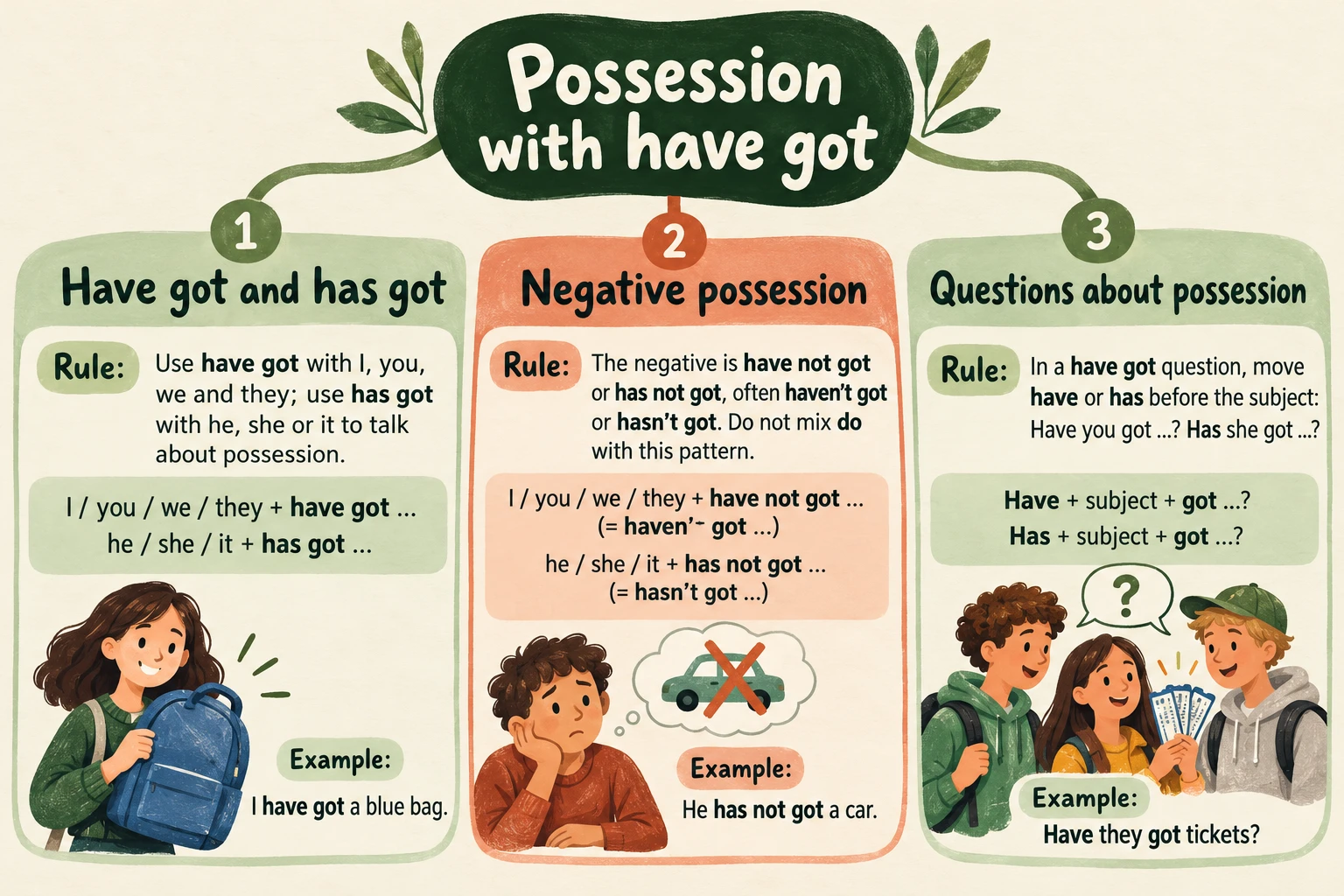
소유를 나타낼 때 I·you·we·they에는 have got, he·she·it에는 has got을 씁니다.
I have got a blue bag.
have got으로 나타내는 소유 · A1. 소유를 나타낼 때 I·you·we·they에는 have got, he·she·it에는 has got을 씁니다.
짧은 상황에서 ‘have got으로 나타내는 소유’을 연습합니다. 단서를 읽고 형태를 고르거나 쓴 뒤 이유를 확인하세요. 수준은 편집상 안내입니다.
소유를 나타낼 때 I·you·we·they에는 have got, he·she·it에는 has got을 씁니다.
I have got a blue bag.부정형은 have not got/has not got이며 haven’t got/hasn’t got으로 줄입니다. 이 구조에 do를 넣지 않습니다.
He has not got a car.의문문은 have/has를 주어 앞에 두어 Have you got ...? / Has she got ...?로 씁니다.
Have they got tickets?
Nora ___ got a red bicycle.
소유를 나타낼 때 I·you·we·they에는 have got, he·she·it에는 has got을 씁니다.
I have got a blue bag.부정형은 have not got/has not got이며 haven’t got/hasn’t got으로 줄입니다. 이 구조에 do를 넣지 않습니다.
He has not got a car.의문문은 have/has를 주어 앞에 두어 Have you got ...? / Has she got ...?로 씁니다.
Have they got tickets?첫 시도를 남기고 변화의 이유를 이해한 뒤 새로운 상황에서 확인해 보세요.
아직 복습 노트가 없어요. 짧은 워밍업부터 해보세요.
소유를 나타낼 때 I·you·we·they에는 have got, he·she·it에는 has got을 씁니다.
I have got a blue bag.부정형은 have not got/has not got이며 haven’t got/hasn’t got으로 줄입니다. 이 구조에 do를 넣지 않습니다.
He has not got a car.의문문은 have/has를 주어 앞에 두어 Have you got ...? / Has she got ...?로 씁니다.
Have they got tickets?정답을 열면 해당 문제에 도움 사용이 기록돼요.
Nora ___ got a red bicycle.
“Nora ___ got a red bicycle.”를 보세요. 소유를 나타낼 때 I·you·we·they에는 have got, he·she·it에는 has got을 씁니다. 완성 문장: “Nora has got a red bicycle.”.
I need a pen; I ___ got one.
“I need a pen; I ___ got one.”를 보세요. 부정형은 have not got/has not got이며 haven’t got/hasn’t got으로 줄입니다. 이 구조에 do를 넣지 않습니다. 완성 문장: “I need a pen; I have not got one.”.
___ you got an appointment today?
“___ you got an appointment today?”를 보세요. 의문문은 have/has를 주어 앞에 두어 Have you got ...? / Has she got ...?로 씁니다. 완성 문장: “Have you got an appointment today?”.
We ___ got a small balcony.
완성 예문: “We have got a small balcony.”. 소유를 나타낼 때 I·you·we·they에는 have got, he·she·it에는 has got을 씁니다. 빈칸에는 ’ve도 쓸 수 있습니다. 앞의 We에 바로 붙이면 We’ve got이 됩니다. 여기서는 have의 축약형이며, 독립된 단어나 be의 형태가 아닙니다.
The printer is out of ink. It ___ got any ink.
“The printer is out of ink. It ___ got any ink.”를 보세요. 부정형은 have not got/has not got이며 haven’t got/hasn’t got으로 줄입니다. 이 구조에 do를 넣지 않습니다. 완성 문장: “The printer is out of ink. It has not got any ink.”.
___ your brother got a driving licence?
“___ your brother got a driving licence?”를 보세요. 의문문은 have/has를 주어 앞에 두어 Have you got ...? / Has she got ...?로 씁니다. 완성 문장: “Has your brother got a driving licence?”.
My grandparents ___ got a garden.
완성 예문: “My grandparents have got a garden.”. 소유를 나타낼 때 I·you·we·they에는 have got, he·she·it에는 has got을 씁니다.
This room ___ got two windows.
“This room ___ got two windows.”를 보세요. 소유를 나타낼 때 I·you·we·they에는 have got, he·she·it에는 has got을 씁니다. 완성 문장: “This room has got two windows.”.
Our bags are empty. We ___ got any snacks.
“Our bags are empty. We ___ got any snacks.”를 보세요. 부정형은 have not got/has not got이며 haven’t got/hasn’t got으로 줄입니다. 이 구조에 do를 넣지 않습니다. 완성 문장: “Our bags are empty. We have not got any snacks.”.
___ this phone got a camera?
완성 예문: “Has this phone got a camera?”. 의문문은 have/has를 주어 앞에 두어 Have you got ...? / Has she got ...?로 씁니다.
They ___ got a map, so they cannot find the path.
“They ___ got a map, so they cannot find the path.”를 보세요. 부정형은 have not got/has not got이며 haven’t got/hasn’t got으로 줄입니다. 이 구조에 do를 넣지 않습니다. 완성 문장: “They have not got a map, so they cannot find the path.”.
___ your neighbours got a dog?
완성 예문: “Have your neighbours got a dog?”. 의문문은 have/has를 주어 앞에 두어 Have you got ...? / Has she got ...?로 씁니다.