01enjoy·avoid·finish 뒤 -ing
enjoy·avoid·finish 뒤 동사는 -ing형입니다.
She enjoys dancing.
동명사와 부정사 · A2. enjoy·avoid·finish 뒤 동사는 -ing형입니다.
짧은 상황에서 ‘동명사와 부정사’을 연습합니다. 단서를 읽고 형태를 고르거나 쓴 뒤 이유를 확인하세요. 수준은 편집상 안내입니다.
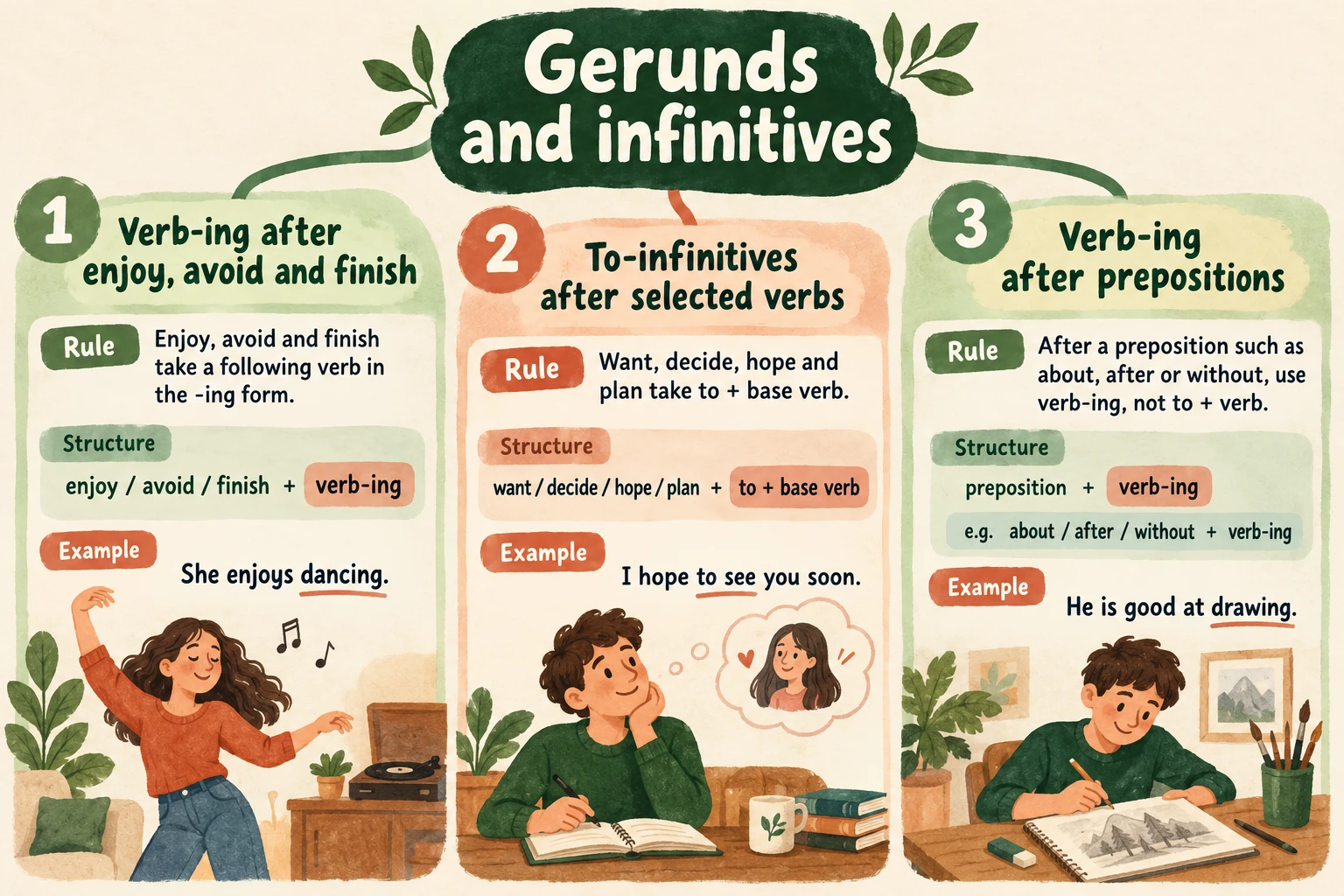
enjoy·avoid·finish 뒤 동사는 -ing형입니다.
She enjoys dancing.want·decide·hope·plan 뒤에는 to+원형을 씁니다.
I hope to see you soon.about·after·without 같은 전치사 뒤에는 to부정사 대신 동사-ing를 씁니다.
He is good at drawing.
We enjoy ___ in the sea. (swim)
enjoy·avoid·finish 뒤 동사는 -ing형입니다.
She enjoys dancing.want·decide·hope·plan 뒤에는 to+원형을 씁니다.
I hope to see you soon.about·after·without 같은 전치사 뒤에는 to부정사 대신 동사-ing를 씁니다.
He is good at drawing.첫 시도를 남기고 변화의 이유를 이해한 뒤 새로운 상황에서 확인해 보세요.
아직 복습 노트가 없어요. 짧은 워밍업부터 해보세요.
enjoy·avoid·finish 뒤 동사는 -ing형입니다.
She enjoys dancing.want·decide·hope·plan 뒤에는 to+원형을 씁니다.
I hope to see you soon.about·after·without 같은 전치사 뒤에는 to부정사 대신 동사-ing를 씁니다.
He is good at drawing.정답을 열면 해당 문제에 도움 사용이 기록돼요.
We enjoy ___ in the sea. (swim)
“We enjoy ___ in the sea. (swim)”를 보세요. enjoy·avoid·finish 뒤 동사는 -ing형입니다. 완성 문장: “We enjoy swimming in the sea. (swim)”.
Leo wants ___ a new skill. (learn)
“Leo wants ___ a new skill. (learn)”를 보세요. want·decide·hope·plan 뒤에는 to+원형을 씁니다. 완성 문장: “Leo wants to learn a new skill. (learn)”.
She is interested in ___ pottery. (make)
“She is interested in ___ pottery. (make)”를 보세요. about·after·without 같은 전치사 뒤에는 to부정사 대신 동사-ing를 씁니다. 완성 문장: “She is interested in making pottery. (make)”.
Please avoid ___ near the entrance. (park)
완성 예문: “Please avoid parking near the entrance. (park)”. enjoy·avoid·finish 뒤 동사는 -ing형입니다.
We decided ___ home early. (go)
“We decided ___ home early. (go)”를 보세요. want·decide·hope·plan 뒤에는 to+원형을 씁니다. 완성 문장: “We decided to go home early. (go)”.
He left without ___ goodbye. (say)
“He left without ___ goodbye. (say)”를 보세요. about·after·without 같은 전치사 뒤에는 to부정사 대신 동사-ing를 씁니다. 완성 문장: “He left without saying goodbye. (say)”.
I finished ___ the report at six. (write)
완성 예문: “I finished writing the report at six. (write)”. enjoy·avoid·finish 뒤 동사는 -ing형입니다.
They enjoy ___ old houses. (visit)
“They enjoy ___ old houses. (visit)”를 보세요. enjoy·avoid·finish 뒤 동사는 -ing형입니다. 완성 문장: “They enjoy visiting old houses. (visit)”.
Mina hopes ___ a doctor. (become)
“Mina hopes ___ a doctor. (become)”를 보세요. want·decide·hope·plan 뒤에는 to+원형을 씁니다. 완성 문장: “Mina hopes to become a doctor. (become)”.
After ___ the dishes, I went out. (wash)
완성 예문: “After washing the dishes, I went out. (wash)”. about·after·without 같은 전치사 뒤에는 to부정사 대신 동사-ing를 씁니다. 이 문제에서는 다음 표현도 확인된 답으로 인정합니다: having washed. 가능한 모든 영어 표현의 목록은 아닙니다.
We plan ___ a tent. (buy)
“We plan ___ a tent. (buy)”를 보세요. want·decide·hope·plan 뒤에는 to+원형을 씁니다. 완성 문장: “We plan to buy a tent. (buy)”.
Thank you for ___ me. (help)
완성 예문: “Thank you for helping me. (help)”. about·after·without 같은 전치사 뒤에는 to부정사 대신 동사-ing를 씁니다.