01문맥에서 복원 가능한 동사구 생략. 맞는 조동사 유지
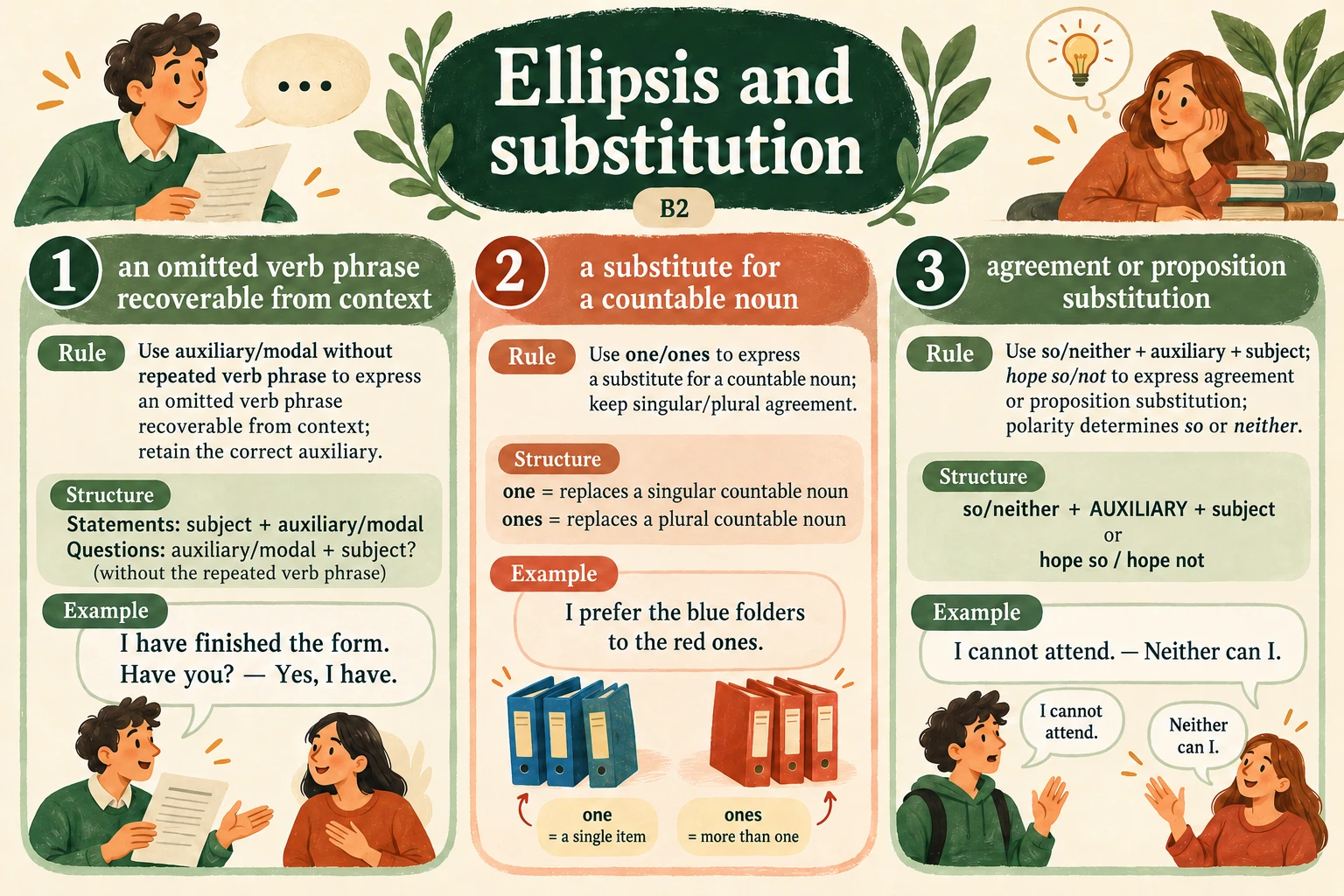
auxiliary/modal without repeated verb phrase 구조를 사용합니다. 의미: 문맥에서 복원 가능한 동사구 생략. 맞는 조동사 유지.
I have finished the form. Have you? — Yes, I have.
생략과 대용 · B2. auxiliary/modal without repeated verb phrase 구조를 사용합니다. 의미: 문맥에서 복원 가능한 동사구 생략. 맞는 조동사 유지.
새로 만든 12문제입니다. 상황에서 의도를 파악하고 형태를 연습한 뒤 새로운 맥락에 적용하세요.
auxiliary/modal without repeated verb phrase 구조를 사용합니다. 의미: 문맥에서 복원 가능한 동사구 생략. 맞는 조동사 유지.
I have finished the form. Have you? — Yes, I have.one/ones 구조를 사용합니다. 의미: 가산명사의 대용. 단수·복수 일치.
I prefer the blue folders to the red ones.so/neither + auxiliary + subject; hope so/not 구조를 사용합니다. 의미: 동의나 명제 대용. 긍정·부정에 따라 so·neither 구별.
I cannot attend. — Neither can I.
Repeat only the appropriate auxiliary instead of have finished the form.
auxiliary/modal without repeated verb phrase 구조를 사용합니다. 의미: 문맥에서 복원 가능한 동사구 생략. 맞는 조동사 유지.
I have finished the form. Have you? — Yes, I have.one/ones 구조를 사용합니다. 의미: 가산명사의 대용. 단수·복수 일치.
I prefer the blue folders to the red ones.so/neither + auxiliary + subject; hope so/not 구조를 사용합니다. 의미: 동의나 명제 대용. 긍정·부정에 따라 so·neither 구별.
I cannot attend. — Neither can I.첫 시도를 남기고 변화의 이유를 이해한 뒤 새로운 상황에서 확인해 보세요.
아직 복습 노트가 없어요. 짧은 워밍업부터 해보세요.
auxiliary/modal without repeated verb phrase 구조를 사용합니다. 의미: 문맥에서 복원 가능한 동사구 생략. 맞는 조동사 유지.
I have finished the form. Have you? — Yes, I have.one/ones 구조를 사용합니다. 의미: 가산명사의 대용. 단수·복수 일치.
I prefer the blue folders to the red ones.so/neither + auxiliary + subject; hope so/not 구조를 사용합니다. 의미: 동의나 명제 대용. 긍정·부정에 따라 so·neither 구별.
I cannot attend. — Neither can I.정답을 열면 해당 문제에 도움 사용이 기록돼요.
Repeat only the appropriate auxiliary instead of have finished the form.
판단 단서는 “Repeat only the appropriate auxiliary instead of have finished the form.”입니다. auxiliary/modal without repeated verb phrase 구조를 사용합니다. 의미: 문맥에서 복원 가능한 동사구 생략. 맞는 조동사 유지. 이 과제의 완성 문장은 “I have finished the form. Have you? — Yes, I have.”입니다.
Replace a plural count noun, folders.
판단 단서는 “Replace a plural count noun, folders.”입니다. one/ones 구조를 사용합니다. 의미: 가산명사의 대용. 단수·복수 일치. 이 과제의 완성 문장은 “I prefer the blue folders to the red ones.”입니다.
Agree with a negative statement using inversion.
판단 단서는 “Agree with a negative statement using inversion.”입니다. so/neither + auxiliary + subject; hope so/not 구조를 사용합니다. 의미: 동의나 명제 대용. 긍정·부정에 따라 so·neither 구별. 이 과제의 완성 문장은 “I cannot attend. — Neither can I.”입니다.
Avoid repeating the verb phrase can operate the machine.
판단 단서는 “Avoid repeating the verb phrase can operate the machine.”입니다. auxiliary/modal without repeated verb phrase 구조를 사용합니다. 의미: 문맥에서 복원 가능한 동사구 생략. 맞는 조동사 유지. 이 과제의 완성 문장은 “Ravi cannot operate it, but Leila can.”입니다.
Replace the singular count noun adapter with a substitute word.
완성 문장: “This adapter is broken; could I borrow another one?” one/ones 구조를 사용합니다. 의미: 가산명사의 대용. 단수·복수 일치. 과제의 주어·시간·의미에 맞춘 형태입니다. 검토한 답만 자동으로 확인하며, 다른 표현을 자동으로 틀렸다고 하지 않습니다.
Use so to substitute for the entire hoped-for proposition.
판단 단서는 “Use so to substitute for the entire hoped-for proposition.”입니다. so/neither + auxiliary + subject; hope so/not 구조를 사용합니다. 의미: 동의나 명제 대용. 긍정·부정에 따라 so·neither 구별. 이 과제의 완성 문장은 “Will the funding continue? — I hope so.”입니다.
Use a past-simple auxiliary to replace submitted a claim last year.
완성 문장: “I did not submit a claim last year, but my colleague did.” auxiliary/modal without repeated verb phrase 구조를 사용합니다. 의미: 문맥에서 복원 가능한 동사구 생략. 맞는 조동사 유지. 과제의 주어·시간·의미에 맞춘 형태입니다. 검토한 답만 자동으로 확인하며, 다른 표현을 자동으로 틀렸다고 하지 않습니다.
The first clause is present perfect; retain have in the elliptical response.
판단 단서는 “The first clause is present perfect; retain have in the elliptical response.”입니다. auxiliary/modal without repeated verb phrase 구조를 사용합니다. 의미: 문맥에서 복원 가능한 동사구 생략. 맞는 조동사 유지. 이 과제의 완성 문장은 “They have not confirmed yet, but we have.”입니다.
Replace plural count noun chairs with a substitute word.
완성 문장: “We need larger chairs; these small ones are unsuitable.” one/ones 구조를 사용합니다. 의미: 가산명사의 대용. 단수·복수 일치. 과제의 주어·시간·의미에 맞춘 형태입니다. 검토한 답만 자동으로 확인하며, 다른 표현을 자동으로 틀렸다고 하지 않습니다.
Agree with a positive statement containing have.
판단 단서는 “Agree with a positive statement containing have.”입니다. so/neither + auxiliary + subject; hope so/not 구조를 사용합니다. 의미: 동의나 명제 대용. 긍정·부정에 따라 so·neither 구별. 이 과제의 완성 문장은 “I have read the guidelines. — So have I.”입니다.
Replace a singular countable noun, proposal.
판단 단서는 “Replace a singular countable noun, proposal.”입니다. one/ones 구조를 사용합니다. 의미: 가산명사의 대용. 단수·복수 일치. 이 과제의 완성 문장은 “Your proposal is detailed; mine is a simpler one.”입니다.
Agree with the negative present-simple statement using an inverted auxiliary construction.
완성 문장: “I do not trust that estimate. — Neither do I.” so/neither + auxiliary + subject; hope so/not 구조를 사용합니다. 의미: 동의나 명제 대용. 긍정·부정에 따라 so·neither 구별. 과제의 주어·시간·의미에 맞춘 형태입니다. 검토한 답만 자동으로 확인하며, 다른 표현을 자동으로 틀렸다고 하지 않습니다.