01과거의 비현실 원인과 현재의 비현실 결과. 두 시간 관계 확인
if + past perfect; would + base verb 구조를 사용합니다. 의미: 과거의 비현실 원인과 현재의 비현실 결과. 두 시간 관계 확인.
If I had studied medicine, I would be a doctor now.
혼합 조건문 · B2. if + past perfect; would + base verb 구조를 사용합니다. 의미: 과거의 비현실 원인과 현재의 비현실 결과. 두 시간 관계 확인.
새로 만든 12문제입니다. 상황에서 의도를 파악하고 형태를 연습한 뒤 새로운 맥락에 적용하세요.
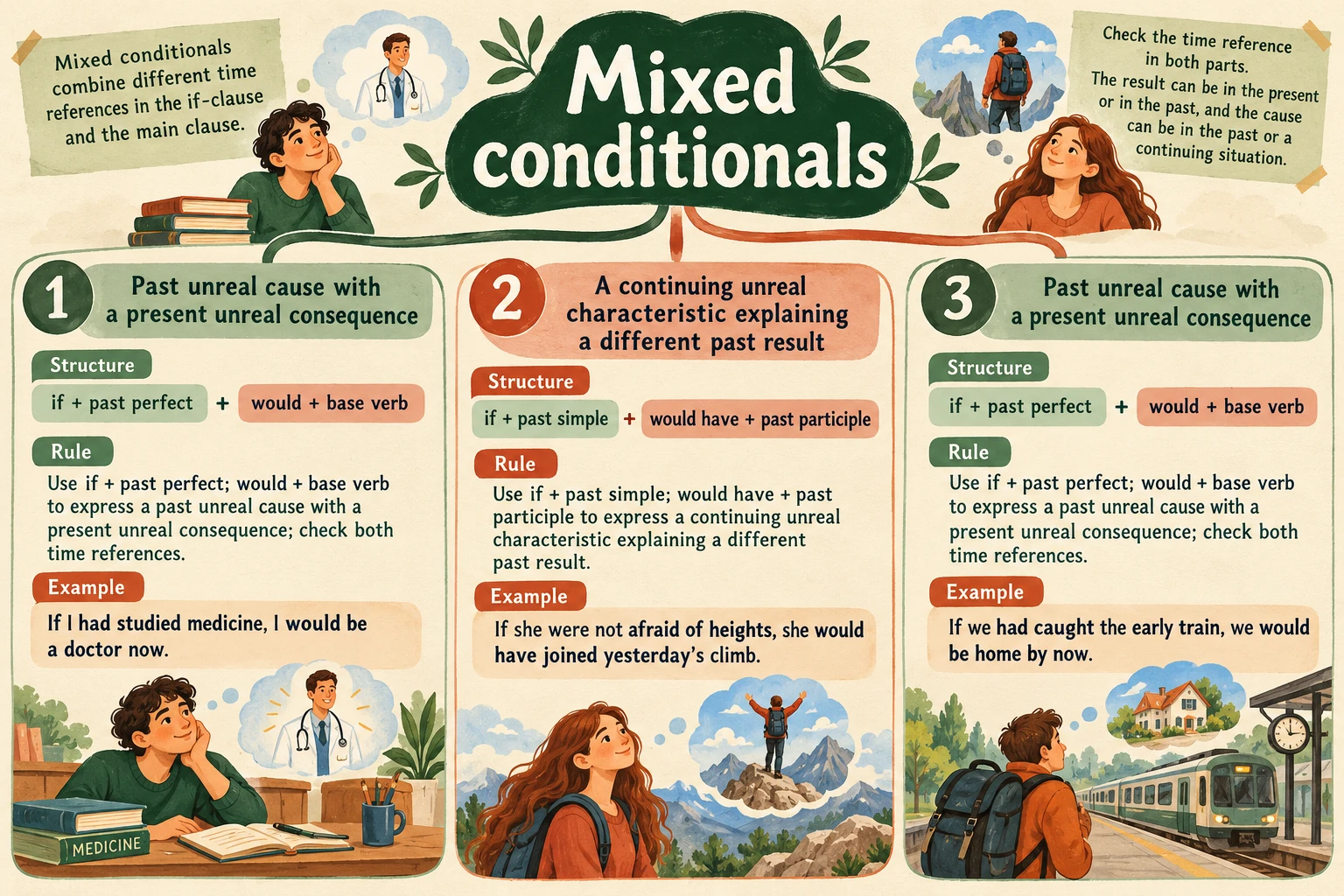
if + past perfect; would + base verb 구조를 사용합니다. 의미: 과거의 비현실 원인과 현재의 비현실 결과. 두 시간 관계 확인.
If I had studied medicine, I would be a doctor now.if + past simple; would have + past participle 구조를 사용합니다. 의미: 지속되는 비현실 특성이 다른 과거 결과를 설명하는 관계.
If she were not afraid of heights, she would have joined yesterday’s climb.if + past perfect; would + base verb 구조를 사용합니다. 의미: 과거의 비현실 원인과 현재의 비현실 결과. 두 시간 관계 확인.
If we had caught the early train, we would be home by now.
I did not study medicine years ago; I am not a doctor now.
if + past perfect; would + base verb 구조를 사용합니다. 의미: 과거의 비현실 원인과 현재의 비현실 결과. 두 시간 관계 확인.
If I had studied medicine, I would be a doctor now.if + past simple; would have + past participle 구조를 사용합니다. 의미: 지속되는 비현실 특성이 다른 과거 결과를 설명하는 관계.
If she were not afraid of heights, she would have joined yesterday’s climb.if + past perfect; would + base verb 구조를 사용합니다. 의미: 과거의 비현실 원인과 현재의 비현실 결과. 두 시간 관계 확인.
If we had caught the early train, we would be home by now.첫 시도를 남기고 변화의 이유를 이해한 뒤 새로운 상황에서 확인해 보세요.
아직 복습 노트가 없어요. 짧은 워밍업부터 해보세요.
if + past perfect; would + base verb 구조를 사용합니다. 의미: 과거의 비현실 원인과 현재의 비현실 결과. 두 시간 관계 확인.
If I had studied medicine, I would be a doctor now.if + past simple; would have + past participle 구조를 사용합니다. 의미: 지속되는 비현실 특성이 다른 과거 결과를 설명하는 관계.
If she were not afraid of heights, she would have joined yesterday’s climb.if + past perfect; would + base verb 구조를 사용합니다. 의미: 과거의 비현실 원인과 현재의 비현실 결과. 두 시간 관계 확인.
If we had caught the early train, we would be home by now.정답을 열면 해당 문제에 도움 사용이 기록돼요.
I did not study medicine years ago; I am not a doctor now.
판단 단서는 “I did not study medicine years ago; I am not a doctor now.”입니다. if + past perfect; would + base verb 구조를 사용합니다. 의미: 과거의 비현실 원인과 현재의 비현실 결과. 두 시간 관계 확인. 이 과제의 완성 문장은 “If I had studied medicine, I would be a doctor now.”입니다.
She is generally afraid of heights; that is why she refused yesterday’s climb.
판단 단서는 “She is generally afraid of heights; that is why she refused yesterday’s climb.”입니다. if + past simple; would have + past participle 구조를 사용합니다. 의미: 지속되는 비현실 특성이 다른 과거 결과를 설명하는 관계. 이 과제의 완성 문장은 “If she were not afraid of heights, she would have joined yesterday’s climb.”입니다.
We missed the early train; as a consequence we are still travelling now.
판단 단서는 “We missed the early train; as a consequence we are still travelling now.”입니다. if + past perfect; would + base verb 구조를 사용합니다. 의미: 과거의 비현실 원인과 현재의 비현실 결과. 두 시간 관계 확인. 이 과제의 완성 문장은 “If we had caught the early train, we would be home by now.”입니다.
He ignored the map earlier and is lost now.
판단 단서는 “He ignored the map earlier and is lost now.”입니다. if + past perfect; would + base verb 구조를 사용합니다. 의미: 과거의 비현실 원인과 현재의 비현실 결과. 두 시간 관계 확인. 이 과제의 완성 문장은 “If he had followed the map, he would know where he was now.”입니다.
Use a would-result with notice for a past consequence of a stable personal characteristic.
완성 문장: “If I were more observant, I would have noticed the error yesterday.” if + past simple; would have + past participle 구조를 사용합니다. 의미: 지속되는 비현실 특성이 다른 과거 결과를 설명하는 관계. 과제의 주어·시간·의미에 맞춘 형태입니다. 검토한 답만 자동으로 확인하며, 다른 표현을 자동으로 틀렸다고 하지 않습니다.
The university rejected my application last year; I am not living abroad now.
판단 단서는 “The university rejected my application last year; I am not living abroad now.”입니다. if + past perfect; would + base verb 구조를 사용합니다. 의미: 과거의 비현실 원인과 현재의 비현실 결과. 두 시간 관계 확인. 이 과제의 완성 문장은 “If it had accepted me, I would be living abroad now.”입니다.
Use a would-result with have for a present consequence of last year’s decision.
완성 문장: “If we had installed solar panels last year, we would have lower bills now.” if + past perfect; would + base verb 구조를 사용합니다. 의미: 과거의 비현실 원인과 현재의 비현실 결과. 두 시간 관계 확인. 과제의 주어·시간·의미에 맞춘 형태입니다. 검토한 답만 자동으로 확인하며, 다른 표현을 자동으로 틀렸다고 하지 않습니다.
She did not bring the key earlier; we cannot enter now.
판단 단서는 “She did not bring the key earlier; we cannot enter now.”입니다. if+과거완료는 ‘그녀가 열쇠를 가져오지 않았다’는 과거 반사실 조건을 나타내고 could+원형은 ‘지금 들어갈 수 있다’는 비현실적 능력을 나타냅니다. could는 능력·가능성 조동사이며 답이 would형인 것은 아닙니다. 이 과제의 완성 문장은 “If she had brought the key, we could get in now.”입니다.
Use a would-result with apply for last month’s unreal past outcome; I am generally risk-averse.
완성 문장: “If I were less cautious, I would have applied for that post last month.” if + past simple; would have + past participle 구조를 사용합니다. 의미: 지속되는 비현실 특성이 다른 과거 결과를 설명하는 관계. 과제의 주어·시간·의미에 맞춘 형태입니다. 검토한 답만 자동으로 확인하며, 다른 표현을 자동으로 틀렸다고 하지 않습니다.
A past injury explains a current limitation.
판단 단서는 “A past injury explains a current limitation.”입니다. if + past perfect; would + base verb 구조를 사용합니다. 의미: 과거의 비현실 원인과 현재의 비현실 결과. 두 시간 관계 확인. 이 과제의 완성 문장은 “If I had not injured my knee, I would be hiking with you today.”입니다.
A stable present skill would have changed an earlier event.
판단 단서는 “A stable present skill would have changed an earlier event.”입니다. if + past simple; would have + past participle 구조를 사용합니다. 의미: 지속되는 비현실 특성이 다른 과거 결과를 설명하는 관계. 이 과제의 완성 문장은 “If he spoke Arabic, he would have understood that conversation yesterday.”입니다.
Use a would-result with feel for a present consequence of yesterday’s choice.
완성 문장: “If I had gone to bed earlier, I would feel less tired now.” if + past perfect; would + base verb 구조를 사용합니다. 의미: 과거의 비현실 원인과 현재의 비현실 결과. 두 시간 관계 확인. 과제의 주어·시간·의미에 맞춘 형태입니다. 검토한 답만 자동으로 확인하며, 다른 표현을 자동으로 틀렸다고 하지 않습니다.