01이미 끝난 과거 사실에 반대되는 조건
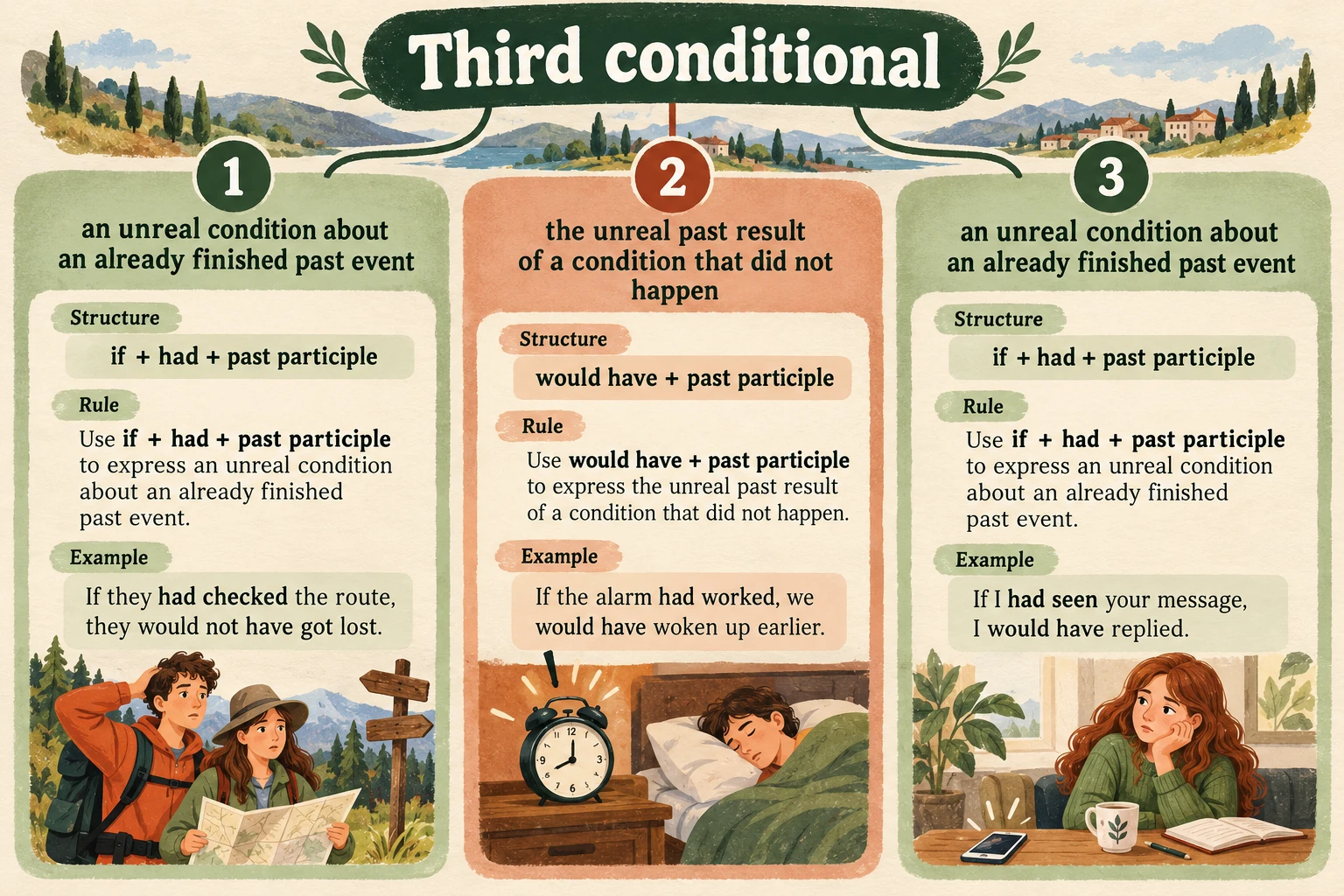
if + had + past participle 구조를 사용합니다. 의미: 이미 끝난 과거 사실에 반대되는 조건.
If they had checked the route, they would not have got lost.
제3조건문 · B2. if + had + past participle 구조를 사용합니다. 의미: 이미 끝난 과거 사실에 반대되는 조건.
새로 만든 12문제입니다. 상황에서 의도를 파악하고 형태를 연습한 뒤 새로운 맥락에 적용하세요.
if + had + past participle 구조를 사용합니다. 의미: 이미 끝난 과거 사실에 반대되는 조건.
If they had checked the route, they would not have got lost.would have + past participle 구조를 사용합니다. 의미: 실현되지 않은 조건에 대한 과거의 가상 결과.
If the alarm had worked, we would have woken up earlier.if + had + past participle 구조를 사용합니다. 의미: 이미 끝난 과거 사실에 반대되는 조건.
If I had seen your message, I would have replied.
They did not check the route yesterday and got lost. Imagine the opposite past.
if + had + past participle 구조를 사용합니다. 의미: 이미 끝난 과거 사실에 반대되는 조건.
If they had checked the route, they would not have got lost.would have + past participle 구조를 사용합니다. 의미: 실현되지 않은 조건에 대한 과거의 가상 결과.
If the alarm had worked, we would have woken up earlier.if + had + past participle 구조를 사용합니다. 의미: 이미 끝난 과거 사실에 반대되는 조건.
If I had seen your message, I would have replied.첫 시도를 남기고 변화의 이유를 이해한 뒤 새로운 상황에서 확인해 보세요.
아직 복습 노트가 없어요. 짧은 워밍업부터 해보세요.
if + had + past participle 구조를 사용합니다. 의미: 이미 끝난 과거 사실에 반대되는 조건.
If they had checked the route, they would not have got lost.would have + past participle 구조를 사용합니다. 의미: 실현되지 않은 조건에 대한 과거의 가상 결과.
If the alarm had worked, we would have woken up earlier.if + had + past participle 구조를 사용합니다. 의미: 이미 끝난 과거 사실에 반대되는 조건.
If I had seen your message, I would have replied.정답을 열면 해당 문제에 도움 사용이 기록돼요.
They did not check the route yesterday and got lost. Imagine the opposite past.
판단 단서는 “They did not check the route yesterday and got lost. Imagine the opposite past.”입니다. if + had + past participle 구조를 사용합니다. 의미: 이미 끝난 과거 사실에 반대되는 조건. 이 과제의 완성 문장은 “If they had checked the route, they would not have got lost.”입니다.
The alarm did not work, so nobody woke up in time.
판단 단서는 “The alarm did not work, so nobody woke up in time.”입니다. would have + past participle 구조를 사용합니다. 의미: 실현되지 않은 조건에 대한 과거의 가상 결과. 이 과제의 완성 문장은 “If the alarm had worked, we would have woken up earlier.”입니다.
I did not see the message yesterday.
판단 단서는 “I did not see the message yesterday.”입니다. if + had + past participle 구조를 사용합니다. 의미: 이미 끝난 과거 사실에 반대되는 조건. 이 과제의 완성 문장은 “If I had seen your message, I would have replied.”입니다.
The doors were not locked, allowing the theft last night.
판단 단서는 “The doors were not locked, allowing the theft last night.”입니다. if + had + past participle 구조를 사용합니다. 의미: 이미 끝난 과거 사실에 반대되는 조건. 이 과제의 완성 문장은 “If we had locked the doors, the theft would not have happened.”입니다.
Use a would-result with attend for a counterfactual past consequence.
완성 문장: “If she had received the invitation, she would have attended the ceremony.” would have + past participle 구조를 사용합니다. 의미: 실현되지 않은 조건에 대한 과거의 가상 결과. 과제의 주어·시간·의미에 맞춘 형태입니다. 검토한 답만 자동으로 확인하며, 다른 표현을 자동으로 틀렸다고 하지 않습니다.
The engineers did not detect the fault before launch.
판단 단서는 “The engineers did not detect the fault before launch.”입니다. if + had + past participle 구조를 사용합니다. 의미: 이미 끝난 과거 사실에 반대되는 조건. 이 과제의 완성 문장은 “If they had detected the fault, they would have postponed the launch.”입니다.
Use the past perfect of leave for the unreal past condition.
완성 문장: “If we had left earlier, we would have caught the ferry.” if + had + past participle 구조를 사용합니다. 의미: 이미 끝난 과거 사실에 반대되는 조건. 과제의 주어·시간·의미에 맞춘 형태입니다. 검토한 답만 자동으로 확인하며, 다른 표현을 자동으로 틀렸다고 하지 않습니다.
The backup was absent, so the records were lost.
판단 단서는 “The backup was absent, so the records were lost.”입니다. if + had + past participle 구조를 사용합니다. 의미: 이미 끝난 과거 사실에 반대되는 조건. 이 과제의 완성 문장은 “If a backup had existed, we would have recovered the records.”입니다.
Use a negative would-result with fail for the past result opposite to what actually happened.
완성 문장: “If the battery had been charged, the device would not have failed.” would have + past participle 구조를 사용합니다. 의미: 실현되지 않은 조건에 대한 과거의 가상 결과. 과제의 주어·시간·의미에 맞춘 형태입니다. 검토한 답만 자동으로 확인하며, 다른 표현을 자동으로 틀렸다고 하지 않습니다.
We did not book in advance and paid more last weekend.
판단 단서는 “We did not book in advance and paid more last weekend.”입니다. if + had + past participle 구조를 사용합니다. 의미: 이미 끝난 과거 사실에 반대되는 조건. 이 과제의 완성 문장은 “If we had booked in advance, we would have paid less.”입니다.
A fact about last year is being imagined differently.
판단 단서는 “A fact about last year is being imagined differently.”입니다. would have + past participle 구조를 사용합니다. 의미: 실현되지 않은 조건에 대한 과거의 가상 결과. 이 과제의 완성 문장은 “If the museum had extended its hours, more visitors would have visited it.”입니다.
Use the past perfect passive of repair for the unreal condition before yesterday’s accident.
완성 문장: “If the brakes had been repaired properly, the accident would not have happened.” if + had + past participle 구조를 사용합니다. 의미: 이미 끝난 과거 사실에 반대되는 조건. 과제의 주어·시간·의미에 맞춘 형태입니다. 검토한 답만 자동으로 확인하며, 다른 표현을 자동으로 틀렸다고 하지 않습니다.